 BirthstoneMeaning
 Aries Birthstone
 Taurus Birthstone
 Gemini Birthstone
 Cancer Birthstone
 Leo Birthstone
 Virgo Birthstone
 Libra Birthstone
 Scorpio Birthstone
 Sagittarius Birthstone
 Capricorn Birthstone
 Aquarius Birthstone
 Pisces Birthstone
 Peridot Meaning
 Garnet Meaning
 Amethyst Meaning
 Aquamarine Meaning
 Diamond Meaning
 Emerald Meaning
 Pearl Meaning
 Ruby Meaning
 Blue Sapphire Meaning
 Opal Meaning
 Topaz Meaning
 Turquoise Meaning
 Moonstone Meaning
 Tourmaline Meaning
 Citrine Meaning
 Tanzanite Meaning
 Alexandrite Meaning
 Spinel Meaning
 Sardonyx Meaning
 Zircon Meaning
 Lapis Lazuli Meaning
 Rose Quartz Meaning
 Onyx Meaning
 Labradorite Meaning
 Malachite Meaning
 Jade Meaning
 Agate Meaning
 Carnelian Meaning
 Clear Quartz Meaning
 Black Tourmaline Meaning
 Smoky Quartz Meaning
 Sodalite Meaning
 Obsidian Meaning
 Fluorite Meaning
 Selenite Meaning
 Hematite Meaning
 Howlite Meaning
 September Birthstone
Free Tarot Reading, One Card and One Stone
This is tradition and practice, not medical, financial, or life advice.
Get a free tarot reading online that ends with a card, a crystal, and a zodiac sign. The card comes from the 22 Major Arcana, the crystal from our stone guides, and the sign from the traditional attribution tables. Start with a yes or no draw.
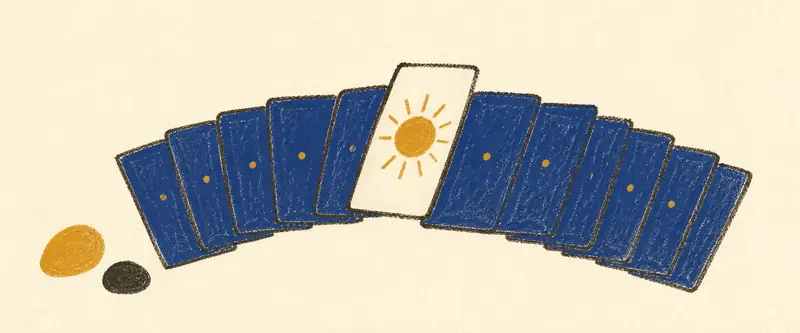
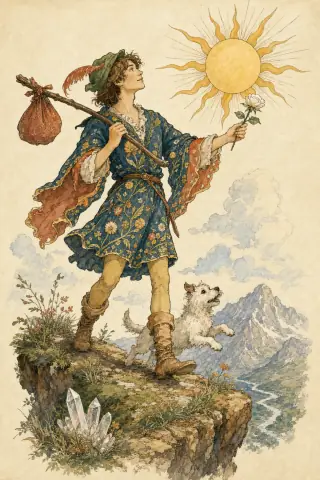
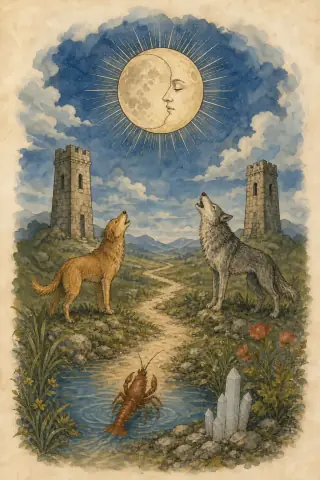
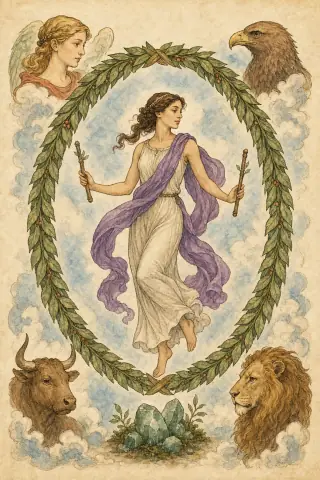
- tarot reading
- major arcana
- crystal pairing
- zodiac attribution
Tarot is symbolic interpretation. Every claim about what a stone or a card does is labelled as tradition, and we name the text or the period we traced it to wherever one exists.
Start Your Free Tarot Reading Here
Two pages are live right now, with more coming in batches, since every card guide gets written and checked one at a time. Nothing here gets mass-produced overnight.
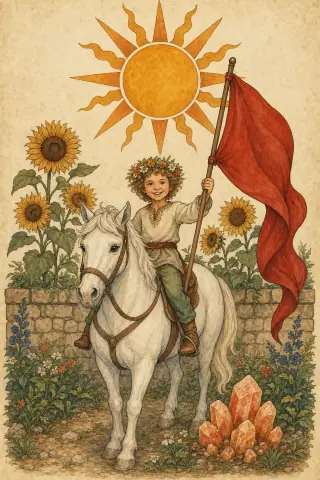 Yes or No Tarot
Draw one card for a closed question. Each of the 22 cards states its verdict upright and reversed, plus the crystal and sign it pairs with.
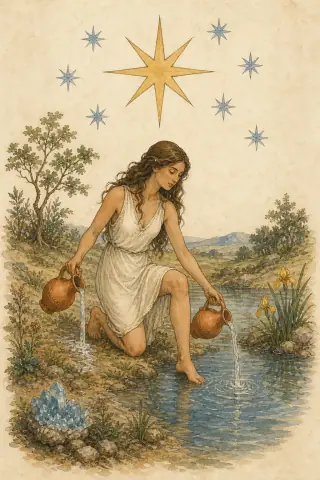 Three Card Tarot Reading
Past, present, future in one line. Pick the area of your question, choose a crystal anchor, draw three cards, and read them as one story.
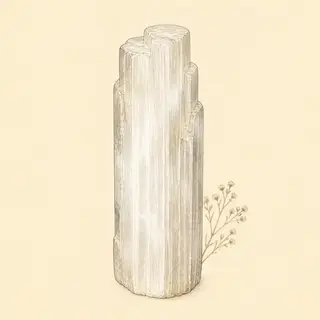 Cleansing a Deck With Selenite
The method, the overnight timing, and the one rule nobody else prints. Water destroys selenite.
- Tarot Card Meanings
All 78 cards in one guide, upright and reversed, Major and Minor Arcana, sourced from Waite's 1911 Pictorial Key.
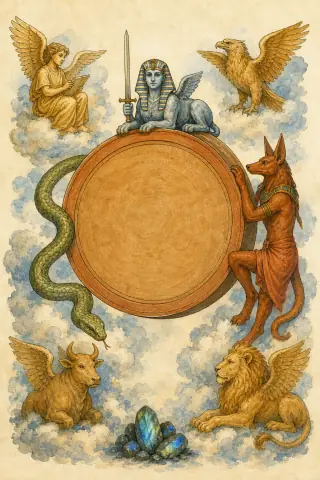 Tarot Birth Card Calculator
Enter your birthday and get your Major Arcana birth card and companion card, each matched to a stone and zodiac sign.
What Makes These Readings Different
Most tarot sites hand you a card. Most crystal sites hand you a stone. Both halves already existed on this site before this hub did, so it just started handing over both at once.
- Every card on this hub pairs with one of 64 stones already documented across the site, each one carrying its chakra, its element, its zodiac attribution, and a named tradition behind every one of those claims.
- Every card carries a zodiac attribution, and we show the reasoning behind it, right there next to the claim. Twelve of the 22 Major Arcana map straight to a sign. The other ten map to a planet first, and the sign comes from whichever sign that planet traditionally rules.
- Belief stays labelled as belief throughout. Cleansing, protection, amplification, all of it gets flagged as tradition in the same sentence where it shows up, with a named source wherever one actually exists.
How the 22 Cards, Their Stones and Signs Connect
22 cards, 12 signs, 18 stones and 10 planets, 64 links on one ring. Topaz, Emerald, Ruby, Peridot each carry two cards. Virgo and Libra hold one card each; every other sign holds two.
one chord per link · card → stone · card → sign · card → planet → the sign it rules · hover a name to light up its links, click a card or planet to pin, signs and stones open their guides
Hover a name to light up its links. Click a name to pin it.
Start from any card on the top arc and follow its two chords: one lands on a stone, one on a sign. Ten cards take a detour through a planet first, because the Golden Dawn gave them a planet rather than a sign, and we follow that planet to the sign it rules. The ring makes the sharing visible. Topaz sits under both The Fool and The Hierophant, ruby under The Emperor and The Tower. Pull on a sign and you see which two cards it holds, pull on a stone and you see which cards ask for it. Every chord here is also a line in the Yes/No and Three-Card tools above, drawn from the same records.
How a Reading Works Here
Four steps, no account required, nothing stored anywhere. The whole draw runs inside your own browser and stays there.
- Start by matching the reading to the question in front of you. A question that genuinely takes a yes or a no belongs on the yes-or-no draw. A wider, open question wants a fuller spread, and those are still being built one batch at a time.
- Hold the actual question in your head while you draw. A vague version of it does not give the card much to answer. Readers who work with tarot regularly say this is the part doing the real work, regardless of what you believe about the cards underneath it.
- Read the verdict, then read the reasoning sitting under it. Every card on this site explains why it lands where it lands, which means you can flatly disagree with the interpretation and still walk away with something from the draw.
- Follow the stone the card names. Each one links to a full guide with its chakra, its element, and what the tradition actually asks you to do with it. That link is the point where a reading stops being an answer and turns into something to act on.
Which Page Should You Start On?
Two pages live today, doing two entirely different jobs.
- Start with the yes-or-no draw when a decision is sitting in front of you and you want one card to argue with tonight. It runs on the full 22 Major Arcana and shows the verdict both upright and reversed.
- Start with the selenite guide instead if you already own a deck and want to look after it properly. It walks through the overnight method and the one rule that matters most: the stone can never go near water.
- Both pages link straight into the crystal guides, so whichever one you start on, the stone side of the site is one click away.
What a Free Tarot Reading Can and Cannot Do
Saying this plainly up front makes everything else on the hub easier to trust, and it explains why fact and tradition stay separated on every single page here.
- Tarot began as a system of symbolic interpretation, rooted in 15th-century Italian card games, and turned into a divinatory practice in 18th-century France. Both of those dates are documented history. The predictive claim layered on top of them never got the same treatment.
- What a card actually gives you is a frame for a question you were already turning over before you sat down. Readers consistently report that the real value sits in the reflection the draw prompts, and that is the honest description of what is happening here, nothing more dressed up.
- Nothing on this hub counts as medical, legal, or financial advice. No reading here should replace a professional you would otherwise go and consult.
- Everything on this hub is folklore, astrology, and crystal practice, plainly. Every claim gets labelled as tradition with a citation to where it was traced, and on the claims we searched for and found nothing behind, that gets said out loud too.
Being Built Next
Written down here before the links exist, so nobody has to guess what is on the way.
- Individual single-card guides for the rest of the Major Arcana, in batches, each with its own dedicated page beyond the four already live.
- A daily single-card draw.
Tarot at a glance
- Also known as
- Aquamarine and emerald are both varieties of the same beryl family, though the gazing tradition points to the paler, clearer stones
- Tradition
- Assigned to the tribe of Gad partly because beryl spheres were reputed to be the material best suited to crystal-gazing
- Chakra / element
- Today's correspondence lists put it at the throat chakra, a category the classical gemstone sources here never used.
- In one line
- The stone two separate legends both reached for when they needed something clear enough to see the future in.
- Try this first
- If scrying draws you more than cards do, a clear beryl or quartz sphere is the traditional stand-in for the crystal ball.
- Do not
- Do not treat this page's tarot cards as continuous with beryl's scrying tradition. They come from separate, undocumented lines of practice.
Kunz 1915, p.283
What Actually Brings People to This Page
Four situations, and which live tool on this hub actually answers each one.
It is eleven at night, you have a yes-or-no question about someone specific, and you have already talked it to death with two friends.
This is exactly the closed question the yes-or-no draw was built for. Pick the card, read the verdict upright and reversed, and let the reasoning underneath it argue back at you, which beats a third friend's opinion.
You inherited your grandmother's tarot deck after she passed, and you have never actually cleansed or used a deck before.
Start with the selenite guide, not a spread. The overnight rest on a slab or beside a wand is the traditional way readers mark a deck as their own before the first real question ever gets asked of it.
You are about to sign a lease, take a job, or make some other decision that has a real deadline attached to it.
Draw once, read the card's reasoning, and treat the crystal it pairs with as the follow-through, not the answer. The stone's job in the old tables was never to decide for you. It was to give you something to hold onto between the draw and the actual decision.
You do not know anything about tarot beyond the Death card meaning change, not literal death, and you are worried about getting it wrong.
Every card on this hub states its meaning in plain language and shows the reasoning behind the verdict, so there is nothing to get wrong beyond disagreeing with an interpretation, which readers who know the deck well do constantly.
Tarot Is Missing From Its Own Supposed Ancestors
Two things the antique gemstone books do not agree on, checked directly against three full texts from 1913 to 1915.
Three 1913-to-1915 Stone Encyclopedias Never Once Say the Word Tarot
George Frederick Kunz wrote two of the standard English references on gemstone folklore, in 1913 and again in 1915, and William Pavitt wrote the third in 1914. Between them the three books run over a thousand pages cataloguing amulets, charms, and divination methods built around stones. Search all three for the word tarot and you find nothing. Zero. The only card-related material in the set is ordinary playing-card luck lore on page 130 of Pavitt's book, plus crystal-ball scrying discussed separately on page 186. That does not make tarot a recent invention. It has its own documented history outside these three books. What it does mean is that this site's antique gemstone sources cannot be stretched to backdate tarot into the same tradition as birthstone lore or crystal-gazing without folklore turning into invention somewhere in the stretch.
Crystal-Gazing Has Two Origin Stories That Do Not Agree
Pavitt's 1914 book credits Saint Augustine with tracing the practice of crystal-gazing back to Persia, folding a fortune-teller's tool into the writings of one of Christianity's most influential theologians. Kunz's 1915 book never mentions Augustine or Persia at all. Instead, Kunz explains beryl's place among the twelve tribal stones through the tribe of Gad, on the grounds that beryl spheres were reputed to be the material best suited for crystal-gazing. Two respected compilers, writing within a year of each other, reached for two completely different explanations for the same practice, one theological and Persian, one Hebrew and tribal. Nothing in either book suggests the writer checked the other's version. The tidy single-origin story sold today sits on top of sources that never actually agreed.
Questions About This Section
- Is the tarot reading on this site free?
- Yes. Every draw here is a free tarot reading online, with no account, no email capture, and no paywall. It runs in your browser.
- Why does a birthstone site publish tarot readings?
- Readers who use crystals in a tarot practice already search for both together. We had the stone side of the site with its sources, so pairing it to cards adds the thing tarot sites cannot: a stone layer with a traceable tradition under the symbolism.
- Which deck do these readings use?
- The 22 Major Arcana, in the standard order from The Fool at zero to The World at twenty-one. Card meanings follow widely shared interpretive tradition.
- Do I need to know anything about tarot to use this?
- No. Each card states its meaning in plain language and explains the reasoning behind the verdict. Readers who already know the deck can skip straight to the card table, which lists all 22 at once.
- Are the readings random?
- The draw picks one of the 22 cards at random in your browser. We do not weight the deck, track you between visits, or bias the result toward a cheerful answer. Seven of the 22 answer no.
- Why does every card come with a crystal?
- Because that is what this site already had. Sixty-four stones are documented here with their correspondences and their lore traced to a named source. Pairing each card to one of them gives the symbolism something to stand on, which is the part tarot sites skip.
The Three Books Behind Every Claim Above
All three are full public-domain texts. Read the page yourself, and treat our summary here as a starting point, not the last word.
- Saint Augustine is credited with believing crystal-gazing originated in Persia.
Pavitt 1914, p.186
Pavitt writes that revealing the future through a crystal ball is of very ancient origin and that Saint Augustine is said to have traced it to Persia, adding that the moon was believed to influence the seer's intuitive faculty. - Beryl was linked to crystal-gazing through the tribe of Gad, a separate rationale from any Persian origin story.
Kunz 1915, p.283
Kunz explains that beryl, assigned as the tribe of Gad's stone, gained extra appropriateness because beryl spheres were considered best suited to crystal-gazing, reinforcing the tribe's association with good fortune. - Dr. John Dee's first documented crystal-ball session happened at Mortlake on December 22, 1581, opened with an invocation to 'the angel of the stone.'
Kunz 1913, p.190
Kunz dates Dee's first session precisely and notes that custom called for a child to act as the crystal-gazer to avoid suspicion of trickery, though Dee instead relied on Edward Kelley to interpret what appeared in the stone.
New batches go up as they are written and checked, not on a schedule. If a card guide is not linked yet, it is not published yet.
Elsewhere on the Site
Read a Single Card in Depth
Sources & Editorial Basis
Month assignments follow the Jewelers of America birthstone list. Care guidance is checked against the Gemological Institute of America. Everything else here is folklore, astrology and crystal practice. We label each claim as tradition and name the text or the period we traced it to wherever one exists.
“The safest cleaning methods are also the easiest.”