 BirthstoneMeaning
 Aries Birthstone
 Taurus Birthstone
 Gemini Birthstone
 Cancer Birthstone
 Leo Birthstone
 Virgo Birthstone
 Libra Birthstone
 Scorpio Birthstone
 Sagittarius Birthstone
 Capricorn Birthstone
 Aquarius Birthstone
 Pisces Birthstone
 Peridot Meaning
 Amethyst Meaning
 Aquamarine Meaning
 Diamond Meaning
 Emerald Meaning
 Pearl Meaning
 Blue Sapphire Meaning
 Opal Meaning
 Topaz Meaning
 Turquoise Meaning
 Moonstone Meaning
 Tourmaline Meaning
 Citrine Meaning
 Tanzanite Meaning
 Alexandrite Meaning
 Spinel Meaning
 Sardonyx Meaning
 Zircon Meaning
 Lapis Lazuli Meaning
 Rose Quartz Meaning
 Onyx Meaning
 Labradorite Meaning
 Malachite Meaning
 Jade Meaning
 Agate Meaning
 Carnelian Meaning
 Clear Quartz Meaning
 Black Tourmaline Meaning
 Smoky Quartz Meaning
 Sodalite Meaning
 Obsidian Meaning
 Fluorite Meaning
 Selenite Meaning
 Hematite Meaning
 Howlite Meaning
 September Birthstone
Ruby Crystal Meaning and Spiritual Properties
Ruby crystal meaning includes royal status, devotion, and protective beliefs in the sources discussed here. Those associations can inspire a keepsake or a reflection exercise. They do not establish that a stone forecasts events. On the fifth of December, 1600, a physician named Wolfgang Gabelchover rode from Stuttgart to Calw with his wife, Catherine Adelmann. He wore a gold ring set with a ruby she gave him. As they rode, the stone lost its color and turned dark before his eyes. The darkness held for days. Gabelchover removed the ring, locked it away, and warned Catherine that an unavoidable blow was approaching. She fell ill within days and did not recover. He recorded the event in his commentary on the sixth book of Andrea Baccio's De Gemmis. George Frederick Kunz preserved it in 1913 in The Curious Lore of Precious Stones as a dated account of an omen Gabelchover believed he had received. The anecdote does not establish that a ruby predicted his wife's illness.
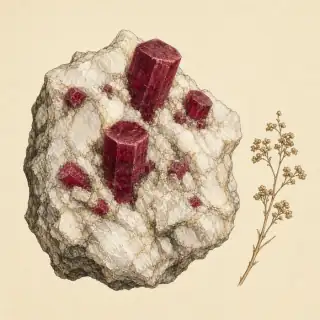
What Did Ancient Kings and 1600 Warnings Reveal About Ruby?
Nobody in the record ever called this a quiet stone. Sanskrit texts recorded by George Frederick Kunz in 1913 gave it three specific titles of royal rank. They called it Ratnaraj, king of precious stones. They called it Ratnanayaka, leader of precious stones. They called it Padmaraga, red as the lotus. Early Hindu lapidaries sorted rubies into four castes, placing the padmaraga at the peak. The text claimed that highest stone assured its owner perfect safety among enemies; the claim is not evidence of protection. An exact rule accompanied that protection. You had to keep your padmaraga from touching inferior specimens. Contact with a lesser stone was believed to contaminate its virtue. This caste-based belief supplies no evidence about a gem's power and is not a rule readers need to follow. Mainstream sources call ruby the July birthstone, but that assignment is young. Six of Kunz's eight historical lists put December on the ruby. Then the jewelers' trade met at Kansas City in August 1912, moved it to July, and gave December away to turquoise, arguing that the warmer gem belonged in the warmer month. Kunz printed that logic in 1913 and explained that the opposite is true. In winter people seek warmth, while in summer coolness is welcome. And his own dated zodiac list gives the ruby to Capricorn, with a verse promising no trouble will touch your brow.
Ruby's royal titles supply an image of speaking openly about what matters to you. The stone can represent a commitment to be direct. Before a conversation you have delayed, write what you want to ask and what you are prepared to hear. A ruby crystal does not burn away hesitation or reveal people who drain you. You still choose your words and boundaries.
Zodiac Connection
This site pairs ruby with Cancer and Leo in its modern reading. Cancer's home theme and Leo's solar imagery offer ways to think about care and visibility. They do not show that ruby changes a person's temperament. Kunz's 1913 zodiac table instead assigns ruby to Capricorn. The modern and historical pairings are different systems, and a reader may choose a symbol without treating either as a prescription.
What follows about ruby is crystal-practice belief, carried forward by tradition. No evidence backs it.
What Can Ruby Represent in Everyday Decisions?
Physical Healing
You might wear ruby to mark a professional milestone or a promise you intend to keep. Its red color and royal lore can make the object memorable. That symbolism does not alter your momentum, speed decisions, or attract respectful partners. Prepare for the meeting, listen to the response, and judge the outcome by what actually happened.
Emotional & Spiritual Healing
When an old disagreement returns to mind, use ruby as an optional reminder to write down the issue before acting. Name what you know and what you still need to ask. The stone does not compel a breakup, remove a mental loop, or make a deadline correct. A symbol of resolve can also accompany the decision to wait for better information.
Chakra Association
Ruby's Heart Chakra pairing belongs to the modern crystal symbolism followed on this page. Here the heart stands for devotion and what you value. A ruby held in the hand can accompany reflection on that theme. It has no stated effect on the organ in your chest, and this guide does not use a chakra association to explain health or emotional symptoms.
This is tradition and practice, not medical, financial, or life advice.
How Do You Use Ruby Day to Day?
Wearing Ruby
The medieval lapidary attributed to Mandeville recommends wearing ruby on the left side for its supposed protection. Kunz records that instruction as part of the stone's folklore. You can choose left-hand jewelry to recall the story, or wear the ruby where it fits comfortably. These placements do not protect a home from storms or make a negotiation successful. Let the ring be a personal cue to review your plan.
Ruby in Your Home
A ruby at the center of a small display can recall the nine-gem layout reproduced by Kunz, where it represents the Sun. Extending that layout to a desk is this guide's decorative suggestion. Store jewelry separately to avoid scratches and damage. The old claim that a lesser stone contaminates a fine ruby's virtue is a belief. It gives no reason to rank people or possessions by spiritual worth.
Meditation with Ruby
Hold your ruby crystal during five quiet minutes if that amount of time suits you. Picture a conversation you would like to prepare for and write the first question you will ask. Red light, if imagined, is a visual motif you create. You can revisit the plan later; the ritual and stone place no deadline on you.
Cleansing & Charging
Kunz's weekday table gives ruby to Tuesday and names it Friday's talisman. You can use those days to revisit an intention if you enjoy the historical connection. A clean cloth and a written note are enough for this guide's symbolic reset. The source does not prescribe a sunlight or smoke charging treatment. Follow the actual care guidance for the ruby and its setting.
Crystal Combinations
Ruby pairs well with these crystals for complementary energy in crystal healing practice:
- Diamond for Symbolic pairing: pairing ruby's imagery with clarity and focused intention
- Emerald for Symbolic pairing: balancing passion with emotional openness in crystal reflection tradition
- Pearl for Symbolic pairing: balancing passionate heart imagery with gentle inner wisdom
Cancer and Leo both hand ruby their season, while garnet answers to Capricorn on the far side of the year. Tradition reads those as two halves of one fire, one stone worn to be seen and the other worn to stay put. The garnet guide covers the Capricorn half of that pairing and what people set as an intention when they carry it.
Caring for Ruby
Cleaning: Warm soapy water and a soft brush suit an untreated ruby perfectly well.
Avoid: Find out how the stone was treated before you clean it. A ruby that has been filled comes apart under heat, so keep any ruby out of a steam bath and well away from a jeweler's torch unless untreated is written down somewhere.
Ruby at a glance
- Also known as
- Ratnaraj, king of gems, and padmaraga, red as the lotus, in old Sanskrit lapidary texts.
- Tradition
- Vedic lapidaries ranked ruby above every other stone in the nine-gem navaratna set.
- Chakra / element
- Root and heart, Fire. A modern crystal-practice pairing, absent from the older texts.
- In one line
- Ruby is the stone tradition trusted to prove itself by touch and by fire, until you actually test it.
- Try this first
- Hold the stone in direct light before a hard conversation and name one thing you won't back down on.
- Do not
- Don't buy a 'ruby' from a seller who tells you to drop it in water to prove it's real.
Kunz, The Curious Lore of Precious Stones, 1913, p.101-102.
When You'd Actually Reach for a Ruby
Three moments where ruby's old reputation for heat becomes something you can act on.
You're buying a 'ruby' from a seller who tells you to drop it in a glass of water to prove it's genuine.
Skip the water. That test comes from a tradition that also claims ruby's fire shines through cloth, and both claims fail under measurement. Ask for a gemological lab report, something that checks refractive index and inclusions. A seller who pushes a home test while dodging the paperwork usually has no paperwork to show you.
You're walking into a performance review with a manager who talks over you in every meeting.
Put the ring on your dominant hand, not for luck, but as a physical reminder before you walk in. Sanskrit sources ranked ruby above every stone in its class and tied it to visible, undeniable presence. Use that association on purpose. Decide your one non-negotiable point before the meeting starts, say it early, and don't restate it three different softer ways once the room goes quiet.
A relative brings up an old grudge at dinner that you thought both of you had dropped years ago.
This is exactly the kind of moment where ruby's reputation for burning through hesitation is worth testing on yourself first, before the stone gets any credit. State once, plainly, that the subject is closed, and let the silence that follows sit there unfilled. The old caste rule kept fine rubies from touching lesser stones. Apply the same logic to which conversations you let back into your life.
The Two Physical Tests Ruby Never Passes
Ruby's oldest claims are about physics, not meaning. Two are specific enough to test, and both fail, which is worth knowing before you buy into ruby crystal folklore.
The Fire You're Told Shows Through Cloth
Sanskrit lapidary texts described ruby's red as an inner fire so intense it showed through a layer of cloth covering the stone. Modern gemology traces that same red to chromium replacing aluminum inside the corundum lattice, a fixed optical effect, not a flame. Hold a ruby against fabric today and you'll see refracted light, not a hidden glow. The old claim and the modern one are describing the same color. Only one of them survives a lab test.
Water That's Supposed to Boil and Never Does
The same tradition claimed a genuine ruby dropped into a bowl of water would make the water visibly boil, offered as a field test buyers could run before paying. No gem has ever measurably raised water's temperature, ruby included, and jewelers today rely on lab reports. What the test did tell you was whether the seller believed his own story. A stone that stayed cool proved nothing about the gem and quite a lot about the man holding it.
Frequently Asked Questions
What is a ruby crystal for?
Ruby crystal meaning centers on bold devotion and unmistakable presence, and the historical record backs that up with unusually direct language. Sanskrit texts recorded by George Frederick Kunz in 1913 gave ruby three specific titles of royal rank: Ratnaraj, king of precious stones; Ratnanayaka, leader of precious stones; and Padmaraga, red as the lotus. Early Hindu lapidaries sorted rubies into four castes, placing the padmaraga variety at the very top, and held that this highest-grade stone assured its owner perfect safety among enemies. Nobody in this record ever called ruby a quiet or subtle stone, the language used for it, across multiple sources Kunz compiled, is consistently about rank, protection, and visible power not gentle calm.
Which tarot cards connect to ruby in occult tradition?
This guide pairs Ruby with The Emperor, The Tower. The Emperor's path carries ruby in 777, row 15 of Column XL, the table Crowley printed in 1909. Rubies crowned kings for centuries, a hard red stone for a card built on rule. Ruby crowns two paths in Crowley's 777, printed 1909, at row 15 for The Emperor and row 27 for The Tower, both in Column XL. Both paths break open what looked permanent. These are correspondences within the named esoteric framework. They do not establish an effect on health or provide information about future events.
Why was ruby moved from December to July?
The ruby crystal moved from December to July because of a single 1912 trade vote, and the reasoning behind the swap struck Kunz as backward. Six of his eight surveyed historical lists put December on ruby; the jewelers' trade meeting in Kansas City in August 1912 moved ruby to July instead and handed December to turquoise, arguing that a warmer-colored gem belonged in a warmer month. Kunz printed that logic in his 1913 book and disagreed with it directly, arguing the opposite made more sense: people seek warmth in winter and welcome coolness in summer, so a warm red stone arguably suited the cold month better, not the hot one. His own dated zodiac list, separately, gives ruby to Capricorn, a winter sign, with a verse promising that no trouble will touch the wearer's brow.
Why should you store a ruby away from other stones?
A ruby at the center of a small display can recall the nine-gem layout reproduced by Kunz, where it represents the Sun. Extending that layout to a desk is this guide's decorative suggestion. Store jewelry separately to avoid scratches and damage. The old claim that a lesser stone contaminates a fine ruby's virtue is a belief. It gives no reason to rank people or possessions by spiritual worth.
On which side of the body should you wear ruby?
The medieval lapidary attributed to Mandeville recommends wearing ruby on the left side for its supposed protection. Kunz records that instruction as part of the stone's folklore. You can choose left-hand jewelry to recall the story, or wear the ruby where it fits comfortably. These placements do not protect a home from storms or make a negotiation successful. Let the ring be a personal cue to review your plan.
What is the navaratna and where does ruby go?
The navaratna, the nine-gem Vedic astrological setting Kunz's research also documents, places the ruby crystal at the very center of the layout, representing the Sun, the position of highest rank among the nine sacred stones. That central placement lines up with ruby's separate Sanskrit titles recorded by Kunz: Ratnaraj, king of precious stones, and Ratnanayaka, leader of precious stones, both pointing to the same idea of ruby as the dominant stone in any collection it appears alongside. Early Hindu lapidaries reinforced this with a strict caste system for ruby quality, placing the finest padmaraga grade above the rest and requiring it be kept separate from lesser stones to avoid diluting its power. Across every documented Vedic and Sanskrit source this site draws on, ruby consistently occupies the top rank, never a supporting one.
Which days of the week belong to ruby?
In the historical weekday gem system Kunz recorded, ruby is assigned to both Tuesday and Friday, Tuesday for its connection to decisive, assertive Mars energy, and Friday for a purposeful Venus alignment tied to devotion and desire. This dual assignment is unusual among the stones on this site; most get a single documented day not two, and the pairing of Mars and Venus specifically fits ruby's broader reputation as a stone of both bold action and fierce devotion, the two qualities its royal Sanskrit titles emphasize. Practitioners who follow this timing cleanse or charge ruby specifically on one of these two days not at random, treating Tuesday as the day for confidence-related intentions and Friday for matters of the heart.
Did a ruby really turn dark before a tragedy?
Kunz records Wolfgang Gabelchover's account of noticing his ruby darken while traveling with his wife on 5 December 1600. Gabelchover interpreted the change as an omen before her illness and death. The record documents his story and interpretation. It does not prove that the gem predicted illness, and a change in a jewel's appearance should not be read as a health forecast.
Where the Ruby Claims Actually Come From
Each ruby crystal claim above, traced to the page it came from.
- Sanskrit lapidary texts described ruby's color as an inner fire strong enough to show through a covering of cloth.
Kunz 1913, p.101
Recorded among the stone's Sanskrit titles and qualities, without any claim to scientific testing. - The same tradition held that dropping a genuine ruby into water would make the water visibly boil.
Kunz 1913, p.102
Offered historically as a rough field test for buyers, not as a documented physical reaction.
References
- Ruby, Gemological Institute of America (GIA)
- Ruby, International Gem Society
- gutenberg.org/files/57978/57978-h/57978-h.htm
“The safest cleaning methods are also the easiest.”

 ?
?