 BirthstoneMeaning
 Aries Birthstone
 Taurus Birthstone
 Gemini Birthstone
 Cancer Birthstone
 Leo Birthstone
 Virgo Birthstone
 Libra Birthstone
 Scorpio Birthstone
 Sagittarius Birthstone
 Capricorn Birthstone
 Aquarius Birthstone
 Pisces Birthstone
 Garnet Meaning
 Aquamarine Meaning
 Diamond Meaning
 Emerald Meaning
 Pearl Meaning
 Ruby Meaning
 Blue Sapphire Meaning
 Opal Meaning
 Topaz Meaning
 Turquoise Meaning
 Moonstone Meaning
 Tourmaline Meaning
 Citrine Meaning
 Tanzanite Meaning
 Alexandrite Meaning
 Spinel Meaning
 Sardonyx Meaning
 Zircon Meaning
 Lapis Lazuli Meaning
 Rose Quartz Meaning
 Onyx Meaning
 Malachite Meaning
 Jade Meaning
 Agate Meaning
 Carnelian Meaning
 Clear Quartz Meaning
 Black Tourmaline Meaning
 Smoky Quartz Meaning
 Sodalite Meaning
 Obsidian Meaning
 Selenite Meaning
 Hematite Meaning
 Howlite Meaning
 September Birthstone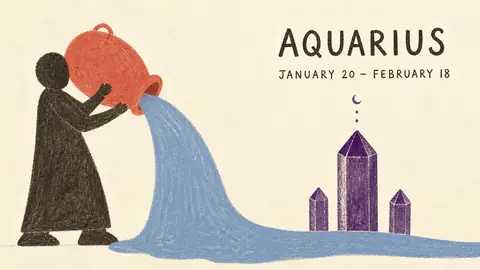
Aquarius Birthstone: Amethyst, Which Once Cost as Much as Ruby
The Aquarius birthstone is amethyst in the modern list, with garnet as the traditional pairing. Amethyst has carried a reputation for a clear head since the Greeks, which suits a visionary sign that trusts reason over reaction. Garnet grounds all that thinking into something you can actually build.
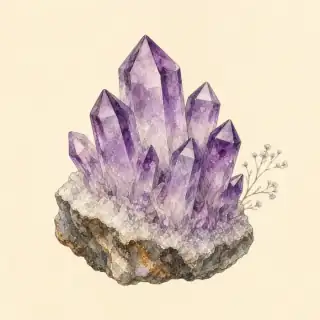
What Connects Amethyst to a Uranus-Ruled Sign?
Saturn and Uranus both claim Aquarius depending on the school of astrology, and amethyst's clarity lore is paired with the sign by tradition alone, a tradition that proves nothing about character or about the stone's effect.
Aquarius is fixed air, ruled by Uranus and Saturn, which is revolutionary thinking bolted onto systematic discipline. The Water Bearer is the visionary of the zodiac, humanitarian, intellectually independent and usually about ten years early. Amethyst suits Aquarius because its long reputation is sobriety and a clear head, which is the Aquarian preference for reason over reaction. It is also the skill of stepping back from a room and naming the thing everybody agreed not to mention. The purple carried royalty and spiritual authority for centuries, and that fits a sign that ends up leading without ever asking to. Aquarius works the idea out in private long before anybody sees it. The traditional stone, garnet, adds the Saturn half, the grounding that moves a brilliant idea into something that actually got built.
Which Gemstone Belongs to Aquarius?
History and Lore
Greek drinkers carved cups out of amethyst and expected the stone to keep them sharp while the wine went round. That single idea kept it in demand for two thousand years. It is still the first thing anybody tells you about the stone.
- The name comes from the Greek 'amethystos,' meaning not intoxicated.
- European treasuries once kept amethyst beside ruby and emerald. South American supply changed that in the nineteenth century and put the stone within reach of ordinary buyers.
Correspondences
Crystal practice files amethyst under these correspondences, a traditional association. Use it to decide where you keep amethyst and which intention you set with it.
| Chakra | Crown (Sahasrara) |
| Element | Air |
| Zodiac | Aquarius, Pisces |
| Colors | Purple, Violet, Lilac, Deep purple |
Traditional Meanings
- Traditionally believed to promote sobriety, clear-headedness, and spiritual wisdom.
- In crystal healing practice, amethyst is thought to calm the mind and strengthen intuition.
Amethyst has held this reputation since antiquity texts first recorded it. That is tradition. It is not proof.
Garnet: The Traditional Aquarius Birthstone
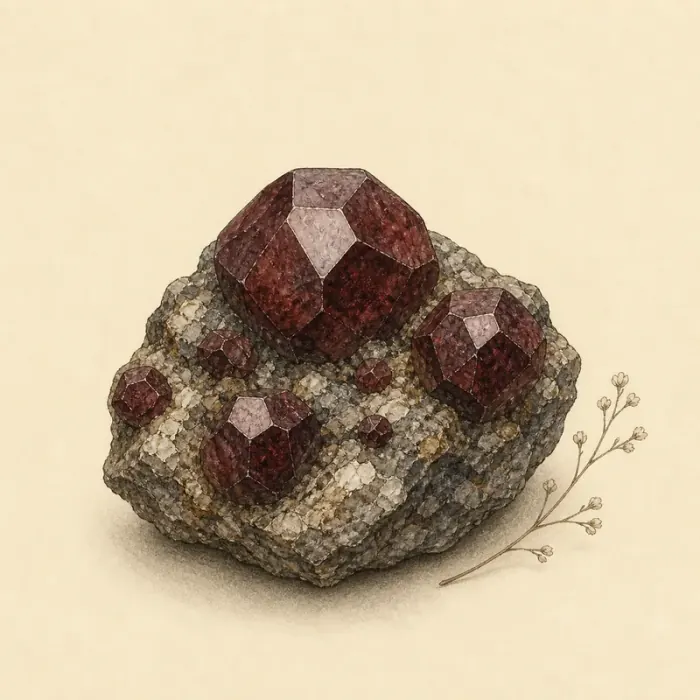
This guide uses Amethyst as the modern Aquarius stone because most of the sign falls in February, whose standardized monthly list includes Amethyst. Garnet comes from a separate, older stream of zodiac-gem associations, which varied by place and period. Garnet's tie to Aquarius is a separate tradition that predates the 1912 vote and was never absorbed into that official month list. The deep red stone tied in 1913 to friendship kept true, and January's birthstone in almost every old list.
Kunz's Aquarius verse names garnet, and our modern amethyst pairing comes from February's month list. For a personal ritual, use garnet to represent one concrete step and amethyst a question still open. This interpretation is ours. The old rhyme does not show that stones turn ideas into results or sustain physical energy.
Garnet reaches Aquarius twice over. It is the sign's older traditional stone, and it also holds January on the modern list, which covers the twelve Aquarius days that fall before February begins. The garnet guide sets out how tradition uses the stone, and how one sign ends up holding two of them at once.
- Garnet beads have been found in Egyptian jewelry dating to 3100 BCE, and in Sumerian artifacts from 2300 BCE.
- The Sutton Hoo burial goods, laid down in early seventh-century England, set thin slices of garnet over gold foil on the shoulder clasps and the sword fittings.
Interactive birthstone reading
Your Aquarius Stone Pairing
This Aquarius guide starts with its own zodiac result. Add a birthday to check another sign.
Aquarius: Amethyst and Garnet
Modern month-derived pairing and older zodiac tradition
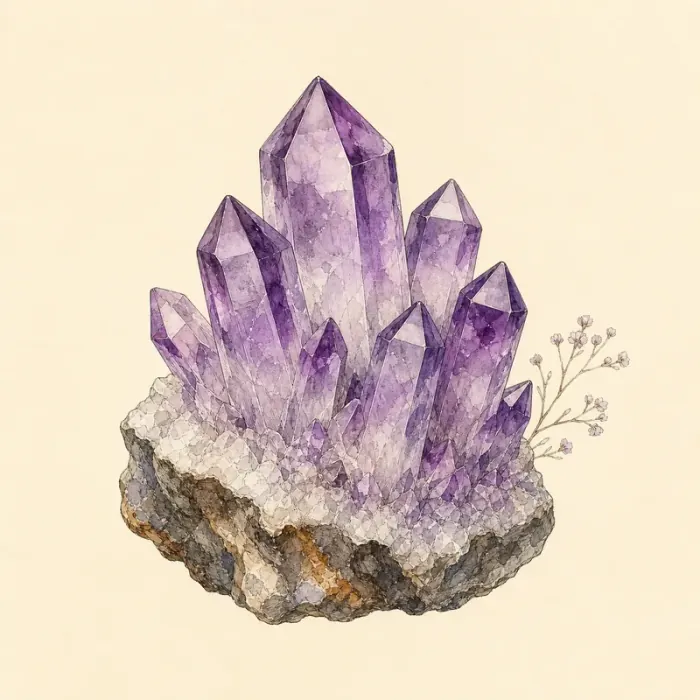
Modern stone
Amethyst
Traditional stone
Garnet
Amethyst is this guide's modern zodiac pairing, drawn from the month containing most Aquarius dates. Garnet comes from older zodiac-gem traditions. Both Amethyst and Garnet are cultural conventions here, and a birthday cannot prove either one.
Try a birthday
Choose a month and day to recalculate the local zodiac result. No birth year, time, or location is needed for this date-range lookup.
Or use today's date from this device to see the current zodiac result.
Choose a symbolic focus
Pick a supporting stone to explore one tradition-based prompt for Aquarius.
Why Labradorite and Fluorite for Aquarius?
Beyond the primary and traditional birthstones, two additional gems have strong associations with Aquarius in crystal healing practice. These are not standardized monthly birthstones, but they complement amethyst well in both color and traditional symbolism.

Labradorite
Labradorite's iridescent flash emerging from an unassuming gray surface mirrors Aquarius' hidden depths and flashes of brilliant innovation beneath a cool exterior.

Fluorite
Fluorite's rainbow of colors and cubic crystal structure appeal to Aquarius' love of intellectual systems, and its fluorescence symbolizes the sign's capacity to illuminate new ideas.
Quick Reference
Aquarius Birthstone
at a glance
Modern Stone
Amethyst
Traditional
Garnet
Chakra
Crown (Sahasrara)
Element
Air
Colors
Purple, Violet, Lilac
Supporting
Labradorite, Fluorite
birthstonemeaning.com
Infographic · share with credit
How Should You Wear the Aquarius Birthstone?
The best way to wear a birthstone is whatever way you will actually put it on every day. That said, some settings and combinations bring out amethyst’s best qualities better than others.
Chakra, planetary and energy notes in this section describe crystal-practice tradition, not a proven physical or medical effect.
- Choose an amethyst ring in an unconventional setting. A geometric, modern design suits Aquarius' innovative aesthetic better than traditional styles.
- Wear labradorite statement earrings that flash spectrolite colors with movement. They mirror Aquarius' surprising depths and make a distinctive conversation starter.
- Pair fluorite and amethyst on separate pieces if you like their colors together. During an Aquarius-themed brainstorm, let one mark an idea and the other a question to test.
Learn more: Amethyst Crystal Meaning & Healing Properties →
The Aquarius Birthstone Has an Older Story Than This Chart Shows
Garnet, listed here as the traditional Aquarius stone, comes from a named source with its own date boundary and its own quoted verse, which lives elsewhere on this site.
The traditional stone column is a dated citation, not folk memory
Garnet did not attach itself to Aquarius by general tradition. George Frederick Kunz, writing in 1913 as Tiffany's gem buyer, set it down in his zodiacal gems chapter with a short verse about cherishing friendship. That verse is already quoted in full on our January birthstone guide and on our garnet crystal guide, so look there if you want the exact wording.
Kunz's Aquarius runs later than the dates in circulation today
This page opens Aquarius on January 20 and closes it on February 18. Kunz's table opens the sign on January 21 and runs it to February 21, three extra days at the close. A reader born February 19 or 20 gets garnet from the 1913 tradition and gets handed to Pisces on most charts printed now.
January's month chart already claims the early Aquarius stretch
January birthdays within our Aquarius range have garnet by month. From February 1, the monthly stone becomes amethyst. Kunz's Aquarius entry continues to name garnet throughout its January 21 to February 21 range. The birthday month and the historical zodiac table remain separate ways to choose a stone.
On the modern stone above. February closes this sign, and February's amethyst is what fills that column here, by calendar and not by any older ruling. Pavitt gave amethyst to Pisces in 1914 and assigned Aquarius garnet and the zircon family. the twelve-sign comparison →
Aquarius Birthstone: Frequently Asked Questions
These common questions cover the Aquarius birthstone, its color, monthly overlap, and how people actually wear it. The sections above carry the lore and the correspondences behind the short answers.
What is the birthstone for Aquarius?
The modern birthstone for Aquarius (January 20 to February 18) is amethyst, the purple stone tied for two thousand years to a clear head and spiritual wisdom. The traditional birthstone is garnet, a deep red gem of devotion.
Why is amethyst the birthstone for Aquarius?
Amethyst has meant a clear head since the Greeks, who believed it kept a drinker sober. That is the Aquarius preference stated in wine terms, which is reason ahead of feeling every time. The purple was a color of royalty and of spiritual authority, and Aquarius has always behaved like a thought leader with no job title.
Does amethyst fade in sunlight?
Yes. Prolonged UV exposure can permanently fade amethyst's purple color. Store amethyst jewelry away from windows and avoid wearing it for extended periods in direct sunlight. The deeper the original color, the more resistant it tends to be.
Why does Aquarius share garnet with Capricorn?
Both signs were traditionally ruled by Saturn before Uranus was discovered. Garnet's endurance and structure connect to the Saturnian discipline shared by both signs, while amethyst connects to Aquarius' Uranian side: visionary, unconventional, and intellectually free.
Is the Aquarius birthstone the same as the February birthstone?
For most of Aquarius, yes. Amethyst is February's monthly birthstone and the modern Aquarius stone. But Aquarius starts January 20, so late-January births fall under January's garnet by month. Since garnet is also Aquarius's traditional stone, the two systems overlap neatly here.
What is Aquarius's lucky stone?
Beyond amethyst, Aquarius is often linked with labradorite and fluorite in crystal tradition, both tied to insight and original thinking. These lucky-stone ideas are cultural beliefs, so pick the one whose look and meaning appeal to you most.
How do I keep amethyst from fading?
Amethyst's purple can lighten permanently with long UV exposure, so keep it out of direct sunlight and off a sunny windowsill. Store it in a pouch or box when not worn. Everyday indoor wear is fine; it is prolonged, direct sun that causes the fading.
Aquarius does best with amethyst in an unconventional, geometric setting that matches the sign's taste. A garnet piece grounds all that visionary energy in something warm and solid. Keep the amethyst out of direct sun and off a sunny windowsill, because the purple fades and it does not come back. The clear-headedness the Greeks credited it with belongs to legend. Choose a design as original as the person, and store it in the dark.
Where This Page's Aquarius Claims Come From
Both the stone and the date question trace to the same 1913 chapter; the full verse is kept on the January and garnet guides to avoid repeating it site-wide.
- Garnet as the traditional Aquarius stone
Kunz 1913, p.345-347, ZODIACAL GEMS
Kunz's Aquarius entry names garnet, with a short verse praising a true friendship kept warm; see our January birthstone guide and our garnet crystal guide for the full quotation. - Kunz's own boundary for the sign
Kunz 1913, p.345-347, ZODIACAL GEMS
Kunz's table runs Aquarius from January 21 to February 21, three days later at the close than the January 20 to February 18 span printed on most modern charts.
References
- Amethyst, Gemological Institute of America (GIA)
- Amethyst, International Gem Society
- perseus.tufts.edu/hopper/text?doc=Perseus:text:1999.02.0137:book=37:chapter=40
- gutenberg.org/files/57978/57978-h/57978-h.htm
- Garnet, Gemological Institute of America (GIA)
- Garnet, International Gem Society
- gutenberg.org/files/57978/57978-h/57978-h.htm
“The safest cleaning methods are also the easiest.”

 ?
?