 BirthstoneMeaning
 Aries Birthstone
 Taurus Birthstone
 Gemini Birthstone
 Cancer Birthstone
 Leo Birthstone
 Virgo Birthstone
 Libra Birthstone
 Scorpio Birthstone
 Sagittarius Birthstone
 Capricorn Birthstone
 Aquarius Birthstone
 Pisces Birthstone
 Peridot Meaning
 Garnet Meaning
 Amethyst Meaning
 Aquamarine Meaning
 Diamond Meaning
 Emerald Meaning
 Pearl Meaning
 Ruby Meaning
 Blue Sapphire Meaning
 Opal Meaning
 Topaz Meaning
 Turquoise Meaning
 Moonstone Meaning
 Tourmaline Meaning
 Citrine Meaning
 Tanzanite Meaning
 Alexandrite Meaning
 Spinel Meaning
 Sardonyx Meaning
 Zircon Meaning
 Lapis Lazuli Meaning
 Rose Quartz Meaning
 Onyx Meaning
 Labradorite Meaning
 Malachite Meaning
 Jade Meaning
 Agate Meaning
 Carnelian Meaning
 Clear Quartz Meaning
 Black Tourmaline Meaning
 Smoky Quartz Meaning
 Sodalite Meaning
 Obsidian Meaning
 Fluorite Meaning
 Selenite Meaning
 Hematite Meaning
 Howlite Meaning
 September Birthstone
The Crystal of the Day, and How This Page Picks It
This is tradition and practice, not medical, financial, or life advice.
A crystal of the day is simply one stone picked to sit with for twenty-four hours. This page runs a fixed thirty-seven-stone rotation and advances it once per calendar day, so the card below changes each morning. Every entry names the chakra, element and zodiac signs tradition assigns to that stone.

Today's Stone

Agate
Steady persuasion
An eleventh-century bishop wrote that this banded stone made its wearer more agreeable and persuasive, a talisman for winning people over gently. Crystal tradition keeps that reading today, treating agate as a stone for staying grounded while you make your case.
Practitioners traditionally hold it before a conversation where they need to be heard without raising their voice.
Traditional Correspondences
- Chakra
- Throat (Vishuddha)
- Element
- Earth
- Zodiac
- Gemini
- Colors
- Brown, Red, Orange, Blue, Green, Gray, White, Black
Today's Stone

Alexandrite
Adaptability
Named for a future tsar and famous for shifting from green to red under different light, alexandrite built its whole reputation on that duality. Crystal folklore treats the color change as a lesson in adjusting to whatever light a day actually offers, not the light you expected.
Practitioners traditionally hold it up to a changed light source before deciding how to read the day.
Traditional Correspondences
- Chakra
- Third Eye (Ajna)
- Element
- Air
- Zodiac
- Gemini
- Colors
- Green, Red, Yellowish-green, Purplish-red
Today's Stone
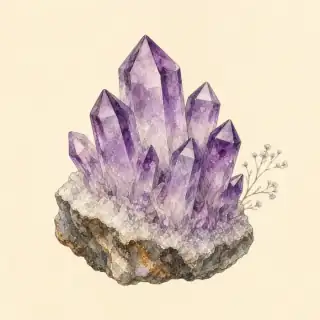
Amethyst
Clear thinking
The Greek world made this purple stone the sober one, and the name descends from a word meaning un-intoxicated. Crystal healing practice inherited that association wholesale and treats amethyst as the stone for a clear head, traditionally reached for on days that need judgment more than energy.
Practitioners traditionally keep it in view while working through a decision.
Traditional Correspondences
- Chakra
- Crown (Sahasrara)
- Element
- Air
- Zodiac
- Aquarius, Pisces
- Colors
- Purple, Violet, Lilac, Deep purple
Today's Stone
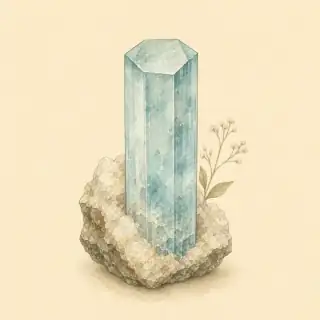
Aquamarine
Steady nerves
Sailors carried this pale blue stone as a charm against rough water, and the link to calm crossings survives intact in modern crystal writing. Tradition now applies it to any crossing at all, and practitioners reach for it before speaking under pressure.
Traditional advice is to hold it briefly before a difficult conversation.
Traditional Correspondences
- Chakra
- Throat (Vishuddha)
- Element
- Water
- Zodiac
- Pisces, Aries
- Colors
- Light blue, Blue-green, Deep blue
Today's Stone
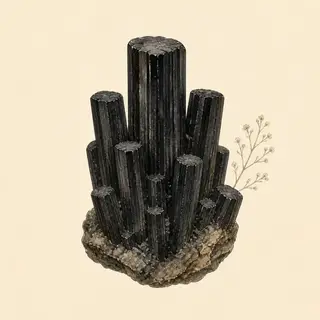
Black Tourmaline
Boundaries
Chinese mandarins once wore specific stones to signal official rank, and this dense, iron-rich stone earned a place in that system. Crystal practice now treats it as a grounding talisman for blocking negative energy and holding a firm boundary.
Practitioners traditionally keep a piece near an entryway or carry one on days that call for extra protection.
Traditional Correspondences
- Chakra
- Root (Muladhara)
- Element
- Earth
- Zodiac
- Capricorn
- Colors
- Black
Today's Stone
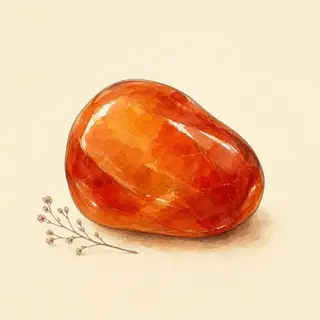
Carnelian
Bold speech
A revered Shia imam once claimed carnelian would grant any wish of the person wearing it, an unusually unconditional promise for a talisman. Crystal tradition narrowed that legend down to something more specific: courage, motivation, and the nerve to speak up.
Practitioners traditionally hold it before a moment that calls for a bolder voice than usual.
Traditional Correspondences
- Chakra
- Sacral (Svadhisthana)
- Element
- Fire
- Zodiac
- Aries
- Colors
- Orange, Reddish-orange, Deep red, Brownish-red
Today's Stone
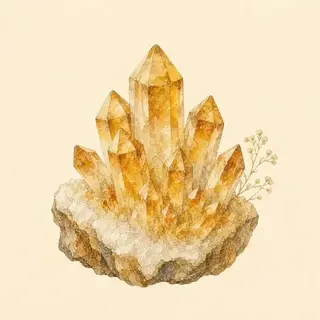
Citrine
Optimism
Most citrine sold today began life as amethyst, heat-treated until the purple turned gold. Crystal tradition keeps the sunny reputation regardless of which process produced the color in your hand, and reads the yellow stone as one for optimism and quiet abundance.
Practitioners traditionally set it near a workspace on days that call for a steadier mood.
Traditional Correspondences
- Chakra
- Solar Plexus (Manipura)
- Element
- Fire
- Zodiac
- Leo
- Colors
- Yellow, Golden, Orange-brown, Honey
Today's Stone
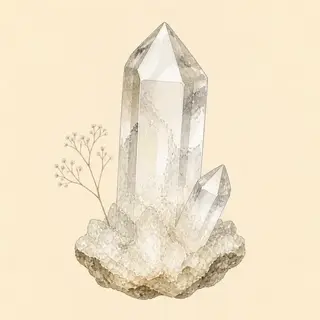
Clear Quartz
Sharpened focus
A fifth-century church council once ruled against believing a spirit lived inside a reflective stone, a superstition serious enough to require penance. Crystal practice inherited a gentler version of that old belief, treating clear quartz as a lens for amplified focus and vision.
Practitioners traditionally hold it during quiet, focused work to sharpen whatever intention they are setting.
Traditional Correspondences
- Chakra
- Crown (Sahasrara)
- Element
- Air
- Zodiac
- Aquarius
- Colors
- Colorless, Transparent, White
Today's Stone
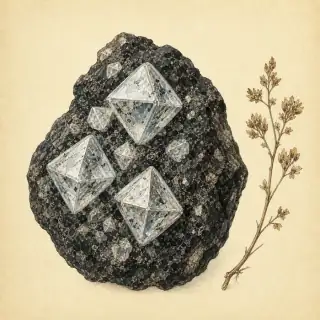
Diamond
Commitment
Diamond is the stone people hand over as a promise, and its tradition runs on endurance more than on mood. Lore treats it as the stone of arrangements meant to outlast the people who made them.
In crystal healing practice it is worn on days a long commitment is made or renewed.
Traditional Correspondences
- Chakra
- Crown (Sahasrara)
- Element
- Fire / Storm
- Zodiac
- Aries
- Colors
- Colorless, Yellow, Brown, Blue, Pink, Green, Black
Today's Stone
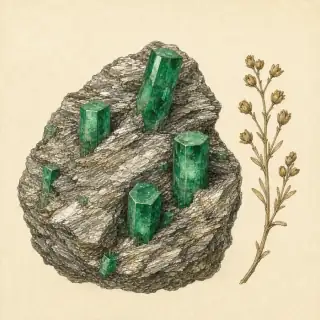
Emerald
Honesty
Emerald has an old reputation as a truth stone, and medieval lapidaries claimed it would crack if the wearer lied. The cracking part has no takers today, though the traditional tie between the green stone and plain speech stayed in the record.
Traditionally it is set out on days that call for saying something directly.
Traditional Correspondences
- Chakra
- Heart (Anahata)
- Element
- Earth
- Zodiac
- Taurus, Gemini
- Colors
- Green, Bluish-green, Yellowish-green
Today's Stone
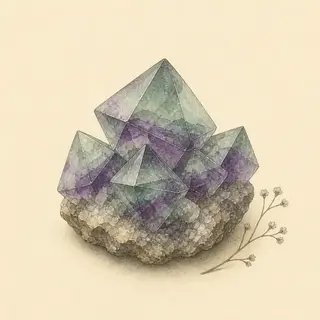
Fluorite
Clear study
Kunz's 1913 book records a nineteenth-century test on Frederike Hauffe, the "Seeress of Prevorst," in which fluorspar laid in her hand was said to relax her muscles while granite and flint did nothing. Crystal healing turned that trance story around, and practitioners now call fluorite a stone for an organized, studying mind.
Practitioners traditionally set a piece beside a stack of reading or an unsolved problem before the work begins.
Traditional Correspondences
- Chakra
- Third Eye (Ajna)
- Element
- Air
- Zodiac
- Pisces
- Colors
- Purple, Green, Blue, Yellow, Pink, Colorless, Rainbow
Today's Stone
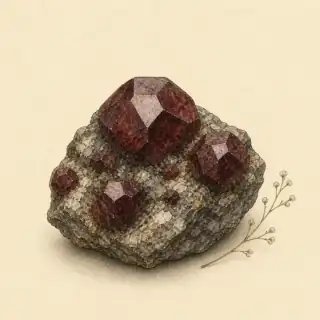
Garnet
Momentum
Deep red garnet traveled with people. It turns up in Roman signet rings and in Anglo-Saxon grave goods a long way from home, and crystal tradition kept that traveling association, reading the stone as one for getting moving.
Believers keep one in a pocket on days that start slowly.
Traditional Correspondences
- Chakra
- Root (Muladhara)
- Element
- Fire
- Zodiac
- Capricorn
- Colors
- Red, Orange, Green, Purple, Brown, Black
Today's Stone
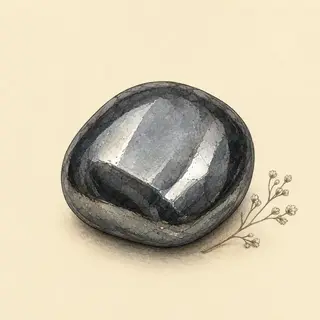
Hematite
Standing firm
Pliny passed along an older writer's claim that this iron ore, carried as a talisman, won a favorable hearing from kings and a good outcome in lawsuits, and ancient soldiers were said to rub it on their skin before battle. Crystal healing keeps that martial thread and reads the heavy stone as an anchor for anxious days.
Believers keep a tumbled piece in a pocket on a day that promises conflict or a hard meeting.
Traditional Correspondences
- Chakra
- Root (Muladhara)
- Element
- Earth
- Zodiac
- Aries
- Colors
- Metallic gray, Black, Reddish-brown, Silver
Today's Stone
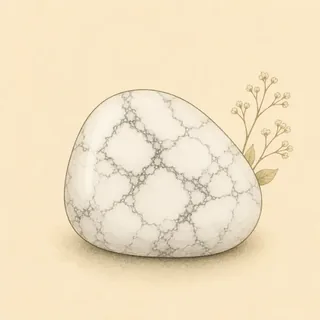
Howlite
Cooling down
Howlite has no ancient lore to inherit. Gypsum miners in Nova Scotia flagged its white nodules as a nuisance, and chemist Henry How identified it as a new mineral in 1868. Its whole tradition is modern: crystal practitioners treat it as a stone for patience and a quieter mind.
Practitioners traditionally leave a piece on the nightstand when racing thoughts keep sleep away.
Traditional Correspondences
- Chakra
- Crown (Sahasrara)
- Element
- Air
- Zodiac
- Gemini
- Colors
- White with gray veins, Chalky white
Today's Stone
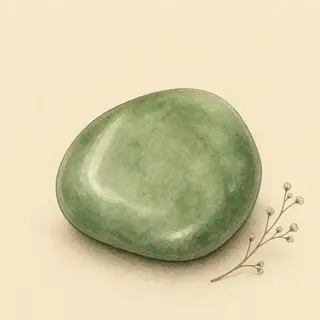
Jade
Family continuity
The name jade actually covers two different stones, nephrite and jadeite, and Chinese tradition folded both into centuries of use as a stone for luck and family continuity. Crystal practice keeps that lineage alive today, treating a piece of jade as something to inherit and hand down within a family.
Practitioners traditionally give a piece as a gift marking a marriage, birth, or coming of age.
Traditional Correspondences
- Chakra
- Sacral (Svadhisthana)
- Element
- Earth
- Zodiac
- Virgo
- Colors
- Green, White, Lavender, Yellow, Black, Orange
Today's Stone
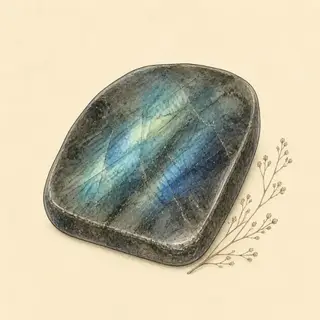
Labradorite
Hidden depths
A 1913 survey recorded an old Siam custom pairing a specific color and stone with each day of the week, no exceptions allowed. Crystal folklore treats labradorite the same deliberate way, as a stone of hidden revelation best approached slowly and studied closely.
Practitioners traditionally view it at a slow-turning angle before a session of quiet reflection.
Traditional Correspondences
- Chakra
- Crown (Sahasrara)
- Element
- Water
- Zodiac
- Scorpio
- Colors
- Gray with blue flash, Green flash, Gold flash, Spectrolite (full spectrum)
Today's Stone
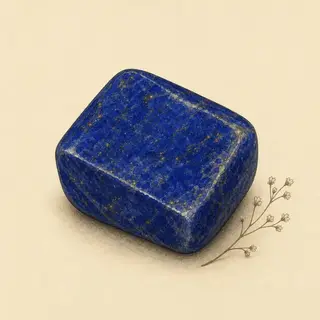
Lapis Lazuli
Ancient authority
Lapis lazuli got counterfeited in antiquity too, with dyed glass sold as the real stone to buyers who wanted its deep blue and could not get it. Crystal tradition has long assigned lapis lazuli to mental clarity, intuition, and a kind of borrowed royal authority.
Practitioners traditionally hold it while preparing to speak on a subject they need to sound certain about.
Traditional Correspondences
- Chakra
- Third Eye (Ajna)
- Element
- Air
- Zodiac
- Sagittarius
- Colors
- Deep blue, Royal blue, Blue with gold pyrite flecks
Today's Stone
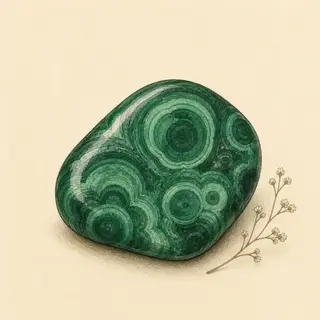
Malachite
Early warning
German folklore held that malachite would crack on its own to warn its owner that danger was already close, a reactive kind of protection. Crystal practice keeps a gentler version of that old belief today, treating malachite as a stone for transformation and heart-centered work.
Practitioners traditionally check a piece for new cracks as a small daily ritual of attention.
Traditional Correspondences
- Chakra
- Heart (Anahata)
- Element
- Earth
- Zodiac
- Capricorn
- Colors
- Green, Dark green, Banded green
Today's Stone
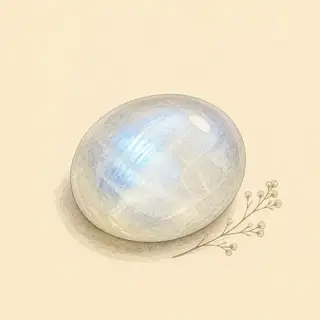
Moonstone
Intuition
Romans believed moonstone held solidified moonlight and the image of the goddess Diana inside it, a belief that outlasted the empire by a thousand years. Crystal tradition carried the lunar association forward and reads the stone as one for emotional insight tied to the moon's own phases.
Practitioners traditionally keep it near the bed during a full moon for reflective dreaming.
Traditional Correspondences
- Chakra
- Sacral (Svadhisthana)
- Element
- Water
- Zodiac
- Cancer
- Colors
- White, Blue sheen, Peach, Gray, Rainbow
Today's Stone
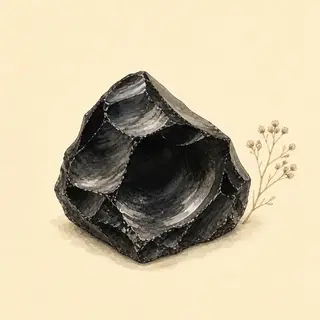
Obsidian
Facing the hidden
The Elizabethan mathematician John Dee used a polished Mexican obsidian mirror for his experiments in crystal vision, one of several such mirrors Kunz traced into European collections. Crystal tradition borrows that scrying history and treats the dark volcanic glass as a surface for looking at what you usually avoid.
Practitioners traditionally hold it for a few minutes while writing down one worry they have been sidestepping.
Traditional Correspondences
- Chakra
- Root (Muladhara)
- Element
- Earth
- Zodiac
- Scorpio
- Colors
- Black, Mahogany, Rainbow, Snowflake, Gold sheen
Today's Stone

Onyx
Quiet strength
Historical tallies once found onyx named for July more often than any rival stone, though the modern calendar still handed the month to ruby. Crystal tradition treats onyx as a grounding stone for strength and protection regardless of which calendar won.
Practitioners traditionally carry a piece on days that call for steady focus under pressure.
Traditional Correspondences
- Chakra
- Root (Muladhara)
- Element
- Earth
- Zodiac
- Leo
- Colors
- Black, Black and white banded, Brown and white
Today's Stone
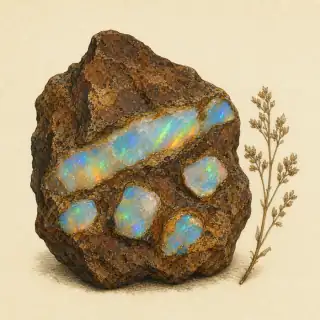
Opal
Imagination
No two opals flash the same colors, and the folklore built around the stone follows the material: it is the unpredictable member of the set. Victorian superstition briefly cast it as unlucky, a reputation the trade then spent decades dismantling.
It is traditionally chosen for days given over to creative work.
Traditional Correspondences
- Chakra
- Crown (Sahasrara)
- Element
- Water
- Zodiac
- Libra, Scorpio
- Colors
- White with play-of-color, Black with play-of-color, Fire (orange-red), Crystal, Boulder
Today's Stone
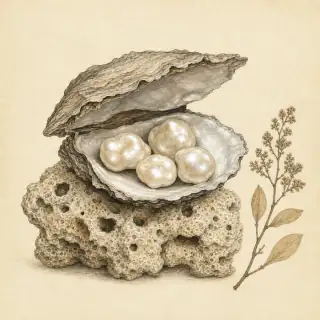
Pearl
Patience
The only entry here grown inside a living animal, pearl takes years to arrive and asks to be handled gently ever after. Tradition reads that slowness as the whole lesson and assigns the stone to patience.
In lore it is worn on days when waiting is the work.
Traditional Correspondences
- Chakra
- Third Eye (Ajna)
- Element
- Water
- Zodiac
- Gemini, Cancer
- Colors
- White, Cream, Pink, Gold, Black, Gray, Lavender
Today's Stone
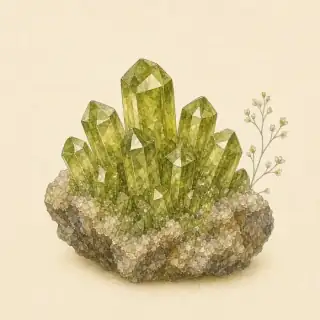
Peridot
Lightness
Egyptians called peridot the gem of the sun, and its yellow-green stays light in every piece you meet. Crystal healing practice reads that steady color as an even, unburdened mood.
Practitioners traditionally wear it when they want the day to feel lighter.
Traditional Correspondences
- Chakra
- Solar Plexus & Heart
- Element
- Earth
- Zodiac
- Leo, Virgo
- Colors
- Olive green, Yellow-green, Lime green
Today's Stone
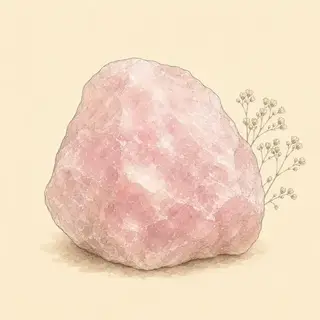
Rose Quartz
Unconditional love
Nineteenth-century jewelers engraved this pale pink stone with sentimental phrases meant to last a lifetime, and the romantic reputation never faded. Crystal tradition treats rose quartz as the primary stone for matters of the heart, from self-compassion to unconditional love.
Practitioners traditionally keep a piece somewhere visible on days that call for extra gentleness.
Traditional Correspondences
- Chakra
- Heart (Anahata)
- Element
- Water
- Zodiac
- Taurus
- Colors
- Pink, Rose, Pale pink, Lavender-pink
Today's Stone
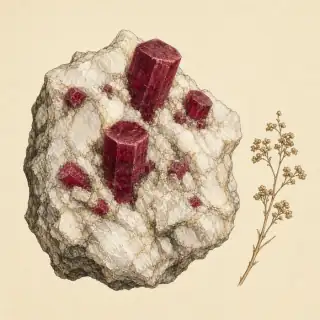
Ruby
Nerve
Sanskrit sources place ruby at the top of the gem hierarchy, and the tradition that grew around it is about nerve: heat, appetite, a willingness to be looked at. By reputation it is the loudest stone in this rotation.
Lore assigns it to days that call for boldness.
Traditional Correspondences
- Chakra
- Heart (Anahata)
- Element
- Fire
- Zodiac
- Cancer, Leo
- Colors
- Red, Pinkish-red, Purplish-red, Pigeon blood red
Today's Stone
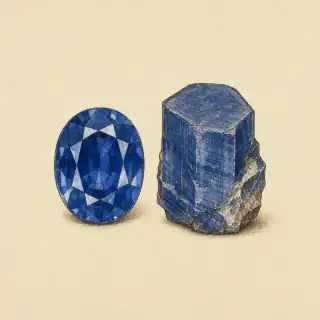
Sapphire
Judgment
Medieval clergy wore sapphire in their rings, and the traditional association with sober judgment comes straight from there. Crystal writing today still frames it as the stone of the long view and the slept-on decision.
Traditionally it is chosen when a decision should be left overnight.
Traditional Correspondences
- Chakra
- Third Eye (Ajna)
- Element
- Air
- Zodiac
- Virgo, Libra
- Colors
- Blue, Pink, Yellow, Green, Orange, Padparadscha, Colorless
Today's Stone

Sardonyx
Steadiness
Roman general Scipio wore a sardonyx signet ring and was said to be invisible to his enemies while it was on his hand. Crystal lore kept the protective reputation long after the invisibility claim quietly dropped out of it.
Practitioners traditionally wear it as a signet or seal on days that call for steady nerve.
Traditional Correspondences
- Chakra
- Throat (Vishuddha)
- Element
- Earth
- Zodiac
- Capricorn
- Colors
- Reddish-brown and white bands, Orange and white, Brown and cream
Today's Stone
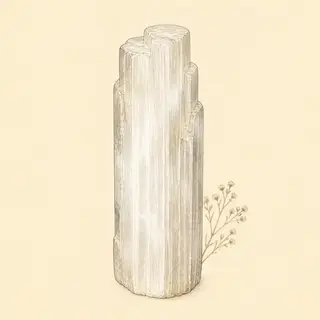
Selenite
Lunar calm
In the sixteenth century the French physician Antoine Mizauld borrowed a friend's stone, which Kunz's account calls selenite and moonstone almost interchangeably, and watched it for a full lunar month to test the claim that a mark on it waxed and waned with the moon. Crystal healing kept the moon link and reads the pale mineral as a stone for clearing mental clutter.
Practitioners traditionally set a piece nearby on days when outside noise and other people's moods feel overwhelming.
Traditional Correspondences
- Chakra
- Crown (Sahasrara)
- Element
- Air
- Zodiac
- Cancer
- Colors
- Colorless, White, Pearly, Golden
Today's Stone
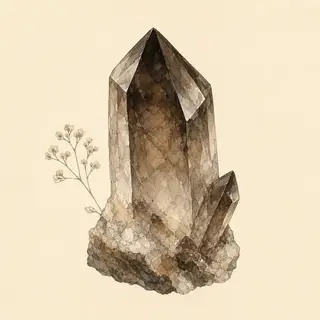
Smoky Quartz
Grounded calm
A historical account dates a formal scrying session to a specific night in December 1581, held before witnesses who described a spirit named in full. Crystal folklore treats smoky quartz as a grounding stone for absorbing stress and steadying a scattered mind.
Practitioners traditionally hold a piece during moments that call for calm over urgency.
Traditional Correspondences
- Chakra
- Solar Plexus (Manipura)
- Element
- Earth
- Zodiac
- Pisces
- Colors
- Light brown, Smoky gray, Dark brown, Nearly black
Today's Stone
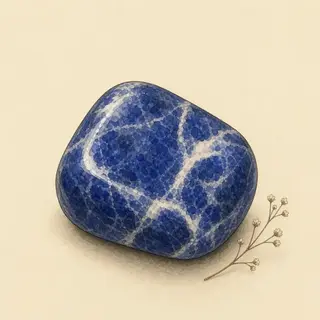
Sodalite
Honest communication
Canada's own national survey, taken in 1913, named sodalite as the country's characteristic gem and then said nothing else about it anywhere in the book, a strikingly short entry for a national symbol. Crystal practice fills that gap with a tradition of its own: sodalite for rational thought and honest communication.
Practitioners traditionally hold a piece before a conversation that calls for plain, direct wording.
Traditional Correspondences
- Chakra
- Throat (Vishuddha)
- Element
- Water
- Zodiac
- Libra
- Colors
- Royal blue, Blue with white veining, Gray-blue, Violet-blue
Today's Stone

Spinel
Reassessment
For centuries, red spinel was sold and worn as ruby, including two famous stones still sitting in British royal jewels. Crystal tradition now treats spinel as the stone of being correctly seen after being mistaken for something else.
Practitioners traditionally reach for it on days spent redoing work that was misjudged the first time.
Traditional Correspondences
- Chakra
- Root (Muladhara)
- Element
- Earth
- Zodiac
- Aries
- Colors
- Red, Pink, Blue, Lavender, Orange, Black
Today's Stone

Tanzanite
Sudden Clarity
A Maasai herder found the first blue crystals in Tanzania in 1967, and Tiffany brought the stone to market only a year later. Crystal tradition reads that speed as symbolic, treating tanzanite as the stone for insight that arrives all at once.
Practitioners traditionally hold it during a decision that needs to be made quickly, not slept on.
Traditional Correspondences
- Chakra
- Third Eye and Throat
- Element
- Air
- Zodiac
- Sagittarius
- Colors
- Violet-blue, Blue-violet, Purple
Today's Stone
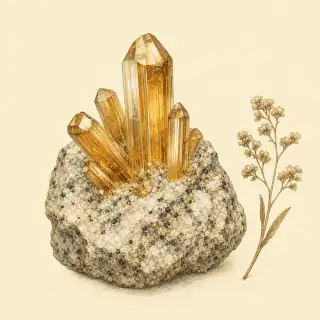
Topaz
Confidence
Golden topaz was linked in classical lore to the sun and to strength returning after illness. That reading survives as a tradition about confidence rebuilt slowly, one ordinary day at a time.
It is traditionally worn while recovering from a setback.
Traditional Correspondences
- Chakra
- Throat (Blue) / Solar Plexus (Golden)
- Element
- Fire
- Zodiac
- Scorpio, Sagittarius
- Colors
- Colorless, Blue, Yellow, Orange (Imperial), Pink
Today's Stone

Tourmaline
Self-Expression
A single tourmaline crystal can shift color along its own length, and crystal tradition reads that range as permission to hold more than one mood at once. Dutch traders carried the stone out of Sri Lanka in the early 1700s under a Sinhalese name meaning mixed-color stone.
Practitioners traditionally pick the color zone closest to hand for the feeling they want that day.
Traditional Correspondences
- Chakra
- Heart (Anahata) and Root (Muladhara)
- Element
- Earth
- Zodiac
- Libra
- Colors
- Pink, Green, Blue (Paraíba), Watermelon, Red (Rubellite), Yellow, Black
Today's Stone
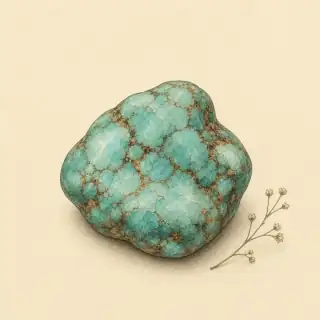
Turquoise
Protection
Few stones were used for protection across so many separate cultures. Persian, Egyptian and Ancestral Puebloan traditions all attached turquoise to safe passage, making the protective reading the most consistently attested tradition on this list.
In crystal healing practice it goes on before travel.
Traditional Correspondences
- Chakra
- Throat (Vishuddha)
- Element
- Earth
- Zodiac
- Sagittarius, Capricorn
- Colors
- Sky blue, Robin's egg blue, Green-blue, Blue with brown matrix
Today's Stone

Zircon
Endurance
Geologists date one zircon crystal from Australia's Jack Hills to 4.4 billion years, the oldest known material on Earth's surface. Crystal tradition reads that endurance as a lesson in outlasting whatever a single day throws at you.
Practitioners traditionally keep it nearby on days that call for patience measured in years, not hours.
Traditional Correspondences
- Chakra
- Crown (Sahasrara)
- Element
- Earth
- Zodiac
- Pisces
- Colors
- Blue, Colorless, Yellow, Orange, Red, Green, Brown
With JavaScript switched off, this card stays on agate, the first entry in the rotation. The full order is in the table below, so you can count forward to today's stone by hand.
Everything on the meaning side of this page is documented belief. No controlled study has shown that holding, wearing or looking at a stone changes mood, health, luck or judgment. The tradition is recorded, dated and clearly labeled as tradition.
How Is the Crystal of the Day Chosen?
Kunz opened his 1913 lapidary with a table that had no shuffle in it: a fixed stone for each of the seven days, unchanged from the week before and the week after it. This page borrows the shape of that idea and swaps in arithmetic for a calendar. Count the days since 1 January 1970, divide by thirty-seven, and the remainder tells you where the pointer sits among the thirty-seven stones below. Position zero is agate, position thirty-six is zircon, and the pointer moves one notch at every local midnight.
Nothing about you feeds this. A reader in Auckland gets the same stone as a reader in Los Angeles on the same calendar date, they just meet it about eighteen hours apart, because your device supplies the date and nothing else. The rotation runs the same for every visitor on the same day, the way a Sunday sunstone was the same stone for every reader of a Siamese wardrobe rule long before browsers existed.
Before your device's clock gets consulted, the card in front of you shows agate. That is what a search engine reads, and what a visitor with scripts turned off sees, and the other thirty-six stones sit fully written out further down the same page, so none of this needs a script to be read.
What Do You Do With a Crystal of the Day?
Picture 7 a.m., coffee not made yet, and a stone already sitting on the counter from last night. That is the whole ritual on record: pick the day's stone up, read the one line of tradition tied to it, then carry it in a pocket or set it where your eyes land twenty times before lunch. Some people copy the stone's one-word theme to the top of a notebook page and let it set the day's agenda before the day has said anything back.
Described without the stone, that is a five-minute journaling habit with a paperweight. In crystal healing practice, the paperweight gets the credit. The prompt is real, the stone is real, and the wire connecting the two is a belief with a documented paper trail behind it, not a demonstrated mechanism. This page keeps stating that split, because it is the whole difference between the rotation and a mood ring.
Which Thirty-Seven Stones Are in the Rotation?
Thirty-seven stones, alphabetical from agate to zircon, each one back at your door roughly ten times a year. Kunz needed only seven slots for his weekday calendar in 1913; this rotation needs thirty-seven, because that is exactly how many stones on this site currently have a full guide behind them, chakra, element, care, and citations included. Sixty-four stones sit in the wider reference. Send a card to one of the other twenty-seven and it lands on a page that does not exist yet, so the rotation stops at thirty-seven on purpose.
| Position | Stone | Traditional Theme | Chakra | Guide |
|---|---|---|---|---|
| 0 | Agate | Steady persuasion | Throat (Vishuddha) | Read the agate guide |
| 1 | Alexandrite | Adaptability | Third Eye (Ajna) | Read the alexandrite guide |
| 2 | Amethyst | Clear thinking | Crown (Sahasrara) | Read the full amethyst guide |
| 3 | Aquamarine | Steady nerves | Throat (Vishuddha) | Open the aquamarine guide |
| 4 | Black Tourmaline | Boundaries | Root (Muladhara) | Read the black tourmaline guide |
| 5 | Carnelian | Bold speech | Sacral (Svadhisthana) | Read the carnelian guide |
| 6 | Citrine | Optimism | Solar Plexus (Manipura) | Open the citrine guide |
| 7 | Clear Quartz | Sharpened focus | Crown (Sahasrara) | Read the clear quartz guide |
| 8 | Diamond | Commitment | Crown (Sahasrara) | See what diamond is believed to mean |
| 9 | Emerald | Honesty | Heart (Anahata) | Read the emerald guide |
| 10 | Fluorite | Clear study | Third Eye (Ajna) | Open the fluorite guide |
| 11 | Garnet | Momentum | Root (Muladhara) | Look up garnet's traditions |
| 12 | Hematite | Standing firm | Root (Muladhara) | See the hematite traditions |
| 13 | Howlite | Cooling down | Crown (Sahasrara) | Read about howlite |
| 14 | Jade | Family continuity | Sacral (Svadhisthana) | Read the jade guide |
| 15 | Labradorite | Hidden depths | Crown (Sahasrara) | Read the labradorite guide |
| 16 | Lapis Lazuli | Ancient authority | Third Eye (Ajna) | Read the lapis lazuli guide |
| 17 | Malachite | Early warning | Heart (Anahata) | Read the malachite guide |
| 18 | Moonstone | Intuition | Sacral (Svadhisthana) | Read the moonstone guide |
| 19 | Obsidian | Facing the hidden | Root (Muladhara) | Open the obsidian guide |
| 20 | Onyx | Quiet strength | Root (Muladhara) | Read the onyx guide |
| 21 | Opal | Imagination | Crown (Sahasrara) | Read about opal's play of color |
| 22 | Pearl | Patience | Third Eye (Ajna) | Open the pearl guide |
| 23 | Peridot | Lightness | Solar Plexus & Heart | Open the peridot guide |
| 24 | Rose Quartz | Unconditional love | Heart (Anahata) | Read the rose quartz guide |
| 25 | Ruby | Nerve | Heart (Anahata) | Read the ruby guide |
| 26 | Sapphire | Judgment | Third Eye (Ajna) | Open the sapphire guide |
| 27 | Sardonyx | Steadiness | Throat (Vishuddha) | Open the sardonyx guide |
| 28 | Selenite | Lunar calm | Crown (Sahasrara) | Look up selenite's traditions |
| 29 | Smoky Quartz | Grounded calm | Solar Plexus (Manipura) | Read the smoky quartz guide |
| 30 | Sodalite | Honest communication | Throat (Vishuddha) | Read the sodalite guide |
| 31 | Spinel | Reassessment | Root (Muladhara) | Read the spinel guide |
| 32 | Tanzanite | Sudden Clarity | Third Eye and Throat | Open the tanzanite guide |
| 33 | Topaz | Confidence | Throat (Blue) / Solar Plexus (Golden) | Read what topaz is said to mean |
| 34 | Tourmaline | Self-Expression | Heart (Anahata) and Root (Muladhara) | Read the tourmaline guide |
| 35 | Turquoise | Protection | Throat (Vishuddha) | See turquoise across cultures |
| 36 | Zircon | Endurance | Crown (Sahasrara) | Open the zircon guide |
Does a Daily Crystal Have Any Proven Effect?
This rotation offers symbolic prompts for reflection. It does not measure or predict changes in mood, health, luck, or decisions, and it should not be used to choose treatment.
What survives is a paper trail: Kunz's 1913 weekday table, a Roman amulet from decades before it that assigned an animal, not a gem, to each day, and a chelonia legend from 1915 that gated a stone's one-day power behind a full or new moon. Read each daily card as folklore with a citation attached, and check the correspondences against the thirty-seven full guides they are drawn from.
Crystal of the day at a glance
- Also known as
- Kunz's 'Phenomenal Gems for the Days of the Week' (1913)
- Tradition
- European and Siamese lapidary custom, recorded by George Frederick Kunz in 1913
- Chakra / element
- Not part of Kunz's weekday table. The chakra and element tags on this page's thirty-seven-stone rotation come from separate, later crystal-healing correspondences.
- In one line
- One fixed stone for every day of the week, filled once in 1913 and never reshuffled since.
- Try this first
- Match today's rotation pick against Kunz's weekday stone for the same day and see if they agree.
- Do not
- Salt or long soaking on pearl and turquoise, both currently in the thirty-seven-stone rotation.
Kunz 1913, p.335
Three Mornings, Three Reasons to Check the Card
The rotation is arithmetic, not judgment, but people reach for it at oddly specific moments.
6:50 a.m., alarm dead, no plan for the day yet
You open the page before coffee, see whichever stone the remainder handed you, and copy its one-word theme, steady nerves for aquamarine, to the top of a blank page. The stone did not choose the theme. Position zero to thirty-six decided that months ago; today just happened to land there.
The night before a hard conversation
Aquamarine's card says to hold it briefly before speaking under pressure, a sailor's-charm carryover from stones once kept against rough water. You are not sailing anywhere. You are rehearsing a sentence in the mirror, and the stone in your pocket is doing the same job a stress ball would.
A birthday that lands on someone else's rotation day
Your birth month stone might not be the one the calendar hands you today. Both systems are correct on their own terms. The daily rotation is not a birthstone lookup, and it says so on this same page in plain words.
Reloading the page twice in one afternoon out of habit
Nothing changes until your local midnight, so the second reload returns the same card as the first. If the stone looks different, the clock moved, not the algorithm.
A Locked Weekday Table, Not a Daily Draw
Two places where the old lapidary record and a modern daily pick pull in different directions.
Kunz's Seven Slots Never Moved
Kunz's 1913 lapidary (p.335) printed a table with no dice anywhere near it: Sunday took sunstone, Monday moonstone, Tuesday star sapphire, Wednesday star ruby, Thursday cat's-eye, Friday alexandrite, Saturday labradorite, seven fixed slots, filled once. He records that Siam ran the same rule through the wardrobe: deep red silk and rubies for Sunday, white cloth and moonstones for Monday. Modern crystal practitioners treat a fresh, unpredictable pick each morning as a descendant of that 1913 table, but nothing about Kunz's seven slots was ever unpredictable. He wrote down a calendar, not an oracle.
One Day of Power, Earned Under a Precise Moon
Kunz's 1915 sequel (p.170) describes the chelonia, reputed to be the eye of an Indian tortoise, granting its bearer one full day of divination, but only after it was bathed in honey and placed in the mouth at the exact moment the moon turned full or new. It is a narrow, ritual-gated window, earned once on cue, not offered fresh on tap every morning at whatever hour you happen to open a page. A modern daily pick asks for zero preparation and zero lunar timing, so citing this stone as its ancestor overstates how easily the old sources say a one-day gift like this was ever earned.
What Else Do People Ask About Daily Crystals?
- Does the crystal of the day change at midnight?
- It changes when your device's calendar date changes, so at your local midnight. The page reads that date once, after it has loaded, and opens the matching card. Reloading during the day returns the same stone; reloading after midnight returns the next one along.
- Can I pick a different stone for today?
- Yes. The rotation is a prompt and none of it is binding. If your birth month stone suits the day better, or you simply like another one, the table above links to all thirty-seven guides and the homepage finder maps any birthday to its stones.
- Why does the rotation hold thirty-seven stones?
- Thirty-seven is the number of stones with a published guide on this site. The reference itself covers sixty-four stones, and pointing a daily card at one of the other twenty-seven would produce a broken link. Thirty-seven also means each crystal of the day comes back around roughly every five weeks.
- Is a daily crystal the same thing as my birthstone?
- No. A birthstone is fixed to your birth month or your zodiac sign and never moves. The daily rotation visits all thirty-seven stones in turn, so your own birthstone surfaces in it about every thirty-seventh day. The two systems answer different questions and they sit alongside each other without conflict.
- Should I cleanse or charge the stone each day?
- Cleansing rituals using moonlight, salt or running water are traditional practice with no demonstrated effect. Salt and long soaking genuinely wreck several stones in this rotation, pearl and turquoise first among them. Warm soapy water and a soft cloth is the safe default for the whole set.
Where the Weekday and One-Day Claims Come From
Three citations anchor the conflicts above, each checked against the page number in the source scan.
- A fixed weekday-to-gem table with no random element, extended into a Siamese dress-color custom.
Kunz 1913, p.335
George Frederick Kunz's 1913 lapidary lists 'Phenomenal Gems for the Days of the Week' as a closed seven-item table and reports that in Siam the matching principle extended to what people wore, deep red silk and rubies on Sunday, white fabric and moonstones on Monday. - A one-day divination power gated behind a precise lunar moment and a honey ritual.
Kunz 1915, p.170
Kunz's 1915 volume describes the chelonia, the reputed eye of an Indian tortoise, as granting one full day of divination only when bathed in honey and placed in the mouth exactly as the moon turned full or new. - A talisman's power activated by a water ritual, with a documented plague-era loan and a bond worth 6,000.
Pavitt 1914, p.127
William Pavitt traces the Lee Penny to a Crusades-era ransom story involving Sir Simon Locard, then records that the city of Newcastle posted a bond of 6,000 pounds to borrow the water-steeped stone during a later plague outbreak, a specific sum attached to a specific city and a specific epidemic.
Tomorrow the pointer moves one place and does not look back. Kunz's Siamese wardrobe rule kept the same seven slots for a lifetime. If a fixed stone suits you more than a moving one, your birth month already has one waiting.
Sources & Editorial Basis
Month assignments follow the Jewelers of America birthstone list. Care guidance is checked against the Gemological Institute of America. Everything else here is folklore, astrology and crystal practice. We label each claim as tradition and name the text or the period we traced it to wherever one exists.
“The safest cleaning methods are also the easiest.”