 BirthstoneMeaning
 Aries Birthstone
 Taurus Birthstone
 Gemini Birthstone
 Cancer Birthstone
 Leo Birthstone
 Virgo Birthstone
 Libra Birthstone
 Scorpio Birthstone
 Sagittarius Birthstone
 Capricorn Birthstone
 Aquarius Birthstone
 Pisces Birthstone
 Peridot Meaning
 Amethyst Meaning
 Aquamarine Meaning
 Diamond Meaning
 Emerald Meaning
 Pearl Meaning
 Blue Sapphire Meaning
 Opal Meaning
 Topaz Meaning
 Turquoise Meaning
 Moonstone Meaning
 Tourmaline Meaning
 Citrine Meaning
 Tanzanite Meaning
 Alexandrite Meaning
 Spinel Meaning
 Sardonyx Meaning
 Zircon Meaning
 Lapis Lazuli Meaning
 Rose Quartz Meaning
 Onyx Meaning
 Labradorite Meaning
 Malachite Meaning
 Jade Meaning
 Agate Meaning
 Carnelian Meaning
 Clear Quartz Meaning
 Black Tourmaline Meaning
 Smoky Quartz Meaning
 Sodalite Meaning
 Obsidian Meaning
 Fluorite Meaning
 Selenite Meaning
 Hematite Meaning
 Howlite Meaning
 September Birthstone
What Garnet Crystal Means and How to Use It
Garnet crystal meaning draws on friendship, loyalty, and protective folklore. Kunz records people both wearing red stones against wounds and using garnets as ammunition in the hope of making worse wounds. The contradiction concerns beliefs about color, not evidence of magical protection. You can choose garnet as a symbol of a commitment or a friendship. This guide's everyday exercises are optional interpretations; they do not promise changes in energy, health, or luck.
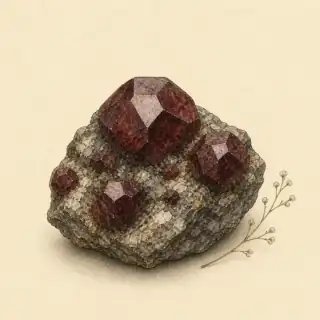
| Chakra | Root (Muladhara) |
| Element | Fire |
| Zodiac | Capricorn |
| Color | Red, Orange, Green, Purple, Brown, Black |
What Real History Lies Behind Garnet?
Garnet holds a strange, intense record in human history. Under the name carbunculus, Kunz links this red stone with a story of the Fourth Heaven. His attribution to the Koran is not independently established here. Ancient lore claimed dragons carried carbuncles in their eyes. If you look into Vedic astrology, garnet is absent from the nine sacred gems of the navaratna. There is no ancient Indian astrological placement for it, and we say so plainly. The stone carries an edge of raw intent. George Frederick Kunz recorded that some Asiatic tribes used garnets as bullets. They believed a blood-colored stone would make a deadlier wound than lead. In 1892, the Hunza used garnet bullets against British troops on the Kashmir frontier. Some of those spent stones were kept afterwards as curiosities. People trusted this gem to carry intention into an impact. Old lapidary lists recorded precise tasks for it. From the collections in Kunz, a lion engraved on a garnet was believed to preserve honors and protect a traveler. That charm claim cannot safeguard a journey.
Garnet's friendship verse in Kunz offers a theme of loyalty. Use it to ask which promises remain worth keeping, including promises to yourself. If you are ending a relationship, the garnet crystal can mark that chapter without dictating what you should feel. It will not clear nostalgia or replace the practical work of making arrangements and seeking support.
Zodiac Connection
Kunz's 1913 zodiac list gives garnet to Aquarius, with a verse about cherishing true friendship. This site's Capricorn pairing is a modern reading of commitment and persistence. You can choose either symbolism without expecting the gem to make you loyal or disciplined. The historical verse and the modern interpretation have different sources; they do not tell everyone born under a sign how to behave.
Garnet's meanings below come from folklore and crystal practice, not from research.
What Does Garnet Represent in Friendship and Commitment?
Physical Healing
Put garnet beside a written task you want to finish today. Define what finished means before you start, and return to the note when notifications distract you. That is a routine built around a visible object. Its value comes from the plan and your follow-through. Garnet does not alter other people's perception, attract reliable allies, or make indecision vanish.
Emotional & Spiritual Healing
During a change of job or home, you might keep garnet with a small list of things you want to carry forward. The red stone can represent continuity with a person, place, or commitment. Leave space for mixed feelings. A symbol of loyalty does not require you to stay in an arrangement that no longer suits you, nor does it prevent panic or speed recovery from grief.
Chakra Association
Modern crystal practice associates garnet with the Root Chakra, Muladhara. The imagery of roots is used here as a metaphor for belonging and continuity. You can hold a garnet crystal in your lap and name the people or routines that help you feel at home. This chosen association does not show that a stone acts on a bodily energy center or controls your sense of safety.
This is tradition and practice, not medical, financial, or life advice.
How Do You Use Garnet Day to Day?
Wearing Garnet
Choose a garnet ring, pendant, or pocket stone that fits your daily routine. Either hand can carry a personal reminder. Before a negotiation, touch it while reviewing the commitment you are prepared to make. A hand's supposed receptive or projecting role is modern symbolism, not a mechanism for guarding you from demanding people.
Garnet in Your Home
A garnet by the door can stand for a promise of hospitality. A piece beside your notebook can stand for finishing one task before starting another. Tell yourself which meaning you have chosen. These placements do not set an emotional perimeter around the home or change a visitor's mood.
Meditation with Garnet
Sit comfortably with the garnet crystal in your palms. If the Root Chakra imagery appeals to you, imagine roots connecting you with a place you care about. Name one small commitment for tomorrow. The image and the commitment are yours to create; the stone does not restore authority or release tension on your behalf.
Cleansing & Charging
For a simple symbolic reset, put garnet on a clean cloth and read the intention you last wrote for it. Keep, change, or discard that intention as you wish. Moonlight is optional atmosphere. Smoke and salt are not necessary, and garnet has no preference for a particular kind of commitment. Use its care instructions when it needs physical cleaning.
Crystal Combinations
Garnet pairs well with these crystals for complementary energy in crystal healing practice:
- Peridot for Symbolic pairing: balancing grounding imagery with optimism and renewal
- Emerald for Symbolic pairing: combining vitality and heart-centered reflection in crystal reflection tradition
- Turquoise for Symbolic pairing: grounding Root Chakra imagery with honest Throat Chakra communication
January is one of the months where the modern and the traditional lists agree, and garnet holds both. Not every month lines up that neatly, since August moved from sardonyx to peridot and left the older name behind. The birthstone finder puts the modern stone, the traditional stone and your zodiac sign on one screen, which is where those disagreements become visible.
Caring for Garnet
Cleaning: Warm soapy water and a soft brush. Dry it fully before it goes back on.
Avoid: Avoid sudden temperature swings and hard knocks. Green garnet is the delicate one, so ask which garnet you have before it goes anywhere near a cleaning machine.
Your crystal profile
Is Garnet Your Birthstone?
Month
Day
Garnet is linked to Capricorn and the month of January. Enter your birthday above to see if it matches your sign.
Garnet at a glance
- Also known as
- Carbuncle, in older English texts
- Tradition
- War charm and travel guard, per Kunz 1913
- Chakra / element
- Root chakra, Fire
- In one line
- The stone for finishing what you started, not for feeling calm.
- Try this first
- Carry a small piece into the one conversation you keep postponing.
- Do not
- A loyalty symbol does not require staying in an arrangement that harms you.
Kunz, The Curious Lore of Precious Stones, 1913, p.33
When You Need It
Three specific moments, not a general mood.
Walking into a room where you're being judged
A performance review or first meeting with your partner's parents can be a moment to carry a garnet as a personal keepsake. Its travel-charm lore supplies a theme of entering unfamiliar surroundings. Review what you need to say or bring; the object does not steady your hand or guard you from what happens.
The morning after you finally end something
A relationship, a job, a friendship that had run its course. Garnet's reputation is for finishing what you started and standing by a decision once it's made, not for comfort. Hold it while you write the message you've been avoiding or pack the last box. It won't soften the loss. It marks the moment you stopped negotiating with yourself and moved.
Before you say the hard thing to a parent or sibling
Kunz's Aquarius verse links garnet with friendship. Use that association as a prompt to consider how you want to speak during a disagreement. Before the conversation, write one question you can ask without assuming the answer. The stone is a reminder of the intention you chose.
Charm Turned Weapon
Two uses of the same blood-red stone point in opposite directions.
A Charm Against Wounds
Kunz records a plain war charm on page 33: a blood-red stone worn into battle was supposed to keep the wearer safe from wounds by weapons. That is a defensive read of garnet's color, the deep red standing in for blood the wearer would not lose. It sits next to garnet's other recorded job, guarding travelers and preserving honors on unfamiliar ground, part of a wider pattern where a stone shaped like blood gets treated as proof against bleeding. Nothing in the record explains why that color logic only runs one way.
The Same Stone as Ammunition
Page 33 also records the opposite use. Certain Asian tribes loaded garnets into rifles as bullets, trusting the stone's color to tear a wound deeper than lead could manage. The logic is identical to the protection charm, a blood-colored stone reads as powerful near blood, only aimed the other way. One tradition wears garnet hoping to avoid injury. Another fires it hoping to cause injury. Kunz records both claims without picking a side, and nothing in his account says which use came first.
Frequently Asked Questions
What does a garnet crystal actually mean?
Garnet crystal meaning centers on grounded protection and raw personal intent, with a history stranger than most calming stones carry. Under the name carbunculus, Kunz connects this red stone with a story about the Fourth Heaven, and ancient lore claimed dragons carried carbuncles in their eyes. Garnet beads have been found in Egyptian jewelry dating to 3100 BCE and in Sumerian artifacts from 2300 BCE, and the Sutton Hoo ship burial in early seventh-century England set thin slices of garnet over gold foil on its shoulder clasps and sword fittings. That combination, ancient, widespread, and associated with fire and blood in myth, is part of why modern practice treats garnet as a stone for grounding fierce, protective energy not gentle calm.
Which tarot card represents garnet?
This page does not establish a tarot correspondence for Garnet. Its sourced folklore stands on its own. The absence of a pairing here does not mean the stone is absent from every row of every historical occult table; that broader claim would require checking the whole work. Readers may choose a personal association while labeling it as their own interpretation.
Why is garnet the January birthstone?
The garnet crystal is not historically the January birthstone in the sense of an ancient, unbroken tradition, it is one of the more stable entries on the modern calendar, but it still owes its current placement to the same Kansas City standardization as most other stones. George Frederick Kunz's 1913 survey of eight historical birthstone lists shows garnet appearing for January with reasonable consistency compared to volatile months like March or June, though not with the total unanimity topaz has for November. The National Association of Jewelers meeting in Kansas City in August 1912 confirmed garnet for January in the standardized list Kunz published the following year. Garnet's deep red color and long documented use, back to 3100 BCE Egyptian jewelry, likely made it an easy, uncontested choice at that meeting.
Is garnet associated with Capricorn or Aquarius?
Modern astrology on this site pairs garnet with Capricorn, the sign of relentless ambition and patient, long-term discipline, matching a stone valued for hard work and enduring commitment. The only dated zodiac list in the historical record tells a different story: George Frederick Kunz's 1913 book, The Curious Lore of Precious Stones, assigns garnet to Aquarius instead, with a printed verse, 'If you would cherish friendship true, in Aquarius well you'll do to wear this gem of warmest hue, the garnet.' That 1913 source defines garnet's traditional role as protecting sincere friendship, not ambition. Readers can choose between the two: Aquarius carries the historical, dated claim; Capricorn is this site's modern reading. Both signs share a demand for unwavering integrity, just aimed at different relationships.
Why did anyone make bullets out of garnet?
Garnet's association with intention and blood-colored intensity has a documented, violent chapter: George Frederick Kunz recorded that some Asiatic tribes used garnets as bullets, believing a red stone would inflict a deadlier wound than lead. In 1892, Hunza fighters used garnet bullets against British troops on the Kashmir frontier, and some of the spent stones were kept afterward as curiosities not discarded. The tradition behind this was not superstition about the stone stopping violence, it was closer to the opposite: people trusted garnet to carry focused, harmful intention into an impact more effectively than an ordinary projectile. Modern crystal practice keeps a softened version of that same idea, treating garnet as a stone for channeling raw willpower into action not for calm or protection alone.
What does a lion engraved on a garnet mean?
A lion engraved on a garnet, according to old lapidary instruction George Frederick Kunz recorded, was believed to preserve the wearer's honors and guard against every peril encountered while traveling. The image mattered specifically. A well-formed lion was the requirement; any other carving fell outside the instruction. That fits garnet's broader traditional reputation as a stone tied to courage, status, and protection under Capricorn's disciplined ambition or Aquarius's loyal friendship, depending on which historical pairing you follow. Practically, the tradition suggests wearing such a piece specifically when you are carrying your reputation into unfamiliar territory: a negotiation, a trip, a first meeting where you are being evaluated. None of this is documented as producing any measurable protective effect; it is inherited symbolism attached to a specific, historically recorded image.
Is garnet part of the traditional Vedic navaratna?
The garnet crystal is absent from the nine sacred gems of the Vedic navaratna, and this site states that plainly and does not invent a placement for it. The navaratna assigns specific stones to the nine celestial bodies of Vedic astrology, ruby to the Sun, pearl to the Moon, and so on, and garnet simply does not appear among them in the classical sources. That gap does not mean garnet lacks documented tradition elsewhere; its record includes Egyptian jewelry from 3100 BCE, Sumerian artifacts from 2300 BCE, and a role in the Sutton Hoo burial goods of early seventh-century England. The honest answer, when a stone does not fit a tradition some readers expect it to belong to, is to say so, not force a connection the sources do not support.
How do you use garnet to improve daily focus?
Using garnet to improve daily focus, in crystal practice, usually means keeping a small piece on your desk or in your pocket as a physical anchor for willpower, with no specific ancient ritual attached to the practice, the old traditions around garnet are more about protection while traveling or in conflict than about desk-bound concentration. Holding the stone briefly before a task that requires sustained effort is one common approach, treating the moment of contact as a reset, not as the stone itself doing measurable work. Given garnet's history as a stone people trusted to carry deliberate intention, as far back as being fired as bullets meant to hit harder through belief alone, some practitioners use it specifically before high-stakes tasks where they want to commit fully, not hesitate.
The Page Behind This
Every claim above traces to a numbered page in a public domain book.
- Blood-red garnet was worn as a charm against wounds in battle
Kunz 1913, p.33
Kunz records the belief without endorsing it, alongside garnet's separate job of preserving a traveler's honors. - Some Asian tribes loaded garnets into rifles as bullets
Kunz 1913, p.33
The stone's red color was read as a promise of a deadlier wound than lead, the inverse of the protection charm recorded on the same page.
References
- Garnet, Gemological Institute of America (GIA)
- Garnet, International Gem Society
- gutenberg.org/files/57978/57978-h/57978-h.htm
“The safest cleaning methods are also the easiest.”

 ?
?