 BirthstoneMeaning
 Aries Birthstone
 Taurus Birthstone
 Gemini Birthstone
 Cancer Birthstone
 Leo Birthstone
 Virgo Birthstone
 Libra Birthstone
 Scorpio Birthstone
 Sagittarius Birthstone
 Capricorn Birthstone
 Aquarius Birthstone
 Pisces Birthstone
 Peridot Meaning
 Garnet Meaning
 Amethyst Meaning
 Aquamarine Meaning
 Diamond Meaning
 Emerald Meaning
 Pearl Meaning
 Ruby Meaning
 Blue Sapphire Meaning
 Opal Meaning
 Topaz Meaning
 Turquoise Meaning
 Moonstone Meaning
 Tourmaline Meaning
 Citrine Meaning
 Tanzanite Meaning
 Alexandrite Meaning
 Spinel Meaning
 Sardonyx Meaning
 Zircon Meaning
 Lapis Lazuli Meaning
 Rose Quartz Meaning
 Onyx Meaning
 Labradorite Meaning
 Malachite Meaning
 Jade Meaning
 Agate Meaning
 Carnelian Meaning
 Clear Quartz Meaning
 Black Tourmaline Meaning
 Smoky Quartz Meaning
 Sodalite Meaning
 Obsidian Meaning
 Fluorite Meaning
 Selenite Meaning
 Hematite Meaning
 Howlite Meaning
 September Birthstone
How to Cleanse Tarot Cards With Selenite
This is tradition and practice, not medical, financial, or life advice.
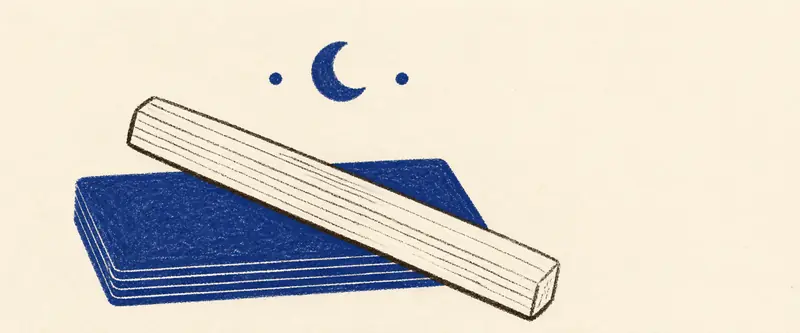
To cleanse tarot cards with selenite as a symbolic ritual, rest a boxed deck beside a selenite wand or on a dry slab overnight. Keep both dry. This is a custom, with no established energy-clearing effect; moisture can damage the cards and selenite.
- selenite
- moonlight cleansing
- deck care
- crystal tradition
Cleansing a deck is a tradition and we label it that way throughout. The care warnings are the part that will actually save you a stone and a deck.
How to Cleanse a Tarot Deck With Selenite, Step by Step
An optional ritual to mark the pause between readings. Overnight is a convenient interval, with no measured cleansing effect attached to it.
- Start by wiping your hands dry, because skin oil is the single biggest thing that ages a deck, and it travels straight onto the card edges the moment you pick them up.
- Set a flat selenite slab, plate, or charging bar somewhere away from any window. Direct sun works slowly but surely on card inks, fading them out over a matter of months.
- Lay the deck flat on the selenite, face down. If the slab runs smaller than the cards, stand a wand beside the stack instead. The tradition never actually demands contact between stone and cards, so either version counts.
- Leave it overnight if that suits your routine. There is no established cleansing duration, and a longer wait has no demonstrated energetic benefit.
- In the morning, box the deck back up and return the selenite to a dry shelf, and the whole thing is done until the next time it needs doing.
Why You Must Never Wash Selenite
Most guides skip straight past this part, right before it destroys somebody's stone.
- Water is the one thing selenite cannot survive. A quick rinse under the tap fogs the polished face in seconds, and a real soak leaves pits that never buff back out. Nothing in this guide ever puts the stone near a tap, a sink, or a rain-soaked windowsill.
- A selenite wand is soft enough that your own thumbnail can leave a mark on it. Keep it away from keys, away from harder stones, and out of any bag that is also carrying something with an edge.
- Drop it on a hard floor and it splits clean along one flat line, the way slate does. Selenite belongs on a shelf or a table. It has no business riding around loose in a pocket.
- Humidity counts as water even when nothing ever touches the stone directly. A bathroom shelf is a bad home for it, and so is a window that fogs over every winter morning.
- If you want a symbolic clearing ritual for selenite itself, set it in a dry indoor spot for the night. No smoke, water or outdoor exposure is needed.
What the Tradition Actually Claims
Saying this plainly costs nothing, and it makes every instruction above easier to trust.
- Crystal healing practice holds that selenite clears other stones and keeps a room settled. That claim describes a belief, plainly stated as one.
- The name itself comes from Selene, the Greek goddess of the moon, borrowed for the stone's pale glow. Moonlight became the traditional partner method for clearing it for exactly that reason, a name doing double duty as an instruction.
- Some readers describe cleansing as a boundary marker between sessions. You can use the arrangement as a personal cue to pause; that choice does not demonstrate an effect on the cards, the room or your attention.
If You Do Not Have Selenite
Three stones readers reach for when selenite is not on hand, each one earning its spot for a different reason.
Clear Quartz
Clear quartz is stable and tough enough to sit against a deck for years without changing. Crystal lore treats it as an amplifier, and that is how it became the general-purpose substitute for everything.
Purple, traditionally believed to settle a busy mind, and a common pick for readers who cleanse before a session as well as after one. It survives a knock far better than selenite does.
Black Tourmaline
Flat black and tough enough to travel in the same bag as a deck. Crystal healing practice treats it as the stone that grounds whatever a busy room brings in, so readers working in public tend to carry it.
What Actually Damages a Tarot Deck
Belief about cleansing aside, these four things shorten a deck's actual working life, no ritual required to prove it.
- Moisture tops the list. Card stock warps and the lamination lifts right along the edges. Never bring a deck near water, salt water, or even a damp cloth, cleansing ritual or not.
- Sunlight comes next. The inks fade out over time and the reds always go first. A windowsill, tempting as it looks for a deck, is the worst storage spot in most houses.
- Skin oils do quiet damage. Cards yellow along the long edges where fingers rest reading after reading, and dry hands genuinely do more for a deck's lifespan than any ritual ever will.
- Loose stones sharing the same box are a slow accident. A tumbled stone rattling against the edges rounds off the corners within months. Keep crystals in their own space, not the card box.
Cleansing a tarot deck at a glance
- Also known as
- Sometimes sold as satin spar or gypsum flower depending on the cut
- Tradition
- Held in crystal healing practice to clear other stones and settle a room, named for Selene, the Greek goddess of the moon
- Chakra / element
- Modern correspondence charts file it under the crown chakra; the classical tradition this page cites never assigned it an element.
- In one line
- The stone practitioners reach for overnight, on the one condition that you never once let it near water.
- Try this first
- Rest the deck flat on it, face down, for about eight hours, then put both away dry.
- Do not
- Never rinse it, soak it, or store it anywhere humid. Water pits selenite permanently.
Selenite's water sensitivity is mineralogical fact, not a folklore claim; the cleansing use is crystal healing practice, undocumented in Kunz or Pavitt.
When a Reader Actually Reaches for the Selenite
Four moments this comes up in practice, none of them requiring you to believe anything you do not already believe.
You just finished a two-hour reading for a friend going through a divorce, and the cards feel heavier in your hand than usual.
This is the moment practitioners treat cleansing as most necessary, whether or not anything measurable changed in the deck. Rest the cards flat on the selenite slab tonight, face down, and leave it until morning. The ritual gives you a hard stop between her reading and your next one, which is worth having whatever you believe about the stone.
You bought a used tarot deck at a flea market, still shrink-wrapped, but somebody clearly opened and resealed it once before.
Traditional practice calls for cleansing a deck before its first real use in your hands, and a secondhand deck is exactly the case that rule was written for. Stand a selenite wand beside the boxed deck overnight before you shuffle it for the first time.
You just moved into a new apartment, boxes still stacked in the hallway, and the deck is one of the last things you find time to unpack.
Readers who cleanse a deck at a move treat it as marking a fresh start in the new space, not a fix for anything wrong with the cards themselves. Stand the wand beside the boxed deck overnight before its first reading in the new place, once you have found it a shelf.
You are reading tarot at a crowded weekend market, and three strangers have handled your cards by lunchtime.
This is the situation selenite is worst suited for, since it cracks if it gets bumped in a bag. Carry black tourmaline instead, the stone practitioners treat as the grounding option for a busy room, and save the overnight selenite rest for when you get home.
What the Card Books Actually Say About Cleansing
Two checks against the historical card-lore books, run before any of this got written down as fact.
No Antique Book Ever Told You to Clear a Deck With a Crystal
Search Pavitt's 1914 'Card Talismans' chapter for anything resembling deck cleansing and you find exactly one kind of card lore: gambling luck. On page 130, the Deuce of Clubs gets called 'the Talisman of the pack,' a sign the dealer is holding four or five trumps. The Four of Clubs earns the nickname 'the devil's bedstead,' the unluckiest card in the pack. The one physical charm folklore records on that page is a badger's tooth sewn into a waistcoat pocket, worn by the player, never laid on the cards. Modern readers who rest a deck on selenite to clear its energy are following a real tradition of caring for tools between uses. They are not continuing anything written in this particular book, and that distinction matters for what you tell people it comes from.
The Only Documented Card Curse Made the Card a Weapon, Not a Patient
George Frederick Kunz's 1915 book records the one concrete case of a playing card tied to real danger: a queen of hearts, pulled from an ordinary deck, allegedly hidden at the bottom of a chair Queen Elizabeth I often sat in, with a nail driven straight through the effigy's forehead. Kunz raises, without confirming it, the idea that this was a piece of witchcraft aimed at her rival, Mary of Scotland. That card was reputed to be an instrument someone built and placed on purpose. It was never treated as a passive object quietly soaking up stray energy from ordinary use, the way a modern deck is said to after a heavy reading. The two ideas, curse-weapon and energy-sponge, come from different centuries and different logic, and folklore has never actually merged them. It just feels like it has, because both involve a deck and a fear of contamination.
Common Questions
- How long should tarot cards sit on selenite?
- Overnight is a convenient option for the ritual described here. There is no established cleansing duration or evidence that waiting longer changes the deck’s energy.
- Can selenite get wet?
- No, and this is the one thing on the page you cannot afford to get wrong. Water fogs the surface and a soak pits it for good. Wipe it with a dry cloth if it gathers dust, and clear it in moonlight or smoke when you feel it needs clearing.
- How often should you cleanse a tarot deck?
- Readers vary widely. Common practice is after an unusually heavy reading, after someone else handles the deck, or on a set schedule such as each new moon. None of these intervals is more correct than another.
- Does the deck need to touch the selenite?
- The tradition does not require contact. Placing a wand beside a boxed deck is treated as equivalent to resting cards on a slab, which is useful when your slab is smaller than the cards.
- Is cleansing a tarot deck with selenite backed by evidence?
- No. It is a practice inside crystal and tarot communities and we present it as one. The care advice holds whatever you believe. Keep the stone dry, keep the deck out of the sun, and both will outlive the question.
Where the Card-Curse Details Actually Come From
Both citations below are about playing cards in general, since none of the historical source books mentions tarot or selenite by name. That gap is the point of the conflicts above.
- The Deuce of Clubs was nicknamed 'the Talisman of the pack' because holding it signaled a strong hand for the dealer, a fortune read from the card itself during play.
Pavitt 1914, p.130
Pavitt records the nickname as part of English card-game folklore, alongside the Four of Clubs as 'the devil's bedstead,' the unluckiest card in the deck. Nothing on the page addresses maintaining or purifying the deck as a whole. - A queen of hearts with a nail through its forehead was allegedly hidden under Queen Elizabeth I's chair as a piece of targeted witchcraft.
Kunz 1915, p.337
Kunz reports the effigy card was found at the bottom of a chair she often sat in, and floats the idea that it may have been aimed at her rival Mary of Scotland, without confirming the theory himself.
Keep selenite dry and cards away from direct sun. If you enjoy a clearing ritual, a dry indoor arrangement can mark the pause between readings.
Related Guides
Sources & Editorial Basis
Month assignments follow the Jewelers of America birthstone list. Care guidance is checked against the Gemological Institute of America. Everything else here is folklore, astrology and crystal practice. We label each claim as tradition and name the text or the period we traced it to wherever one exists.
“The safest cleaning methods are also the easiest.”