 BirthstoneMeaning
 Aries Birthstone
 Taurus Birthstone
 Gemini Birthstone
 Cancer Birthstone
 Leo Birthstone
 Virgo Birthstone
 Libra Birthstone
 Scorpio Birthstone
 Sagittarius Birthstone
 Capricorn Birthstone
 Aquarius Birthstone
 Pisces Birthstone
 Peridot Meaning
 Amethyst Meaning
 Aquamarine Meaning
 Diamond Meaning
 Emerald Meaning
 Pearl Meaning
 Blue Sapphire Meaning
 Opal Meaning
 Topaz Meaning
 Turquoise Meaning
 Tourmaline Meaning
 Citrine Meaning
 Tanzanite Meaning
 Alexandrite Meaning
 Spinel Meaning
 Sardonyx Meaning
 Zircon Meaning
 Lapis Lazuli Meaning
 Rose Quartz Meaning
 Onyx Meaning
 Labradorite Meaning
 Malachite Meaning
 Jade Meaning
 Agate Meaning
 Carnelian Meaning
 Clear Quartz Meaning
 Black Tourmaline Meaning
 Smoky Quartz Meaning
 Sodalite Meaning
 Obsidian Meaning
 Fluorite Meaning
 Selenite Meaning
 Hematite Meaning
 Howlite Meaning
 September Birthstone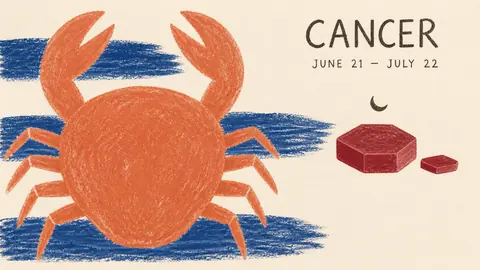
Cancer Birthstone: What Sanskrit Called the King of Gems
The Cancer birthstone is ruby in the modern list and emerald in the older zodiac tradition. Sanskrit texts called ruby ratnaraj, king of gems, and the Crab wears that red as loyalty nobody can talk it out of. Emerald, the green of renewal, answers Cancer's other half.
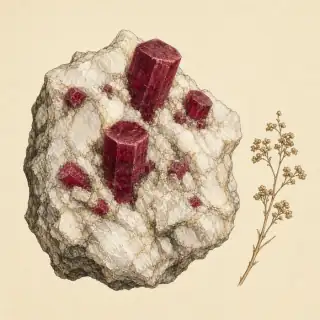
Why Ruby for a Moon-Ruled Sign?
Cancer's Moon rulership and ruby's fire symbolism come from two different traditions read together here. Both stay symbolic, offering no scientific account of your character and none of the stone's effect.
Cancer is cardinal water, ruled by the Moon, and the sign everybody comes to when things fall apart. Ruby matches that because red is the color tradition gives to devotion with teeth in it. The Crab has a hard shell and a very soft interior, and people keep mistaking the shell for the whole animal. Ruby is what that interior looks like from outside. The traditional stone, emerald, covers the other half. Its green stands for growth, renewal and the ordinary work of keeping a household alive, which a Cancer does without being asked. Egyptian, Roman and Hindu traditions all tied emerald to fertility and rebirth. Together the two read as fire and garden, and that is a fair portrait of how a Cancer actually runs.
How Did Cancer Get Its Birthstone?
History and Lore
Burmese fighters are said to have set rubies beneath their own skin before battle, trusting the stone to make them untouchable. The Mogok valley in Myanmar has been sending red stones out into the world for more than eight hundred years. Crowns across Asia and Europe were built around that color.
- The Black Prince's Ruby in Britain's Imperial State Crown passed from Pedro the Cruel of Castile to Edward the Black Prince in 1367, and Henry V is said to have worn it at Agincourt in 1415.
- Marco Polo described a great red stone owned by the king of Ceylon in the thirteenth century, and reported that Kublai Khan offered a city for it and was turned down.
Correspondences
Crystal practice files ruby under these correspondences, a traditional association. Use it to decide where you keep ruby and which intention you set with it.
| Chakra | Heart (Anahata) |
| Element | Fire |
| Zodiac | Cancer, Leo |
| Colors | Red, Pinkish-red, Purplish-red, Pigeon blood red |
Traditional Meanings
- Traditionally believed to ignite passion, protect the wearer, and ensure vitality.
- In ancient Indian texts (Ratnapariksha), ruby was called 'ratnaraj' (the king of gems) and believed to confer invincibility.
Ruby's list is drawn from old gem lore passed down by word of mouth and text, not from clinical research.
Emerald: The Traditional Cancer Birthstone
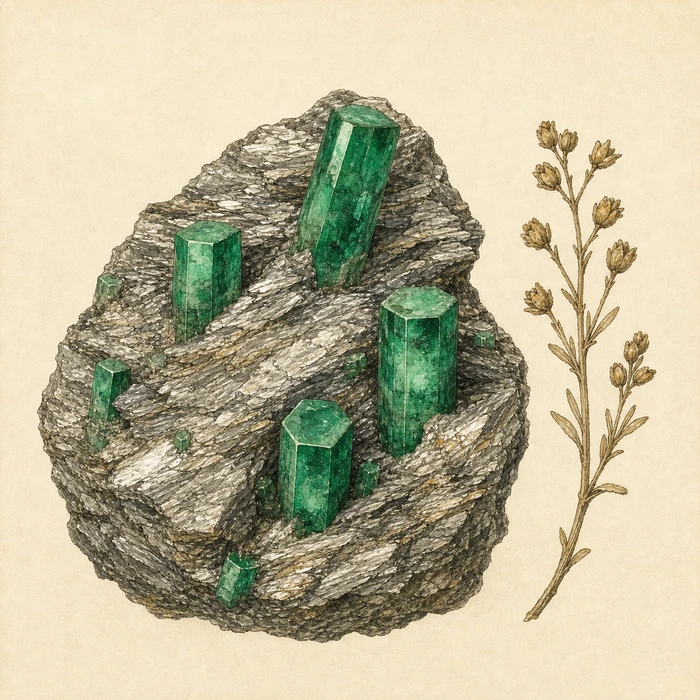
This guide uses Ruby as the modern Cancer stone because most of the sign falls in July, whose standardized monthly list includes Ruby. Emerald comes from a separate, older stream of zodiac-gem associations, which varied by place and period. Emerald's tie to Cancer comes from an older custom that the 1912 vote did not carry forward. The green stone credited with testing a lover's oath, and the modern May birthstone.
Kunz's 1913 zodiac table names emerald for Cancer; our modern ruby column comes from July's birthday list. Green and red can give the pairing two symbols: something you want to nurture and something you want to defend. Those are our suggested meanings for a personal ritual. The table does not demonstrate fertility, emotional support or an effect on family life.
Cancer holds emerald as its older traditional stone while Taurus holds it on the modern list, so one green stone answers to two signs three months apart. Practice reads that stone as a test of whether somebody means what they said, and the guide to love stones lays out where that reading came from and which weekday the old gem calendars attach to it.
- Cleopatra claimed sole ownership of the Egyptian emerald workings near the Red Sea.
- Spanish conquistadors stripped the Muzo and Chivor workings in Colombia through the sixteenth century and shipped the stones on to Europe and Asia.
Interactive birthstone reading
Your Cancer Stone Pairing
This Cancer guide starts with its own zodiac result. Add a birthday to check another sign.
Cancer: Ruby and Emerald
Modern month-derived pairing and older zodiac tradition
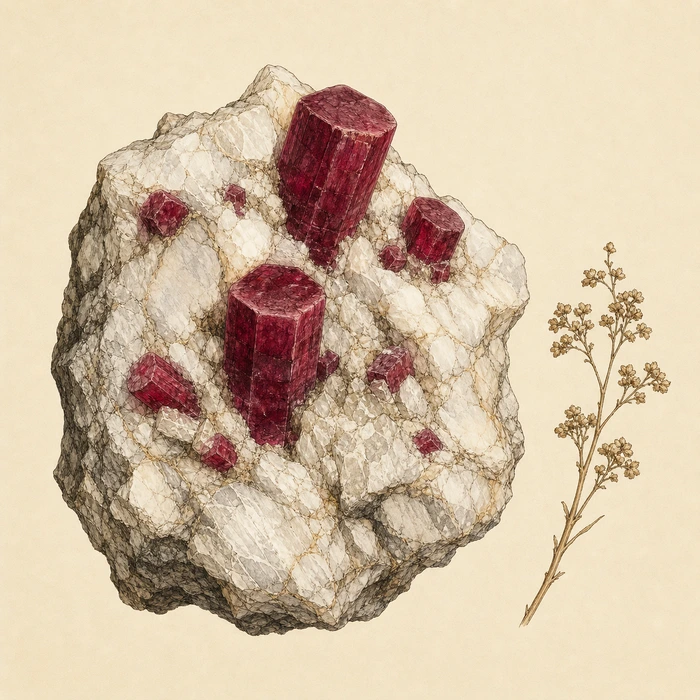
Modern stone
Ruby
Traditional stone
Emerald
Ruby is this guide's modern zodiac pairing, drawn from the month containing most Cancer dates. Emerald comes from older zodiac-gem traditions. Both Ruby and Emerald are cultural conventions here, and a birthday cannot prove either one.
Try a birthday
Choose a month and day to recalculate the local zodiac result. No birth year, time, or location is needed for this date-range lookup.
Or use today's date from this device to see the current zodiac result.
Choose a symbolic focus
Pick a supporting stone to explore one tradition-based prompt for Cancer.
Is Moonstone a Better Fit for Cancer Than Ruby?
Beyond the primary and traditional birthstones, two additional gems have strong associations with Cancer in crystal healing practice. These are not standardized monthly birthstones, but they complement ruby well in both color and traditional symbolism.

Moonstone
Moonstone's connection to the moon directly mirrors Cancer's lunar rulership, and its adularescent glow is traditionally linked to intuition and emotional depth.

Rhodonite
Rhodonite is traditionally regarded in crystal healing practice as a heart-balancing stone. Practitioners say it supports Cancer's nurturing, empathetic nature while helping the Crab set healthy emotional boundaries.
Quick Reference
Cancer Birthstone
at a glance
Modern Stone
Ruby
Traditional
Emerald
Chakra
Heart (Anahata)
Element
Fire
Colors
Red, Pinkish-red, Purplish-red
Supporting
Moonstone, Rhodonite
birthstonemeaning.com
Infographic · share with credit
How Should You Wear the Cancer Birthstone?
The best way to wear a birthstone is whatever way you will actually put it on every day. That said, some settings and combinations bring out ruby’s best qualities better than others.
Chakra, planetary and energy notes in this section describe crystal-practice tradition, not a proven physical or medical effect.
- Wear a moonstone pendant on a long chain so it rests near the heart, Cancer's emotional center and the traditional placement for moon-ruled stones.
- Wear the ruby on your ring finger. Tradition runs a line from that finger straight to the heart, which is where a Cancer keeps everything anyway.
- Layer rhodonite with moonstone if you enjoy pink beside pale blue. During a transition, use the jewelry to mark an intention to ask for help or check in with a friend.
Learn more: Ruby Crystal Meaning & Healing Properties →
The One Sign Where Kunz and Modern Astrology Agree on Dates
Cancer is a rare case: the old table and the modern chart close on the same day. That agreement makes the stone worth tracing properly, and it does not settle the monthly chart's separate claim.
Emerald's Place on This Page Comes From the Same 1913 Table
Cancer runs June 21 to July 22 in Kunz's 1913 zodiac table and in the modern range this page also uses, an exact match shared with only one other sign. Emerald, listed here as Cancer's traditional stone, is the gem Kunz recorded for the sign, where a verse promised a joyful life to anyone born under Cancer who carried one. That promise remains a traditional belief, never a tested claim.
The Monthly Chart Still Splits Early Cancer From Late Cancer
Matching dates between Kunz and modern astrology does not settle the birthstone question. June's monthly list gives pearl, alexandrite, and moonstone, while July's gives ruby, the modern stone this page opens with for Cancer. Someone born June 21 to June 30 gets pearl or moonstone from the monthly chart and ruby from the zodiac chart, in the very week that the two date systems finally agree on which sign they belong to.
A word on where the modern pairing comes from. It is month arithmetic: Cancer runs into July, so it takes July's ruby. Pavitt's 1914 chapter assigns ruby to Capricorn and opens Cancer with emerald, moonstone and pearl. where the 1914 tables put each stone →
Cancer Birthstone: Frequently Asked Questions
These common questions cover the Cancer birthstone, its color, monthly overlap, and how people actually wear it. The sections above carry the lore and the correspondences behind the short answers.
What is the birthstone for Cancer?
The modern birthstone for Cancer (June 21 to July 22) is ruby, the king of colored gems. The traditional birthstone is emerald. Both rank among the most precious gemstones, which fits Cancer's deep emotional value system.
Why is ruby the birthstone for Cancer?
Red is the color tradition gives to love that will fight for you, and Cancer loves like that. Sanskrit texts called ruby ratnaraj, king of gems. The Crab wears it as a badge of the loyalty everybody underestimates.
Is moonstone a Cancer birthstone?
While not an official birthstone, moonstone is the most popular auxiliary stone for Cancer because Cancer is ruled by the moon. Many Cancer natives feel a stronger connection to moonstone than to any other gem.
How do I choose between ruby and emerald for a Cancer gift?
Ruby suits a Cancer who leads with passion. Emerald suits a Cancer who leads with care. If ruby stretches the budget, red garnet carries the same warm red through tradition, and green aventurine stands in for emerald.
Is the Cancer birthstone the same as the July birthstone?
For most of Cancer, yes. Ruby is July's monthly birthstone and the modern Cancer stone. But Cancer starts June 21, so those born in late June fall under June's pearl by the monthly system. By zodiac, ruby covers the whole sign regardless of the calendar month.
What is the lucky stone for Cancer?
Because Cancer is ruled by the Moon, moonstone is the crystal most often called its lucky stone, alongside pearl. Both carry watery, lunar associations in tradition. That is a cultural belief. It has no tested effect, so pick the one whose look and story resonate with you.
When is the best time to give a Cancer their birthstone?
On a full moon, if you can time it. The Moon rules Cancer, and crystal practice treats the full moon as the night for charging a stone and setting an intention with it. Hand it over, then sit with it in the moonlight together for an hour.
For the Cancer you want to spoil, a ruby on the ring finger says the loud version of the thing you feel. An emerald says the quiet one. If ruby stretches the budget, red garnet has carried the same meaning in tradition for a very long time at a fraction of the price. The devotion people have poured into these stones runs centuries deep. Give the version that sounds like your Cancer.
Primary Source: Kunz, 1913
Cancer's exact date match makes it a useful check on the rest of Kunz's table. Here is the wording behind the stone.
- Emerald is the zodiac stone Kunz recorded for Cancer
Kunz 1913, p.345-347, ZODIACAL GEMS
Kunz set this down as folklore verse: “If born in Cancer's sign, they say, Your life will joyful be alway, If you take with you on your way An emerald.” The 'joyful life' promise is a traditional belief handed down through the verse, not an outcome anyone measured. - Cancer's boundary dates are one of only two exact matches between the 1913 table and modern astrology
Kunz 1913, p.345-347, ZODIACAL GEMS
Across the twelve signs Kunz recorded, most boundaries drift by one to three days against the ranges printed today. Cancer's June 21 to July 22 span is one of only two that land on the same days in both, which makes it a useful check on how far the rest of the table has shifted.
References
- Ruby, Gemological Institute of America (GIA)
- Ruby, International Gem Society
- gutenberg.org/files/57978/57978-h/57978-h.htm
- Emerald, Gemological Institute of America (GIA)
- Emerald, International Gem Society
- perseus.tufts.edu/hopper/text?doc=Perseus:text:1999.02.0137:book=37:chapter=16
- gutenberg.org/files/57978/57978-h/57978-h.htm
“The safest cleaning methods are also the easiest.”

 ?
?