 BirthstoneMeaning
 Aries Birthstone
 Taurus Birthstone
 Gemini Birthstone
 Cancer Birthstone
 Leo Birthstone
 Virgo Birthstone
 Libra Birthstone
 Scorpio Birthstone
 Sagittarius Birthstone
 Capricorn Birthstone
 Aquarius Birthstone
 Pisces Birthstone
 Peridot Meaning
 Garnet Meaning
 Amethyst Meaning
 Aquamarine Meaning
 Diamond Meaning
 Emerald Meaning
 Pearl Meaning
 Ruby Meaning
 Blue Sapphire Meaning
 Opal Meaning
 Topaz Meaning
 Turquoise Meaning
 Moonstone Meaning
 Tourmaline Meaning
 Citrine Meaning
 Tanzanite Meaning
 Alexandrite Meaning
 Spinel Meaning
 Sardonyx Meaning
 Zircon Meaning
 Lapis Lazuli Meaning
 Rose Quartz Meaning
 Onyx Meaning
 Labradorite Meaning
 Malachite Meaning
 Jade Meaning
 Agate Meaning
 Carnelian Meaning
 Clear Quartz Meaning
 Black Tourmaline Meaning
 Smoky Quartz Meaning
 Sodalite Meaning
 Obsidian Meaning
 Fluorite Meaning
 Selenite Meaning
 Hematite Meaning
 Howlite Meaning
 September Birthstone
Smoky Quartz Meaning and Healing Properties Explained
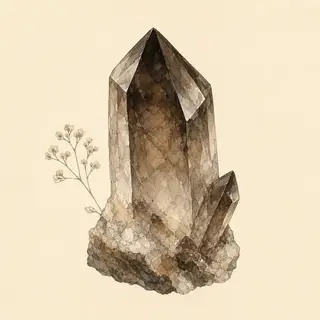
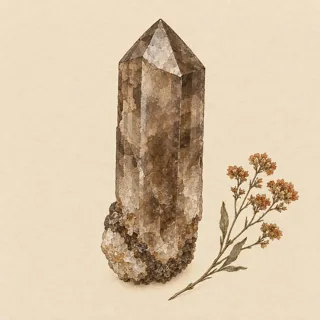
The smoky quartz meaning centers on grounding, absorbing stress, and neutralizing scattered energy. Practitioners in crystal practice treat this brown-to-black quartz as a stabilizing anchor for overactive minds. Its Scottish name, cairngorm, comes from the mountains where it was traditionally worn, and its most famous historical use involves a royal demonstration recorded in 1581.
| Chakra | Solar Plexus (Manipura) |
| Element | Earth |
| Zodiac | Pisces |
| Color | Light brown, Smoky gray, Dark brown, Nearly black |
What is the spiritual Smoky Quartz meaning?
Smoky quartz gets its color from natural background radiation acting on ordinary quartz over long spans of geological time, turning clear crystal to shades of brown, gray, and near-black. Scotland calls its own material cairngorm, after the Cairngorm Mountains where it was traditionally found and set into kilt pins, sword hilts, and brooches for Highland dress. George Frederick Kunz, writing in 1913, recorded a much stranger use of this same mineral. He documented that the Elizabethan mathematician and astrologer Dr. John Dee used a sphere of cairngorm as his shew-stone, the crystal ball through which he claimed to receive angelic communication. Kunz places one specific session at Mortlake on December 22, 1581, complete with what he calls a religious ceremonial and a pious invocation to the angel of the stone. Queen Elizabeth I herself is recorded visiting Mortlake to see the stone, arriving on horseback and dismounting with help from the Earl of Leicester. That exact sphere survives today in the British Museum, which received it in 1700 as part of the Cottonian Library, donated by the grandson of the original collector, Sir Robert Bruce Cotton. Kunz suggests Dee may have chosen smoky quartz specifically because of existing Scotch superstitions about the stone, noting dryly that operators of this kind tend to build their claims on beliefs the public already holds.
The core of the smoky quartz meaning in modern practice is emotional ballast. People experiencing racing thoughts or diffuse anxiety often reach for the stone because its dense, opaque body gives scattered attention something physical to settle on. Practitioners describe the mineral as absorbing excess emotional charge the way it absorbs light, turning agitation into something quieter and more manageable. This makes it a common choice during periods of transition, when old patterns feel unstable and a person needs a single steady point of reference. Unlike brighter, more energizing stones, smoky quartz is traditionally reached for when the goal is to slow an overactive mind down. Holding a heavy piece during a difficult phone call or a tense commute gives the hands something to do besides clench, and that small physical redirection is often enough to interrupt a spiral of worry. Crystal practitioners also associate the stone with releasing outdated emotional attachments, framing its dark color as a visual cue for letting unwanted feelings drain away.
Zodiac Connection
Pisces is a mutable water sign known for vivid intuition and a tendency to drift into daydream, so pairing it with smoky quartz's grounding tradition gives that same fluid imagination a stone built to anchor it back to the present.
Grounding or energy-absorbing claims made about smoky quartz reflect long-standing Scottish folk belief and present-day crystal-practice tradition, without controlled scientific testing behind them. These effects remain symbolic and unverified outside that tradition.
How do practitioners use Smoky Quartz for healing?
Physical Healing
In crystal practice, smoky quartz is associated with the lower body and with a general sense of physical steadiness. Practitioners often place a piece near the feet during a session, reasoning that the stone's earthy color and weight direct attention downward, toward the parts of the body already in contact with the ground. People who spend long hours seated at a desk sometimes keep a tumbled piece nearby as a tactile reminder to shift position, stand, or stretch. The stone's traditional Scottish use in kilt pins and sword hilts points to a long-standing association between smoky quartz and a settled, upright bearing, carried into modern practice as simple encouragement toward good posture and steady footing.
Emotional & Spiritual Healing
Practitioners describe smoky quartz as a stone for processing heavy emotion without becoming overwhelmed by it. Practitioners treat the stone as a buffer for intense feeling, taking the edge off strong reactions so a person can think before responding. This is why it shows up often in guidance for grief, professional stress, or the aftermath of conflict, situations where the goal is composure over intensity. Some practitioners recommend naming a specific worry out loud while holding the stone, treating the mineral as a listening object that absorbs the emotional charge of the statement even after the words themselves are spoken. Kunz's own account of Dee's shew-stone captures an older version of this same impulse, using the mineral as a vessel for troubling questions in the hope of receiving a calmer answer than the mind could produce alone.
Chakra Association
Modern practitioners connect smoky quartz to the Solar Plexus chakra, the energy center traditionally associated with personal will and self-possession. Most stones linked to this chakra lean on fire imagery; smoky quartz brings an earthy, damping quality instead, which practitioners describe as useful when willpower has tipped into anxious overdrive. Placing the stone on the upper abdomen during meditation is a common practice, paired with slow breathing intended to draw excess mental energy down and out through the base of the body. Because the stone's own coloring comes from natural irradiation settling and stabilizing within the crystal over time, some practitioners treat this geological process as a loose metaphor for turning raw, unprocessed energy into something settled and usable.
This is tradition and practice, not medical, financial, or life advice.
How Do You Use Smoky Quartz Day to Day?
Wearing Smoky Quartz
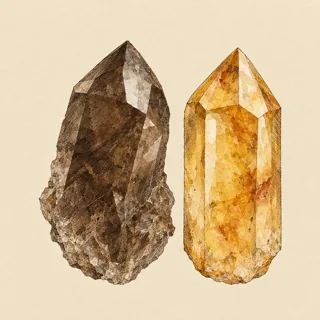
Smoky quartz appears most often in rings, pendants, and cufflinks, since its Mohs hardness of 7 makes it durable enough for daily contact without special handling. A pendant worn at chest height is a common choice for keeping the stone's grounding association close to the body throughout a demanding day. Because the color ranges from pale honey-brown to near-black morion, buyers can choose a shade that matches how strong an effect they want the piece to visually suggest, with darker stones generally read as more intensely grounding in crystal-practice tradition. Faceted stones catch light in a way that raw, unpolished points do not, so those who prefer a quieter accessory often choose a smooth cabochon over a large statement piece. Extended direct sunlight can gradually lighten the color, so pieces worn frequently outdoors benefit from occasional evenings spent away from a sunny windowsill.
Smoky Quartz in Your Home
A piece of smoky quartz near a home office desk is a common placement, chosen for its traditional association with steady focus. Because the stone is linked with absorbing excess energy, some practitioners avoid placing large raw clusters in bedrooms, preferring the entryway or a shared living space, on the theory that a stone this grounding can feel heavy in a room meant for rest. Pairing a rough chunk with brighter stones on a shelf is a simple way to soften an otherwise high-energy display. Because Kunz records the stone's use in scrying specifically for its role holding still, quiet attention, some households place a single large piece on a table used for journaling or slow, deliberate conversation, treating it as a physical cue to keep the exchange calm.
Meditation with Smoky Quartz
A simple meditation practice involves holding a smooth piece in both hands, resting them in the lap, and focusing on the sensation of weight before trying to clear the mind entirely. Because smoky quartz is traditionally linked to scrying, some practitioners sit with a polished sphere at eye level in low light, not expecting a vision in Dee's sense, but using the dark reflective surface as a focal point the way others use a candle flame. Ten slow breaths with the stone resting on the upper abdomen is a common short practice for interrupting a racing or anxious mind before sleep. Longer sessions sometimes pair the stone with a visualization of excess mental noise draining downward and out through the feet, echoing the stone's general association with drawing energy toward the earth.
Cleansing & Charging
A soft brush with a little mild soap under warm running water cleans smoky quartz safely, and its hardness of 7 makes it tolerant of routine handling. Because the stone is associated with absorbing emotional residue, many practitioners cleanse it more often than harder, less symbolically absorbent stones, using running water or a few hours buried in dry rice or soil to draw out what the stone is believed to have taken in. Direct, prolonged sunlight should be avoided for cleansing, since ultraviolet exposure is one of the few things that can visibly fade the color over months of repeated use. A brief rinse followed by drying with a soft cloth is sufficient for stones worn daily, while pieces used heavily in emotional work are sometimes set outside overnight under a full moon, kept out of direct sun entirely.
Crystal Combinations
Smoky Quartz pairs well with these crystals for complementary energy in crystal healing practice:
- Citrine for Both are quartz-family stones formed by the same underlying mineral, and practitioners pair them to balance smoky quartz's grounding with citrine's traditional association with confidence and clear-headed focus.
- Amethyst for As another member of the quartz family, amethyst is often combined with smoky quartz to pair a calming, higher-minded clarity with smoky quartz's steadier, more physical sense of stability.
Smoky quartz is another Earth-element stone in crystal practice, the same element assignment zircon carries despite the two looking nothing alike. The zircon guide explains the Crown chakra work behind zircon and its place on the December birthstone list.
Caring for Smoky Quartz
Cleaning: Warm soapy water and a soft brush; ultrasonic cleaning is generally safe.
Avoid: Avoid extreme heat which can alter or lighten the color; prolonged sunlight may also fade it.
Your crystal profile
Is Smoky Quartz Your Birthstone?
Month
Day
Smoky Quartz is linked to Pisces. Enter your birthday above to see if it matches your sign.
Smoky Quartz at a glance
- Also known as
- Cairngorm
- Tradition
- Traditionally believed to ground and absorb excess or anxious energy
- Chakra / element
- Solar Plexus (Manipura) / Earth
- In one line
- A brown-to-black quartz tied to Scottish tradition and a documented 1581 royal demonstration.
- Try this first
- Hold a piece in your closed hand before a stressful conversation to steady your focus.
- Do not
- Extended direct sunlight, which can gradually fade the stone's color.
Kunz, The Curious Lore of Precious Stones, 1913, p.190
When to Reach for a Grounding Stone
The stone's traditional role is absorbing excess energy, which makes certain ordinary moments a natural fit for it.
Ten minutes before a performance review you have been dreading all week.
You hold a smooth piece of smoky quartz in your closed hand while running through what you plan to say. The weight gives your fidgeting hands something specific to do besides tapping the desk. Practitioners describe this kind of contact as drawing off some of the nervous charge before you walk into the room, leaving your voice steadier than it would otherwise be.
On the train home after a long, draining shift at work.
You keep a small tumbled stone in your coat pocket and close your hand around it as the train pulls out of the station. Crystal practice treats this as a way of setting a boundary between the day just finished and the evening ahead, using the stone's traditional grounding association to mark the transition so the day's tension does not carry straight through your front door.
Late at night, unable to sleep because your mind keeps replaying an argument.
You rest a flat piece of smoky quartz on your chest and breathe slowly, picturing the replaying thoughts settling the way sediment settles in still water. This is a common practice for interrupting rumination at bedtime, using the stone's weight and dark color as a physical anchor for a mind that keeps circling back to the same unresolved moment.
Dee's Angel Versus Kunz's Skeptical Footnote
The most detailed historical record of this stone comes from a scene its own chronicler did not fully believe.
A Royal Visit and a Named Angel
George Frederick Kunz dates the Elizabethan scholar Dr. John Dee's first formal use of his crystal ball to December 22, 1581, at his home in Mortlake. Kunz describes a religious ceremonial that opened with what he calls a pious invocation to the angel of the stone, after which Dee reported the being answered questions put to it by those present. Kunz also records an earlier scene at the same house: Queen Elizabeth I arriving on horseback, being helped down by the Earl of Leicester, and watching Dee demonstrate the stone's properties to her evident delight. The sphere Dee used, now identified as smoky quartz, still exists. It entered the British Museum in 1700 as part of the Cottonian Library, given by the grandson of its original collector, Sir Robert Bruce Cotton.
Kunz's Own Doubt About Why Dee Chose This Stone
Kunz does not simply record Dee's claims and move on. Writing in 1913, more than three centuries later, he suggests a specific, ungenerous explanation: Dee likely chose cairngorm because Scotch superstitions about the stone already existed among the public, and, in Kunz's words, charlatans of this kind tend to build new claims on top of beliefs people already hold, not invent something from nothing. That reading turns Dee's angelic invocation into a calculated choice of prop, not a genuine discovery, a skepticism Kunz never states outright about the stone's supposed power itself but implies clearly about the man wielding it.
Frequently Asked Questions
What is the core smoky quartz meaning in crystal practice?
The core smoky quartz meaning is grounding: absorbing excess or anxious energy and giving scattered attention a steady physical point of focus. Practitioners reach for it during stress, transition, or emotional overwhelm, not for energizing or uplifting purposes, treating its dark, dense body as a natural fit for settling a person's mood, not stimulating it.
Why is smoky quartz called cairngorm?
Cairngorm is the traditional Scottish name for smoky quartz found in the Cairngorm Mountains, where the stone was historically cut for kilt pins, sword hilts, and other Highland dress accessories. Kunz's own 1913 survey lists Cairngorm as Scotland's representative national gem, distinct from the wider international name smoky quartz used for the same mineral found elsewhere.
What is the real history behind smoky quartz and crystal balls?
The best-documented example comes from George Frederick Kunz's 1913 account of Dr. John Dee, an Elizabethan mathematician and astrologer who used a smoky quartz sphere as his shew-stone starting with a recorded session on December 22, 1581. Queen Elizabeth I is recorded visiting to see a demonstration, and the sphere itself survives today in the British Museum, which acquired it in 1700 through the Cottonian Library.
How do you cleanse and care for smoky quartz?
A soft brush, a little mild soap, and warm running water clean smoky quartz safely; its Mohs hardness of 7 handles this without difficulty. Because practitioners treat the stone as absorbing emotional residue, many cleanse it more frequently than harder stones, using running water or a period buried in dry rice or soil. Avoid extended direct sunlight, which can gradually lighten the stone's characteristic brown-to-black color over time.
Who should wear smoky quartz?
Those holding onto excess mental weight traditionally gravitate toward this brown-to-black quartz. In spiritual practice, it is believed to quietly absorb frantic energy. Folklore holds that holding a piece before stressful conversations provides steadying support. Crystal enthusiasts associate its earth element nature and solar plexus alignment with establishing a calm, grounded focus.
What zodiac sign is smoky quartz for?
Pisces is the primary sign associated with this grounding mineral in crystal astrology. These individuals are highly empathetic and often absorb the emotions of others. Tradition suggests the earth element properties help pull their floating energy back down to reality. Practitioners believe the solar plexus connection gently disperses any overwhelming feelings they accumulate.
The Record Behind Dee's Shew-Stone
Two pages from the same 1913 study place this stone in a royal household and on a list of national gems.
- A specific, dated 1581 demonstration ties smoky quartz to Dr. John Dee's occult practice and a documented royal visit.
Kunz 1913, p.190
Kunz records Dee's first formal session with his shew-stone at Mortlake on December 22, 1581, along with an earlier visit from Queen Elizabeth I, and identifies the surviving sphere, now in the British Museum since 1700, as cairngorm, or smoky quartz. - Kunz's own 1913 survey names Scotland's cairngorm a national gem while separately documenting smoky quartz across several American states.
Kunz 1913, p.364
In his Gems of Countries table Kunz lists Scotland's representative stone as Cairngorm (smoky quartz), then in the following United States Stones section records smoky quartz among the notable stones of Alabama and Arkansas, part of a wider domestic list including Maine, Montana, New Jersey, and North Carolina.
References
“The safest cleaning methods are also the easiest.”