 BirthstoneMeaning
 Aries Birthstone
 Taurus Birthstone
 Gemini Birthstone
 Cancer Birthstone
 Leo Birthstone
 Virgo Birthstone
 Libra Birthstone
 Scorpio Birthstone
 Sagittarius Birthstone
 Capricorn Birthstone
 Aquarius Birthstone
 Pisces Birthstone
 Peridot Meaning
 Garnet Meaning
 Amethyst Meaning
 Aquamarine Meaning
 Diamond Meaning
 Emerald Meaning
 Pearl Meaning
 Ruby Meaning
 Blue Sapphire Meaning
 Opal Meaning
 Topaz Meaning
 Turquoise Meaning
 Moonstone Meaning
 Tourmaline Meaning
 Citrine Meaning
 Tanzanite Meaning
 Alexandrite Meaning
 Spinel Meaning
 Sardonyx Meaning
 Zircon Meaning
 Lapis Lazuli Meaning
 Rose Quartz Meaning
 Onyx Meaning
 Labradorite Meaning
 Malachite Meaning
 Jade Meaning
 Agate Meaning
 Carnelian Meaning
 Clear Quartz Meaning
 Black Tourmaline Meaning
 Smoky Quartz Meaning
 Sodalite Meaning
 Obsidian Meaning
 Fluorite Meaning
 Selenite Meaning
 Hematite Meaning
 Howlite Meaning
 September Birthstone
Alexandrite Meaning and Healing Properties Explained
The core alexandrite meaning centers on adaptability and viewing situations from multiple perspectives. Because this rare chrysoberyl naturally shifts from green in daylight to red under incandescent light, crystal practitioners associate it with embracing change. Traditional folklore links the stone to good fortune, heightened intuition, and the ability to navigate complex emotional landscapes. Discovered in Russia's Ural Mountains in 1830, the gem originally symbolized Imperial Russia. Its natural red and green hues perfectly matched the national military colors, making it an instant favorite among the aristocracy. Over time, its reputation spread across Europe as a talisman for transformation. Today, synthetic versions are common. Natural alexandrite remains exceedingly rare and highly prized by collectors. People use the stone symbolically to balance opposing forces, dissolve rigid thinking patterns, and navigate difficult life transitions with a clear mind. Understanding the alexandrite meaning today starts with that same duality: a stone that reads differently depending on where you stand.

| Chakra | Third Eye (Ajna) |
| Element | Air |
| Zodiac | Gemini |
| Color | Green, Red, Yellowish-green, Purplish-red |
What Does Alexandrite's Color Change Really Symbolize?
In 1830, miners discovered this color-changing chrysoberyl in the Ural Mountains. They named it after Tsar Alexander II on his coming-of-age day. The gem quickly became the national stone of tsarist Russia. Its natural red and green colors mirrored the Imperial Russian military uniforms. According to gemologist George Frederick Kunz, an Oriental system of planetary stones also assigned alexandrite to Friday as a specific phenomenal gem. Over the following decades, the stone's dramatic optical shift inspired numerous regional myths. Russian storytellers often linked the gem to the duality of human nature and the shifting tides of fate. People viewed the green daylight hue as a symbol of youthful optimism and springtime growth. The red evening tone represented maturity, caution, and the fires of experience, cementing the stone's reputation as a talisman for navigating life's inevitable changes. Beyond its Russian roots, late nineteenth-century European jewelers began incorporating the gem into estate pieces to signify profound transformation. Aristocrats exchanged these rings during times of political upheaval to quietly signal their loyalty and readiness to adapt to shifting power dynamics. The extreme rarity of large crystals meant that only the wealthiest collectors could acquire them, turning the gem into a quiet marker of survival and endurance among high society. Traveling merchants often carried small fragments as protective amulets, believing the color change would warn them of impending danger or sudden shifts in the weather. This widespread fascination cemented the gem's status as a powerful emblem of resilience. That reading of the alexandrite meaning has held steady since the gem's earliest days on the market.
Crystal practitioners use alexandrite to symbolize flexibility during periods of upheaval. You might hold this stone when you face a sudden career shift or a change in your living situation. The physical color shift from green to red serves as a reminder that every problem has at least two valid angles. Modern crystal workers often recommend this gem for people struggling with rigid thinking patterns or stubbornness. By meditating with the stone as it changes color under different light sources, individuals practice letting go of absolute certainties. This visual exercise helps build emotional resilience, encouraging a mindset that welcomes new information and adapts to unexpected challenges with grace. This physical transformation from cool to warm tones also offers a powerful metaphor for personal reinvention. People who feel stuck in repetitive cycles often use the gem to visualize a complete internal shift. By observing how a simple change in the environment completely alters the stone's appearance, practitioners learn to accept that their own emotional responses will naturally evolve as their surroundings change. The gem encourages individuals to release their grip on outdated coping mechanisms and embrace new ways of interacting with the world. Meditating on these dual colors helps users recognize that they possess the inner strength to reinvent themselves whenever necessary.
Zodiac Connection
This site pairs alexandrite with Gemini because the sign represents duality and communication. The symbol of the twins maps directly onto a stone that displays two completely different colors depending on the light. Gemini's natural curiosity aligns perfectly with the gem's reputation for revealing hidden perspectives and encouraging adaptable thinking.
The historical folklore and spiritual properties described on this page represent traditional crystal practices and do not constitute scientifically proven medical advice.
How Can Alexandrite Support Everyday Adaptability?
Physical Healing
People wear this gem as a daily reminder to stay adaptable in their physical routines. You can place a ring on your dominant hand to symbolize active problem-solving and physical readiness. Some practitioners keep a small piece in their workspace to encourage creative thinking and reduce physical tension during stressful projects. The tactile sensation of the smooth facet edges provides a grounding focal point when physical stress builds in the shoulders or jaw. Touching the cool surface of the stone helps interrupt the body's natural panic response. Crystal healers often recommend carrying a pocket stone to help regulate breathing patterns during sudden anxiety attacks. The deliberate act of rolling the gem between the thumb and forefinger draws attention away from racing thoughts and back to the physical body. Many users report that focusing on the stone's temperature as it warms against the skin helps them physically relax their muscles during high-pressure situations. This simple physical interaction serves as an immediate grounding technique for individuals who struggle with sensory overload in crowded environments. This physical ritual is where most people first encounter the everyday alexandrite meaning practitioners describe.
Emotional & Spiritual Healing
The dual colors represent the delicate balance between joy and sorrow in human experience. Practitioners use the gem to acknowledge difficult emotions while remaining completely open to future happiness. It serves as a visual anchor for maintaining emotional equilibrium during chaotic times or sudden life transitions. When feelings of grief or anxiety threaten to overwhelm the mind, holding the stone offers a quiet reassurance that all emotional states are temporary. The shifting hues remind the user that light will eventually return to even the darkest situations. Working with the gem encourages individuals to process their anger or frustration constructively. The red incandescent hue acts as a safe container for fiery, passionate emotions, allowing the user to examine their feelings without acting out destructively. Later, viewing the green daylight color helps soothe that initial intensity, promoting forgiveness and a calm return to baseline emotional stability. This cyclical practice teaches users to honor their immediate emotional reactions while maintaining the perspective needed to move forward peacefully.
Chakra Association
Modern crystal guides link alexandrite to the Third Eye (Ajna) chakra. Practitioners believe this vital energy center governs insight, perception, and the ability to see multiple perspectives clearly. They place the stone directly on the center of the forehead during meditation to help dissolve illusions and broaden their understanding of complex situations. The gem's dual nature acts as a highly effective tool for balancing deep intuition with logical, grounded observation. This balance prevents the user from becoming entirely detached from reality while exploring spiritual concepts. A blocked Third Eye often manifests as extreme stubbornness or an inability to envision alternative solutions to daily problems. By resting the stone above the brow, crystal workers aim to stimulate dormant creative energies and clear away persistent mental fog. This specific placement helps align the mind's inner vision with external reality, making it easier to accept difficult truths. Activating this chakra with a color-changing stone specifically targets rigid belief systems, encouraging a more fluid and accepting approach to spiritual growth.
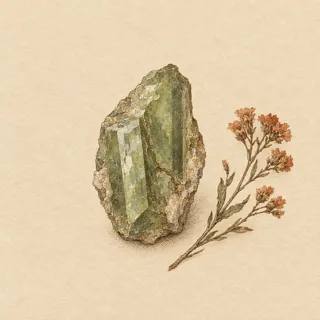
This is tradition and practice, not medical, financial, or life advice.
How Do You Use Alexandrite Day to Day?
Wearing Alexandrite
Set the stone in a pendant to keep it close to your chest and visible throughout the day. A necklace allows the gem to catch different light sources as you move between indoors and outdoors, constantly demonstrating its dramatic color change. You can also wear it in a ring on your dominant hand to serve as a visual anchor during stressful manual tasks. Whenever you glance down at your keyboard or steering wheel, the shifting hues remind you to stay flexible and open-minded. Many practitioners choose open-back settings to let maximum light pass through the crystal structure, maximizing the brilliant flash of red or green as they walk through different environments. Worn this way, the alexandrite meaning of adapting to changed light stays close throughout the day.
Alexandrite in Your Home
Place a piece on a living room windowsill where it can interact with the shifting daily sunlight. The stone will display its green daylight color during the afternoon and shift to deep red when you turn on the evening lamps. This placement creates a natural transition point in your home, signaling the mental shift from active daytime work to quiet evening rest. You might also keep a small specimen on your home office desk to encourage creative problem-solving during long afternoon meetings. Moving the stone closer to a warm incandescent desk lamp provides an immediate visual cue to approach your work from a completely different angle. Placed this way, the stone keeps the alexandrite meaning of shifting perspective close at hand throughout the day.
Meditation with Alexandrite
Sit in a quiet room with a single incandescent lamp and a clear window nearby. Hold the smooth gem in your left hand and observe how the stone reacts as you adjust the lighting from natural to artificial. Focus on its glowing red hue to ground your racing thoughts, then let natural sunlight hit the stone to bring out its calming green tones. Practitioners use this deliberate visual shift to guide their breathing exercises, inhaling deeply during the green phase and exhaling slowly during the red. This structured practice helps center the mind and prepares you to process difficult emotional conflicts objectively.
Cleansing & Charging
Wash the gem gently with warm soapy water and a soft-bristled brush to remove daily oils and dust. It has a high Mohs hardness of 8.5, making it exceptionally durable for regular handling and everyday wear. You should still keep it away from extreme heat sources or sudden temperature shocks to prevent microscopic structural damage. Pat the stone dry with a clean microfiber cloth to restore its natural brilliance before returning it to your velvet-lined jewelry box. Store the gem separately from softer stones like pearls or opals, as the hard chrysoberyl edges can easily scratch their delicate surfaces.
Crystal Combinations
Alexandrite pairs well with these crystals for complementary energy in crystal healing practice:
- Amethyst for Amethyst shares a connection to the Third Eye chakra and supports mental clarity.
- Moonstone for Both stones display unique optical phenomena and traditionally represent intuitive insight.
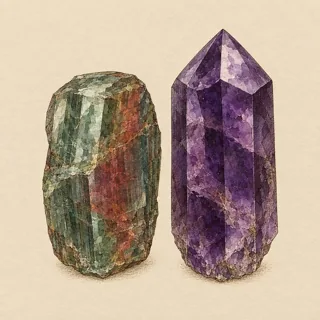
Alexandrite and tanzanite share the same Third Eye chakra and Air element assignment in crystal practice, though tanzanite adds a second Throat chakra link of its own. The tanzanite guide covers that second chakra assignment and tanzanite's place on the December birthstone list.
Caring for Alexandrite
Cleaning: Warm soapy water and a soft brush; ultrasonic cleaning is generally safe.
Avoid: Keep it away from hard knocks and sudden temperature swings. A sharp blow or a fast change from hot to cold can chip or crack the stone.
Your crystal profile
Is Alexandrite Your Birthstone?
Month
Day
Alexandrite is linked to Gemini. Enter your birthday above to see if it matches your sign.
Alexandrite at a glance
- Also known as
- Color-change chrysoberyl
- Tradition
- Tsarist Russian national stone
- Chakra / element
- Third Eye (Ajna) / Air
- In one line
- A rare color-change gem representing adaptability and shifting perspectives.
- Try this first
- Wear it to encourage open-mindedness during major life transitions.
- Do not
- Striking the stone against hard surfaces despite its high hardness.
Kunz, The Curious Lore of Precious Stones, 1913, pp.315-316
Using Alexandrite In Daily Life
In crystal practice, you can incorporate the stone into specific routines to symbolize adaptability.
On a Wednesday evening while mediating a disagreement between two family members at your dinner table.
You catch the alexandrite ring on your finger flashing between green and red as the argument heats up. The stone's shifting color reminds you that both people at the table likely have a valid point. You use that visual cue to slow down and consider the other side before you respond. By the time dessert is served, the conversation has usually turned from a standoff into an actual exchange of views.
On a Friday evening while drafting a complex email in your home study.
You place the gem under a warm incandescent desk lamp to reveal its deep red evening color. You focus on this glowing hue to break through a stubborn creative block and quiet your mounting frustrations. The dramatic color shift encourages you to abandon your initial draft and rewrite the message from a completely fresh angle. Taking a quiet moment to observe the stone allows your tired mind to reset and find the exact right words for the situation.
During a Sunday afternoon packing session before a major cross-country move.
You keep a small piece in your pocket while sorting through old belongings and deciding exactly what to keep. The stone serves as a physical reminder that major life changes bring new opportunities and fresh starts. You reach into your pocket to touch the smooth crystal whenever you feel overwhelmed by the heavy emotional weight of the transition. This simple tactile habit keeps you firmly grounded in the present moment and focused entirely on your future goals.
Disputed Alexandrite Meaning And Birthstone Lists
Historical texts disagree on the gem's proper place in the birthstone calendar.
The August Birthstone Anomaly
In his 1913 book, George Frederick Kunz compared eight major historical birthstone lists. These lists spanned traditions from the Romans to the Arabians and the Poles. Only the Russian list named alexandrite as an August birthstone. The stone was discovered in Russia in 1830, making its inclusion a regional preference.
Friday Gem Vs Monthly Stone
Western jewelers eventually moved alexandrite to June in modern commercial lists. Older traditions categorized it differently. Kunz documented an Oriental system of gems for the days of the week. This system assigned alexandrite specifically to Friday as a phenomenal gem.
Frequently Asked Questions
What is the spiritual alexandrite meaning?
The spiritual alexandrite meaning focuses on adaptability and the ability to see multiple perspectives. Crystal practitioners associate the stone with embracing change and navigating difficult transitions. This symbolism comes directly from the gem's physical ability to shift from green in daylight to red under incandescent light. Folklore also links the gem to good fortune, heightened intuition, and creative inspiration. People use the stone as a visual reminder that every complex situation has more than one valid angle. Meditating with the gem helps clear away mental fog and promotes a deep sense of inner peace.
Why does alexandrite change color?
Alexandrite changes color due to the presence of chromium in its crystal structure. The gem absorbs certain wavelengths of light. In natural daylight, it transmits green light to the eye. Under incandescent artificial light, the light source lacks green and blue wavelengths. The stone then transmits red light. Gemologist George Frederick Kunz documented this dichroitic behavior in 1913. Today, gemologists consider a strong, distinct shift from vivid green to vivid red the most valuable trait in a natural specimen. The dramatic contrast between these two states continues to fascinate collectors worldwide.
How do you care for natural alexandrite?
You should clean alexandrite using warm soapy water and a soft brush. The gem has a Mohs hardness of 8.5, making it highly resistant to scratching. Ultrasonic cleaners are generally safe for this stone. You must still avoid hard impacts, as a sharp blow can chip or fracture the crystal. Gemologists also recommend keeping the stone away from extreme heat sources to prevent permanent structural damage. Regular cleaning ensures the gem continues to display its famous color change without interference from dirt or oils.
Is synthetic alexandrite real alexandrite?
Synthetic alexandrite has the exact same chemical formula and crystal structure as the natural stone. It is genuine chrysoberyl and exhibits the same green-to-red color change. Laboratories grow these stones to meet commercial demand. Natural stones with a strong color shift are extremely rare and carry a very high price. Jewelers often use synthetic versions to provide the same visual effect and durability at an accessible cost. You should always request a gemological certificate to verify a stone's origin. Reputable dealers will clearly disclose whether a gem grew in a laboratory or formed naturally in the earth.
Who should wear alexandrite?
Anyone navigating major life transitions might appreciate this color-changing gem. Traditional beliefs associate the rare stone with adaptability and shifting perspectives. In spiritual practices, individuals wear the crystal to encourage open-mindedness and stimulate the third eye chakra. Crystal lore suggests it helps the wearer process change with a clear and focused mind.
What zodiac sign is alexandrite for?
Practitioners historically connect this adaptable mineral with Gemini. The famous color-shifting nature of the gem perfectly reflects the dual energy of this air sign. In astrological folklore, the stone supports Gemini's quick intellect and constantly shifting perspectives. Believers say wearing it helps this sign maintain mental clarity and stimulate the third eye chakra.
Historical Alexandrite Citations
Kunz's own early-1900s research pins down the stone's regional significance and optical properties.
- Only the Russian birthstone tradition historically included alexandrite.
Kunz 1913, pp.315-316
Kunz compares eight historical birthstone lists side by side. He notes that the Russian list alone assigns alexandrite to the month of August. - The stone is colored by chromium and loses its green hue in artificial light.
Kunz 1913, p.334
Kunz explains the scientific mechanism behind the color change. He states that the gem is dichroitic and appears red under artificial lighting.
References
“The safest cleaning methods are also the easiest.”