 BirthstoneMeaning
 Aries Birthstone
 Taurus Birthstone
 Gemini Birthstone
 Cancer Birthstone
 Leo Birthstone
 Virgo Birthstone
 Libra Birthstone
 Scorpio Birthstone
 Sagittarius Birthstone
 Capricorn Birthstone
 Aquarius Birthstone
 Pisces Birthstone
 Peridot Meaning
 Garnet Meaning
 Amethyst Meaning
 Aquamarine Meaning
 Diamond Meaning
 Emerald Meaning
 Ruby Meaning
 Blue Sapphire Meaning
 Opal Meaning
 Topaz Meaning
 Moonstone Meaning
 Tourmaline Meaning
 Citrine Meaning
 Tanzanite Meaning
 Alexandrite Meaning
 Spinel Meaning
 Sardonyx Meaning
 Zircon Meaning
 Lapis Lazuli Meaning
 Rose Quartz Meaning
 Onyx Meaning
 Labradorite Meaning
 Malachite Meaning
 Jade Meaning
 Agate Meaning
 Carnelian Meaning
 Clear Quartz Meaning
 Black Tourmaline Meaning
 Smoky Quartz Meaning
 Sodalite Meaning
 Obsidian Meaning
 Fluorite Meaning
 Selenite Meaning
 Hematite Meaning
 Howlite Meaning
 September Birthstone
Pearl Meaning and Healing Properties Explained
Pearl meaning includes purity, reflection, and lunar symbolism in the traditions discussed here. Pliny's account of shells receiving dawn dew offers a striking example: he linked a pearl's quality to the weather at its formation. That account belongs to ancient natural history. It is not the modern explanation of how pearls form. This guide reads the story as a metaphor for reflection. Your pearl does not preserve the weather of someone's morning or change how you handle a conversation. You can enjoy a keepsake without assigning it that power.
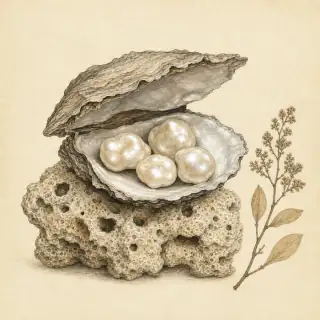
What Did Ancient Observers Believe A Pearl Recorded?
Standard guides repeat empty lines about ancient purity. None of them carry the Roman account, and the Roman account is the one that changes the pearl meaning from a slogan into an instruction. Pliny recorded that atmospheric calm determines the radiance of a pearl. A clear dawn creates a luminous sphere. Heavy fog leaves it dim. Roman history shows how a ruler used this stone to project power. In Book 9, chapter 57 of Natural History, Pliny recorded that British pearls were small and of a bad color. The deified Julius Caesar wished it distinctly understood that the breastplate he dedicated to Venus Genetrix was made of British pearls. Caesar chose the humbler stone on purpose. He made sure everyone knew it. The modern birthstone calendar also hides a dispute that internet articles ignore. Kunz printed the schedule the trade approved in Kansas City, August of 1912. Kunz wrote it out in The Curious Lore of Precious Stones, 1913: "The pearl, which is not a stone in any sense of the word, should not appear in the list at all." Kunz preferred the asteria star sapphire for June. In his eight historical lists, pearl appears once for February, once for June, and once for November. It was never a primary choice.
Pliny's account of a hollow pearl called physema belongs to ancient natural history. It should not be used to diagnose a person's character. You may borrow the contrast between surface and substance as a writing prompt: what do you know about a promise beyond its attractive wording? Check the details and allow an answer. A pearl cannot identify deceptive people or validate a suspicion.
Zodiac Connection
Cancer and Gemini are the modern pearl pairings used by this guide. For Cancer, the lunar image can prompt reflection on home and belonging. For Gemini, a pearl can mark a pause between conversations. These are editorial interpretations of familiar astrological themes. Pearl does not reflect unwanted emotions away from Cancer or quiet Gemini's thoughts. Readers can enjoy the symbolism without treating a birthday as a psychological diagnosis.
Pearl's meanings below survive from folklore, not from any scientific study.
How Can Pearl Meaning Inform a Listening Ritual?
Physical Healing
A pearl can mark a personal preference for listening before speaking. Before a meeting, choose one question you genuinely want answered and leave space for the response. This is a habit you practise. Wearing a pearl does not reveal hidden motives, unsettle opponents, or make you a trusted negotiator. Its meaning can stay with you even when the conversation goes differently from what you hoped.
Emotional & Spiritual Healing
Pearl's reflective appearance can symbolize a little privacy at the end of a crowded day. Set it beside a journal and decide what you want to keep to yourself and what you would like to share. That choice is yours. The gem does not conserve an invisible store of emotional energy or rebuild confidence on its own. A keepsake can be meaningful without being a treatment.
Chakra Association
This guide pairs pearl with the Third Eye in modern crystal symbolism. Ajna supplies an image of looking inward; it does not turn pearl into a detector of hidden truth. Hold the pearl safely in your palm while reflecting on a question. Separate what you observed from what you inferred. The spiritual association can frame the exercise, while the evidence must come from elsewhere.
This is tradition and practice, not medical, financial, or life advice.
How Do You Use Pearl Day to Day?
Wearing Pearl
Kunz's weekday table lists pearl on Monday and as Sunday's talisman. If you enjoy that tradition, wear pearl on one of those days to mark time for listening or reflection. The nine-gem layout reproduced in his book separately connects pearl to the Moon. These historical correspondences do not provide a timetable for steady nerves. Choose jewelry that is comfortable and care for its delicate surface.
Pearl in Your Home
A pearl on a soft-lined dish can be a keepsake in a quiet corner. Keep it where it will not roll away and away from cosmetics or heat. You can associate it with finishing the day's correspondence before bed. It will not remove work worries from a room, but it can remind you of a boundary you have already chosen.
Meditation with Pearl
Crowley's 1909 correspondence table includes pearl with The High Priestess and The Moon, two cards used for different kinds of reflection. This is the occult framework cited by this guide. Tarot traditions can use other correspondences. With the pearl in your hand, ask what you have observed and what remains unknown. Write both. A theme of intuition is an invitation to reflect, not evidence that a hunch is accurate.
Cleansing & Charging
A monthly pause beside your pearl can be a symbolic reset. Choose an indoor evening and review what the pearl means to you. Moonlight supplies a motif for the ritual. It does not clean the pearl. Avoid salt-water cleansing and keep smoke residue off the surface. For actual cleaning, use pearl-appropriate care. Do not leave jewelry unattended where an open window, heat, or a fall could damage it.
Crystal Combinations
Pearl pairs well with these crystals for complementary energy in crystal healing practice:
- Aquamarine for Symbolic pairing: pairing emotional wisdom with clear, compassionate communication
- Ruby for Symbolic pairing: balancing gentle inner peace with passionate engagement in crystal reflection tradition
June is one of six months carrying more than one modern stone, and pearl shares the slot with alexandrite and moonstone. The free birthstone finder shows which of the three a given date returns, next to the traditional pick, which for June has stayed pearl throughout.
Caring for Pearl
Cleaning: Wipe it with a damp soft cloth after every wearing and keep it in its own soft pouch.
Avoid: Never rest a pearl in salt water. The cleansing tradition that says otherwise will cost you the pearl. Perfume, hairspray and household cleaners do the same damage more slowly, so pearls go on last and come off first.
Pearl at a glance
- Also known as
- June's modern birthstone; Kunz's own historical count gave it single footholds in February, June, and November
- Tradition
- Read through the weather and mood it formed in, and through claims about its health that are often invented.
- Chakra / element
- Third Eye chakra, Water element
- In one line
- A stone whose sickness often says more about the seller than the pearl.
- Try this first
- Before you buy a flawed pearl at a discount, ask the seller to point at the flaw itself, on the pearl.
- Do not
- Do not take a claim of pearl sickness at face value. De Boot flagged this as a sales trick centuries ago.
Kunz 1913, pp. 5, 41
Moments this pearl lore is actually useful
Three real situations, not general pearl advice.
You just found a spare pearl and want to do something meaningful with it
A traditional Bornean practice, recorded by Kunz, set aside every ninth pearl in a catch, sealed it in a bottle with two grains of rice, and stopped the bottle with a piece taken from a dead man's finger, believing the pearl would then breed more. We're not suggesting you replicate the finger part. A modern version is simpler: set the pearl aside somewhere quiet and treat it as a seed for a future piece, not raw material to sell today.
Someone selling you a pearl says it's a little sick but still worth full price
That phrase has history. De Boot warned that most pearl sickness is imagined, and that sellers sometimes call their own pearl sick specifically so a buyer assumes it started out flawless. Ask what sick means in measurable terms, like a visible pit or discoloration you can point to yourself. If nobody can name it, the sickness is probably just a sales line.
You're wearing pearl into a conversation where you need to stay quiet and read the room
In crystal practice, pearl is tied to emotional discernment and the Water element, the kind of quiet clarity that helps you notice what's not being said. Wear it as a personal cue to listen twice before you speak once. It won't tell you who's lying, but it can slow you down enough to actually watch for it.
Two pearl beliefs that can't both be true
One tradition treats pearl as alive, the other calls it theater. Pearl meaning has never been settled.
Sick pearl, or good marketing
The physician Anselmus de Boot looked hard at claims that pearls get sick and lose their shine. His conclusion, recorded by Kunz: most of what people call a sick pearl is imagined, not observed. De Boot noticed something sharper too. Owners who announce their own pearl is sick are often doing it on purpose, planting the idea so people assume the pearl was flawless before whatever supposedly went wrong. A claimed flaw becomes proof of a hidden perfection. Next time someone tells you their pearl used to be perfect, ask what changed, and when exactly they noticed it.
A living pearl versus an imagined one
Kunz recorded a Borneo practice where every ninth pearl taken from a haul gets set aside, sealed in a bottle with two grains of rice, on the belief that it will breed more pearls like a living creature. The stopper had to come from a dead man's finger. That belief treats pearl as alive and fertile. De Boot's skepticism, recorded a few pages earlier in the same book, treats pearl sickness as a story people tell, not a biological fact. Two traditions, one object, opposite assumptions about whether a pearl lives at all.
Frequently Asked Questions
What is a pearl telling you?
Pearl meaning in this guide draws on reflection and lunar imagery. Pliny's Book 9 links pearl quality with dawn dew and weather; those statements record an ancient explanation of formation. They do not establish that atmospheric calm makes a pearl luminous. Readers may use the story as a metaphor while keeping it separate from modern biology and from promises about the wearer's emotions.
Which tarot cards represent the pearl?
Crowley's 1909 correspondence table includes pearl with The High Priestess and The Moon, two cards used for different kinds of reflection. This is the occult framework cited by this guide. Tarot traditions can use other correspondences. With the pearl in your hand, ask what you have observed and what remains unknown. Write both. A theme of intuition is an invitation to reflect, not evidence that a hunch is accurate.
Why did George Frederick Kunz criticize pearl as a birthstone?
George Frederick Kunz, writing in his 1913 book The Curious Lore of Precious Stones, argued that pearl should not appear on the birthstone calendar at all, on the grounds that it is not a stone in any sense of the word, it is an organic gem, formed by a living mollusk not mineral crystallization. Kunz preferred the asteria, or star sapphire, for June specifically. His own survey of eight historical birthstone lists found pearl listed only once each for February, June, and November, never a primary or consistent choice across the sources he examined. Kunz still recorded the schedule the jewelers' trade approved at Kansas City in August 1912 and published it in 1913, even while stating his own disagreement with including pearl at all.
Can you cleanse a pearl in salt water?
A monthly pause beside your pearl can be a symbolic reset. Choose an indoor evening and review what the pearl means to you. Moonlight supplies a motif for the ritual. It does not clean the pearl. Avoid salt-water cleansing and keep smoke residue off the surface. For actual cleaning, use pearl-appropriate care. Do not leave jewelry unattended where an open window, heat, or a fall could damage it.
What is a physema in pearl folklore?
Pliny uses physema in Book 9 of Natural History for a hollow, inflated pearl in an account connecting its formation with thunder. It is an ancient explanation, not modern pearl biology. This page uses the story as history; it does not establish that the weather produces such pearls or that a pearl can reveal a person's character.
What does Julius Caesar's breastplate tell us about pearl symbolism?
Julius Caesar's breastplate, central to one strand of pearl meaning documented in Pliny's Book 9 of his Natural History, was dedicated to Venus Genetrix and made specifically of small British pearls, which Pliny himself described as poor in quality and color. Caesar made a point of letting it be known that the pearls were British, choosing the humbler stone deliberately over a more prized variety from elsewhere in the empire. Pearl symbolism, read through this account, extends past luxury or purity into restraint, provenance, and a specific kind of image-making, using a modest material on purpose to make a political point. That is a documented use of pearl for status signaling that runs in the opposite direction from simply displaying the largest or finest gem available.
Is there a best day to wear a pearl?
Kunz's weekday table lists pearl on Monday and as Sunday's talisman. If you enjoy that tradition, wear pearl on one of those days to mark time for listening or reflection. The nine-gem layout reproduced in his book separately connects pearl to the Moon. These historical correspondences do not provide a timetable for steady nerves. Choose jewelry that is comfortable and care for its delicate surface.
Where does pearl sit in the traditional navaratna layout?
Pearl meaning, in the traditional navaratna, the nine-gem Vedic astrological setting, is tied to the Moon, a natural fit given pearl's broader association with lunar and water symbolism across multiple traditions this site draws on. The navaratna assigns each of the nine sacred gems to one of nine celestial bodies, with pearl specifically representing the Moon's position in the layout; the center is reserved for ruby and the Sun. That placement is consistent with pearl's Roman-documented sensitivity to atmospheric and, by extension, celestial conditions, and with the stone's general folkloric association with emotional depth and reflection, distinct from the boldness assigned to fire-associated stones like ruby. Kunz's own research draws on this Vedic source alongside the Roman and medieval European material more central to his book.
Crystal practice also pairs pearl with a card from the tarot deck. The The Moon tarot guide covers that card's upright and reversed meaning, plus the zodiac sign tradition assigns to it.
The primary sources for this pearl page
The two passages that give pearl meaning its stranger edges, quoted from the pages that carry them.
- De Boot said most reports of a sick pearl are imagined
Kunz 1913, p. 5
De Boot argued pearl sickness is largely invented, and sometimes claimed by owners to imply prior perfection. - A Borneo custom set aside every ninth pearl to breed more pearls
Kunz 1913, p. 41
The pearl was sealed in a bottle with two grains of rice and a stopper cut from a dead man's finger.
References
- Pearl, Gemological Institute of America (GIA)
- Pearl, Gemological Institute of America (GIA)
- Pearl, Gemological Institute of America (GIA)
- Pearl, International Gem Society
- perseus.tufts.edu/hopper/text?doc=Perseus:text:1999.02.0137:book=9:chapter=54
- perseus.tufts.edu/hopper/text?doc=Perseus:text:1999.02.0137:book=9:chapter=57
- gutenberg.org/files/57978/57978-h/57978-h.htm
“The safest cleaning methods are also the easiest.”

 ?
?