 BirthstoneMeaning
 Aries Birthstone
 Taurus Birthstone
 Gemini Birthstone
 Cancer Birthstone
 Leo Birthstone
 Virgo Birthstone
 Libra Birthstone
 Scorpio Birthstone
 Sagittarius Birthstone
 Capricorn Birthstone
 Aquarius Birthstone
 Pisces Birthstone
 Peridot Meaning
 Garnet Meaning
 Amethyst Meaning
 Aquamarine Meaning
 Diamond Meaning
 Emerald Meaning
 Pearl Meaning
 Ruby Meaning
 Blue Sapphire Meaning
 Opal Meaning
 Topaz Meaning
 Turquoise Meaning
 Moonstone Meaning
 Tourmaline Meaning
 Citrine Meaning
 Tanzanite Meaning
 Alexandrite Meaning
 Spinel Meaning
 Sardonyx Meaning
 Zircon Meaning
 Lapis Lazuli Meaning
 Rose Quartz Meaning
 Onyx Meaning
 Labradorite Meaning
 Malachite Meaning
 Jade Meaning
 Agate Meaning
 Carnelian Meaning
 Clear Quartz Meaning
 Black Tourmaline Meaning
 Smoky Quartz Meaning
 Sodalite Meaning
 Obsidian Meaning
 Fluorite Meaning
 Selenite Meaning
 Hematite Meaning
 Howlite Meaning
 September Birthstone
Howlite Meaning and Healing Properties Explained
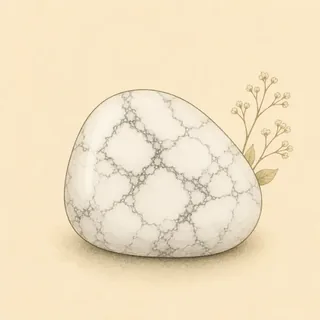
The howlite meaning, in modern crystal practice, is built around deep calm, patience, and settling an overactive mind. Crystal healers traditionally use this white stone to encourage restful sleep and ease overactive thoughts. Geologically, it is a porous borate mineral primarily known for absorbing bright blue dyes.
| Chakra | Crown (Sahasrara) |
| Element | Air |
| Zodiac | Gemini |
| Color | White with gray veins, Chalky white |
What Is the Traditional Spiritual Howlite Meaning?
Because this mineral was first identified in 1868, it lacks the centuries of ancient folklore associated with older stones like quartz or amethyst. The cultural story of howlite belongs to modern geology and commerce. Canadian chemist Henry How first analyzed the stone after gypsum miners in Nova Scotia flagged the unfamiliar white nodules as an annoying obstacle. How recognized it as a distinct mineral. American geologist James Dwight Dana renamed the stone in How's honor shortly afterward. Today, howlite occupies a unique place in the gemstone market. Its extreme porosity allows it to absorb commercial dyes rapidly and permanently. Sellers most frequently dye the white mineral a bright robin's-egg blue. Because natural howlite features dark gray or black web-like veining, the dyed blue material closely mimics turquoise. Honest vendors label this material clearly as howlite turquoise or simply dyed howlite. Dishonest dealers routinely pass it off as genuine turquoise. This makes understanding the mineral's true physical properties an essential consumer skill. The howlite meaning in modern commerce is often tied directly to this ability to act as an accessible, easily modified substitute for more expensive gems.
In crystal healing practice, the emotional howlite meaning revolves around cultivating profound patience and stillness. Modern practitioners associate the stone with cooling down fiery emotions, frustration, and everyday stress. If you struggle with an overactive mind that races late at night, crystal healers traditionally recommend keeping this mineral nearby to absorb that excess mental energy. Practitioners believe the stone acts like a sponge for heavy, swirling thoughts. They use it to promote a more measured, thoughtful response to irritating situations. Many spiritual guides suggest holding the stone when you feel anger building, relying on its traditionally believed calming energy to help you pause before reacting. Crystal workers often pair it with intention-setting practices focused on emotional regulation and peaceful communication. They view the white, webbed mineral as a visual reminder to untangle complicated feelings. The gray veining is said to represent the complex web of human thoughts, while the stark white background symbolizes the clarity you can achieve through mindful breathing and emotional release.
Zodiac Connection
Modern crystal practitioners primarily pair howlite with Gemini. This air sign is known for a rapid, frequently shifting thought process. Crystal healers traditionally recommend the stone to help Gemini individuals quiet their exceptionally busy, overthinking minds and find a sense of grounded focus. Some spiritual practitioners also use it as a secondary stone for Virgo. They believe its calming properties help ease the perfectionism and mental burnout that Virgos occasionally experience.
Please note that howlite's traditional associations with calming energy and mental tranquility come from modern crystal healing practice, not scientific findings.
How Do Practitioners Use Howlite in Healing Traditions?
Physical Healing
In traditional crystal healing, practitioners link howlite to the physical health of the skeletal system. They often claim the stone supports the absorption of calcium into the bones and teeth, drawing a spiritual parallel to the mineral's actual calcium content. Healers also traditionally use the stone in routines designed to balance physical energy levels and promote deep, restorative sleep cycles. If you plan to use this stone daily, you must understand its actual physical limitations. Howlite is exceptionally soft, registering at just 3.5 on the Mohs hardness scale. It scratches easily against harder objects like metal keys or quartz crystals. The mineral is also highly porous. It will rapidly absorb natural skin oils, lotions, perfumes, and sweat. Over time, these daily exposures can permanently discolor or stain the stone. Because of this fragility, it performs poorly in daily-wear rings or bracelets. You will get much better longevity by keeping it on a bedside table or wearing it as a protected pendant where it makes less contact with environmental hazards.
Emotional & Spiritual Healing
The emotional healing traditions surrounding howlite focus on dismantling rigid, stressful mental habits. Crystal healers believe the stone gently dissolves selfishness and critical attitudes. It encourages a more open, accepting mindset. Practitioners frequently use it as a tool for shadow work. They claim it helps you confront uncomfortable emotional truths without becoming overwhelmed by defensiveness or panic. If you experience chronic impatience, traditional crystal practice suggests using this stone to anchor your daily emotional responses. Spiritual counselors recommend keeping the mineral close during difficult conversations to maintain a balanced, non-reactive emotional state. They view it as a steadying companion that absorbs hostility before it can trigger an outburst. The stone's energy is traditionally described as a cooling blanket over a hot temper. By working with the crystal regularly, followers of energy healing aim to build a strong emotional foundation that resists outside agitation. They believe the mineral teaches you to process emotional data slowly, allowing you to discard unnecessary worries and retain only the thoughts that serve your highest good.
Chakra Association
Crystal energy practitioners primarily align howlite with the Crown chakra, or Sahasrara. Tradition places this energy center right at the crown of the head, tying it to spiritual connection, higher wisdom, and pure consciousness. Healers believe that when the Crown chakra becomes blocked, you may feel mentally foggy, cynically detached, or overwhelmed by racing thoughts. They use the white mineral to stimulate and clear this chakra, aiming to open a channel for clear, peaceful mental energy. Many crystal workers also connect the stone to the Third Eye chakra as a secondary association. The Third Eye governs intuition and internal insight. In meditation practices, healers traditionally place the stone on the forehead to calm a frantic mind and sharpen spiritual vision. They believe this dual activation of the Crown and Third Eye chakras creates a powerful alignment for accessing deep meditative states. By working with these upper chakras, practitioners claim the stone helps you receive spiritual guidance while remaining emotionally grounded, mentally serene, and ready to process new insights.
This is tradition and practice, not medical, financial, or life advice.
How Do You Use Howlite Day to Day?
Wearing Howlite
Wearing howlite requires mindful attention to its physical properties. Because the stone sits at 3.5 on the Mohs scale, it scratches and scuffs easily. Its porous surface will absorb makeup, sweat, and hand sanitizers, leading to permanent discoloration. You should choose necklaces, brooches, or earrings over rings or bracelets to minimize accidental impacts and chemical exposure. Crystal healers traditionally suggest wearing the stone near the upper body. They believe this placement keeps its calming energy close to the Crown and Third Eye chakras throughout your daily routine.
Howlite in Your Home
Placing howlite in your bedroom aligns perfectly with its traditional association with deep, restorative sleep. Crystal healers frequently recommend tucking a smooth tumbled stone under your pillow or setting a larger nodule on your bedside table to quiet a racing mind at night. You can also place the mineral in your home office or study space. Practitioners believe its presence helps absorb environmental stress and encourages patience during complex, frustrating tasks. Its striking white and gray pattern also makes a beautiful, natural decorative piece that visually brightens up dim corners of a room.
Meditation with Howlite
Meditation is one of the most popular ways to interact with howlite. Spiritual practitioners use it as an object to fix your attention on while you quiet down internal chatter. You can hold a palm stone while practicing deep breathing to anchor your physical body. Traditional crystal healers suggest placing the mineral gently on your forehead while lying down. They believe this contact with the Third Eye chakra deepens your meditative state and creates a peaceful boundary against distractions. Many users focus their gaze on the stone's web-like veining before closing their eyes.
Cleansing & Charging
Cleansing howlite requires extreme care due to its porous nature. You must avoid soaking this mineral in water, saltwater, or commercial jewelry dips. Liquids will seep into the stone, potentially compromising its structure or altering its color. You should also keep it strictly away from perfumes, essential oils, and lotions. To clean the physical stone safely, wipe it gently with a dry, soft microfiber cloth. For energetic cleansing, crystal healers traditionally recommend placing the stone in dry brown rice overnight, setting it beside a cluster of clear quartz, or using sound vibrations from a singing bowl.
Crystal Combinations
Howlite pairs well with these crystals for complementary energy in crystal healing practice:
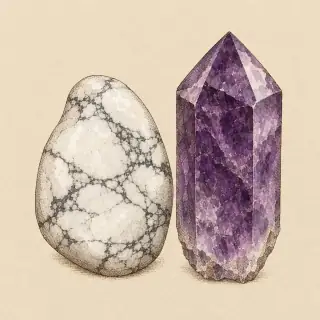
- Amethyst for Crystal healers pair these two stones to maximize nighttime relaxation. They believe Amethyst enhances spiritual intuition while howlite absorbs the frantic thoughts that prevent deep sleep.
- Clear Quartz for Practitioners use Clear Quartz to amplify howlite's traditionally calming properties. They believe this pairing brings intense mental clarity and helps you process difficult emotions with patience.
Caring for Howlite
Cleaning: Wipe with a dry or barely damp cloth; avoid soaking.
Avoid: Porous and soft, so avoid water, chemicals, perfume, and any abrasive surfaces. Dyed versions may bleed color.
Your crystal profile
Is Howlite Your Birthstone?
Month
Day
Howlite is linked to Gemini. Enter your birthday above to see if it matches your sign.
Pairs well with
Howlite at a glance
- Also known as
- Silico-boro-calcite (original name), howlite turquoise / turquoise howlite (when dyed)
- Tradition
- Calming an overactive mind
- Chakra / element
- Crown (Sahasrara) / Air
- In one line
- The howlite meaning centers on patience and mental tranquility, traditionally valued in this naturally white, porous mineral.
- Try this first
- Hold a tumbled piece in your palm when you feel overwhelmed by racing thoughts.
- Do not
- Avoid wearing it as a daily ring or exposing it to lotions, as its Mohs 3.5 hardness and high porosity mean it scratches and absorbs liquids easily.
Mindat.org mineral data, howlite entry
Using Howlite in Daily Practice
Modern crystal practitioners turn to this stone when seeking patience and a quieter mind.
At your office desk during a tense Thursday afternoon meeting.
You face a frustrating project delay, and your thoughts immediately start racing. Crystal healing traditions suggest keeping a tumbled howlite stone on your desk to help manage these overwhelming moments. As you sit through the tense update, you hold the cool, porous stone in your palm. Practitioners believe this action grounds a restless mind and encourages patience. You take three slow breaths, focusing on the dark veins crossing the white surface. In modern spiritual practice, the howlite meaning centers entirely on calming this exact kind of mental overdrive, helping you respond clearly and avoid purely frustrated reactions.
Beside your bed at 11:30 PM on a restless Sunday night.
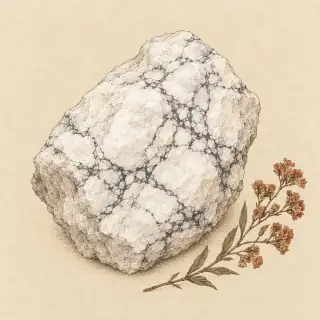
Your mind replays the upcoming week's entire schedule, keeping you wide awake. Many modern crystal users place a piece of raw howlite directly on their nightstand or slip it under their pillow to promote better sleep. According to traditional crystal practice, the stone's energy directly counters overthinking and racing thoughts. You reach out and touch the cauliflower-like nodule in the dark. Followers of chakra healing associate the mineral with the Crown chakra, using it to clear away unnecessary mental clutter. You close your eyes, relying on this tradition to find the patience needed to finally drift off.
In your living room preparing for a meditation session before sunrise.
You sit on your cushion, struggling to settle your busy mind before the day officially starts. Gemini placements, frequently associated with rapid thoughts and a restless nature, heavily utilize this stone in their morning routines. You hold a piece of the mineral lightly in your left hand. Crystal practitioners say this action absorbs nervous energy and clears emotional static. As you focus on the steady rhythm of your breathing, you visualize the white stone acting as a sponge for your rushing thoughts. You spend ten minutes grounding yourself, applying the traditional belief that this mineral brings emotional tranquility.
The Name and the Market
The howlite meaning carries no old folklore, but its real history involves both a naming dispute and an ongoing jewelry market complication.
Discoverer's Choice Versus Scientific Honor
Canadian chemist Henry How first identified this white mineral in 1868 near Windsor, Nova Scotia. Miners in a local gypsum quarry flagged the unfamiliar nodules as a nuisance. How analyzed the material and gave it a strictly descriptive name: silico-boro-calcite. He based this name directly on its exact chemical composition. However, American geologist James Dwight Dana reviewed the discovery shortly after and decided to rename the mineral howlite to honor How's work. The discoverer's own preferred, descriptive name quickly lost out to an eponym he did not choose himself. Today, silico-boro-calcite remains completely forgotten by the general public. Mineralogists and crystal collectors exclusively use Dana's tribute name. This creates a historical oddity where the man who found and accurately classified the stone lost control of its public identity almost immediately. Science favors Dana's choice, securing How a permanent place in mineralogical history despite his original intentions.
The Dyed Turquoise Dilemma
Howlite possesses a naturally porous structure and a low Mohs hardness of 3.5. This physical reality makes the white stone exceptionally easy to dye. Because natural howlite often features dark gray-to-black matrix veining that closely resembles genuine turquoise, dyed blue howlite became the jewelry market's single most common imitation turquoise. This creates a sharp divide in modern retail practices. Many legitimate jewelry sellers openly and honestly label this dyed material as howlite turquoise or turquoise howlite. They offer an affordable, attractive product with full transparency. Conversely, dishonest merchants pass the exact same dyed material off as genuine turquoise to unsuspecting buyers. Consumers face a constant challenge navigating these two very different market practices around the same physical property. Buyers must rely on gemological testing or trusted vendors to distinguish the natural white mineral holding a blue dye from actual copper-bearing turquoise.
Frequently Asked Questions
Who should wear howlite?
Anyone looking to cultivate patience and reduce daily mental stress can benefit from wearing howlite. In traditional crystal healing, practitioners specifically recommend this stone for individuals who struggle with an overactive mind, frequent frustration, or racing thoughts at night. The howlite meaning focuses heavily on cooling hot tempers and slowing down frantic energy. People seeking a visual reminder to pause and breathe during difficult conversations often choose this mineral. You should avoid wearing it in heavy-duty settings, as the soft stone requires gentle handling to prevent damage.
What zodiac sign is howlite for?
Modern crystal practitioners primarily recommend howlite for those born under the Gemini zodiac sign. Gemini is an air sign famous for its quick, highly active intellect, which can sometimes lead to overthinking or mental exhaustion. Spiritual healers believe this calming white stone helps Geminis slow their thoughts, ground their energy, and find quiet focus. Crystal workers also frequently use the stone as a secondary pairing for Virgo. They traditionally claim the mineral's soothing energy helps ease the intense perfectionism and critical self-analysis that Virgos sometimes face.
Is howlite the same as turquoise?
No, howlite and turquoise are two entirely different minerals. Genuine turquoise is a valuable copper aluminum phosphate mineral that naturally forms in shades of blue and green. Howlite is a soft, highly porous calcium borosilicate that is naturally white or gray. Because white howlite features dark matrix veining that closely resembles the patterns in turquoise, manufacturers frequently dye it blue to imitate the more expensive gemstone. Sellers honestly label this dyed material howlite turquoise, but you must read descriptions carefully to avoid accidentally buying a dyed substitute.
Is howlite safe to wear every day?
You can wear howlite every day if you choose the right type of jewelry, but it is entirely unsafe for daily-wear rings. The stone ranks at a very soft 3.5 on the Mohs hardness scale. It will scratch, scuff, and chip easily if you bump it against hard surfaces. The mineral is also highly porous, meaning it readily absorbs hand sanitizers, lotions, and natural skin oils. These substances will permanently stain the stone. For regular wear, stick to protected pieces like pendants or earrings that sit safely away from your hands.
How do you cleanse howlite?
You must clean howlite physically using only a soft, dry microfiber cloth. Because the mineral is incredibly porous, you should never soak it in water, soapy mixtures, or jewelry cleaning solutions. The stone will absorb these liquids, which can ruin its finish or alter its color permanently. You must also keep it away from essential oils and lotions. For traditional energetic clearing, crystal healers recommend safe, dry methods. You can leave the stone resting on a piece of selenite overnight or expose it to the sound waves of a tuning fork.
What We Know About Howlite (No Kunz Coverage — See Note)
The howlite meaning has zero coverage in George Frederick Kunz's 1913 book, so modern authoritative mineralogical sources provide the documented history and physical facts instead.
- The 1868 discovery and naming of the mineral in Nova Scotia.
Henry How, 1868; named by James Dwight Dana
Canadian chemist and mineralogist Henry How first identified this borate mineral near Windsor, Nova Scotia, in 1868. Miners working in a local gypsum quarry found the irregular, cauliflower-like white nodules and flagged them as an unfamiliar nuisance. How carefully analyzed the calcium borosilicate hydroxide material and initially named it silico-boro-calcite to accurately describe its chemical makeup. Shortly after this publication, the prominent American geologist James Dwight Dana formally renamed the mineral howlite to honor How's original discovery and detailed analysis. The original Nova Scotia location remains a historically significant source, though modern commercial mining of these evaporite deposits frequently occurs in California and Nevada today. - The common jewelry practice of dyeing the porous stone to imitate turquoise.
GIA gemological reference, accessed 2026
The Gemological Institute of America and other authoritative gemological bodies extensively document howlite's role as a turquoise simulant. The mineral forms with a very low Mohs hardness of 3.5 and a highly porous structure. This physical porosity allows the naturally white or gray stone to absorb artificial dyes exceptionally well. Because the stone typically features dark gray-to-black matrix veining similar to genuine turquoise, dyed blue pieces look highly convincing. Reputable sellers accurately label this material as dyed howlite or turquoise howlite, offering consumers an inexpensive alternative to copper-bearing turquoise. Dishonest vendors frequently use this exact same dyed material to sell fake turquoise to uninformed buyers.
References
“The safest cleaning methods are also the easiest.”