 BirthstoneMeaning
 Aries Birthstone
 Taurus Birthstone
 Gemini Birthstone
 Cancer Birthstone
 Leo Birthstone
 Virgo Birthstone
 Libra Birthstone
 Scorpio Birthstone
 Sagittarius Birthstone
 Capricorn Birthstone
 Aquarius Birthstone
 Pisces Birthstone
 Peridot Meaning
 Garnet Meaning
 Amethyst Meaning
 Aquamarine Meaning
 Diamond Meaning
 Emerald Meaning
 Pearl Meaning
 Ruby Meaning
 Blue Sapphire Meaning
 Opal Meaning
 Topaz Meaning
 Turquoise Meaning
 Moonstone Meaning
 Tourmaline Meaning
 Citrine Meaning
 Tanzanite Meaning
 Alexandrite Meaning
 Spinel Meaning
 Sardonyx Meaning
 Zircon Meaning
 Lapis Lazuli Meaning
 Rose Quartz Meaning
 Onyx Meaning
 Labradorite Meaning
 Malachite Meaning
 Jade Meaning
 Agate Meaning
 Carnelian Meaning
 Clear Quartz Meaning
 Black Tourmaline Meaning
 Smoky Quartz Meaning
 Sodalite Meaning
 Obsidian Meaning
 Fluorite Meaning
 Selenite Meaning
 Hematite Meaning
 Howlite Meaning
 September Birthstone
The Complete Birth Flower Chart, Month by Month
A birth flower chart lists the flower tradition assigns to each month of the year, the way a birthstone chart lists a gemstone. Most months carry two flowers, not one, because the list grew in two waves: Victorian floriography first, American florist marketing later. This birth flower chart lays out all 12 months side by side.
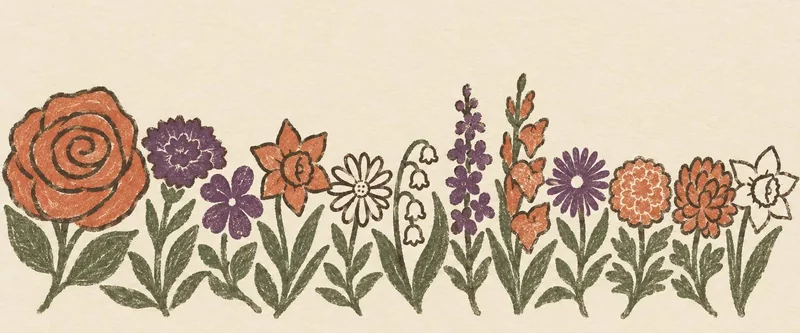
- birth flower chart
- birth flower by month
- birth month flowers
- birth flower meaning
Bloom color is a fact you can check on the plant itself. A flower's "meaning" is Victorian-era floriography, a 19th-century tradition of assigning symbolism to flowers, and later florist-trade additions on top of it. We label every meaning as tradition and keep it visibly apart from the color, which is not.
How to Read This Chart
Find your birth month in the table below. Most months show two flowers. The first is usually the older, more widely agreed-on one. The second was often added later by American florists and does not always show up on every list, which is exactly what the disagreements section further down documents with named sources. Color is listed as a plain fact about the plant. Meaning is listed as what the tradition says, never as something the flower does. Modern birth-flower lists trace their template back to the first true floriography dictionary, "Le langage des Fleurs," published in Paris in 1819 by Louise Cortambert under the pen name Madame Charlotte de la Tour and translated into English within a year.
The Birth Flower Chart, Month by Month
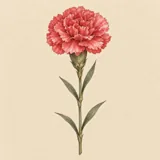
January
- Carnation (primary)
Dianthus caryophyllus. Color: Most often pink or red, also grown in white, yellow, purple, and striped forms.
Traditionally read as love, with the color changing the message: red for deep love, pink set aside for mothers.
- Snowdrop (secondary)
Galanthus. Color: Pure white, with small green markings on the inner petals, in a drooping bell shape.
Traditionally read as hope and consolation, used in folklore for both a hopeful new year and, in older mourning customs, sympathy.
Both major almanac sources pair carnation with snowdrop for January. Farmers' Almanac calls carnation the official flower and snowdrop the traditional alternate, a minor ranking, not a real disagreement over which flowers belong to the month.
Birthstone: Garnet
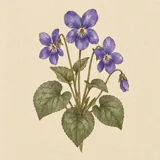
February
- Violet (primary)
Viola. Color: Usually purple-blue, with some cultivars in yellow, white, or bicolor.
Traditionally read as modesty and faithfulness.
- Primrose (secondary)
Primula vulgaris. Color: Pale yellow in the wild, garden varieties add pink, red, purple, and white.
Traditionally read as young love and the first sign of spring.
Britannica's list also mentions iris as an occasional third February flower on some lists, though violet and primrose are the pair almost every modern source agrees on.
Birthstone: Amethyst
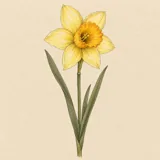
March
- Daffodil (primary)
Narcissus. Color: Yellow and white in the classic trumpet form, also grown in orange and pink-cupped varieties.
Traditionally read as rebirth and new beginnings, tied to its place as one of the first flowers of spring.
- Jonquil (secondary)
Narcissus jonquilla. Color: Yellow only, in smaller and more fragrant blooms than daffodil.
Traditionally read as affection returned.
Jonquil is a specific narcissus species, not a separate flower family from daffodil. Some regional sources use "jonquil" as another name for daffodil, not as a distinct second flower, so treat the pair as closely related, not two unrelated plants.
Birthstone: Aquamarine and Bloodstone
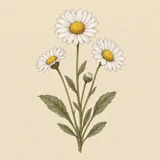
April
- Daisy (primary)
Bellis perennis. Color: White petals around a yellow center in the classic form, cultivated varieties add pink, red, and yellow.
Traditionally read as innocence and true love.
- Sweet Pea (secondary)
Lathyrus odoratus. Color: Pink, purple, salmon, peach, and white; sweet peas are not grown in yellow.
Traditionally read as a fond farewell or a thank-you, sometimes blissful pleasure.
Birthstone: Diamond
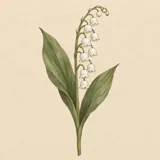
May
- Lily of the Valley (primary)
Convallaria majalis. Color: White, small bell-shaped blooms strung along a single stem.
Traditionally read as the return of happiness, sweetness, and humility.
- Hawthorn (secondary)
Crataegus. Color: White, pink, or red, in small clustered blossoms on a flowering shrub.
Traditionally read as hope and protection.
Birthstone: Emerald
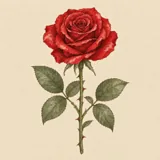
June
- Rose (primary)
Rosa. Color: Red, pink, white, yellow, orange, and more, one of the widest color ranges of any garden flower.
Traditionally read as love, with color carrying the specific message: red for true love, yellow for friendship, white for purity.
- Honeysuckle (secondary)
Lonicera. Color: White, yellow, pink, or red, in tubular clustered flowers.
Traditionally read as bonds of love and affection for someone new.
Birthstone: Pearl, Alexandrite, and Moonstone
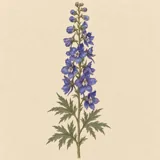
July
- Larkspur (primary)
Delphinium. Color: Blue and purple most often, also grown in pink and white.
Traditionally read as an open heart, with color changing the message: blue for dignity, purple for first love.
- Water Lily (secondary)
Nymphaea. Color: White in the classic form, cultivated types add yellow, pink, red, and blue.
Traditionally read as purity and quiet majesty.
Birthstone: Ruby
August
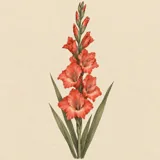
- Gladiolus (primary)
Gladiolus. Color: Red, pink, white, yellow, purple, and orange, across tall flower spikes.
Traditionally read as strength of character and remembrance.
- Poppy (secondary)
Papaver. Color: Red most famously, also grown in orange, pink, purple, and white.
Traditionally read as remembrance, tied to the red poppy worn after the First World War, and restful sleep.
Gladiolus does not appear in the original 19th-century Victorian language of flowers. It entered the birth flower list later, which is part of why some older floriography references skip it entirely.
Birthstone: Peridot, Spinel, and Sardonyx
September
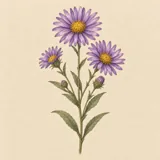
- Aster (primary)
Aster / Symphyotrichum. Color: Purple most classically, also grown in pink, blue, and white.
Traditionally read as wisdom, faith, and patience, its name drawn from the Greek word for star.
- Morning Glory (secondary)
Ipomoea. Color: Blue most classically, also grown in purple, pink, red, and white.
Traditionally read as affection, sometimes as love that goes unanswered.
Birthstone: Sapphire
October
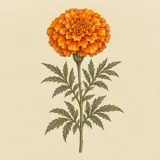
- Marigold (primary)
Tagetes / Calendula. Color: Orange, yellow, red, and bi-colored blooms.
Traditionally read as warmth and creativity. In Mexican tradition, marigolds are used on Dia de los Muertos to guide the dead home for the night, a separate, specific custom from the Victorian birth flower meaning.
- Cosmos (secondary)
Cosmos bipinnatus. Color: Pink, white, red, orange, and yellow, on tall thin stems.
Traditionally read as harmony and order.
Birthstone: Opal and Tourmaline
November
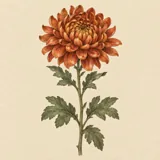
- Chrysanthemum (primary)
Chrysanthemum. Color: Yellow, white, red, purple, and bronze, one of the widest color ranges of any birth flower.
Traditionally read as joy, friendship, and long life. This is the one flower every source we checked agrees belongs to November.
- Peony (secondary, disputed)
Paeonia. Color: Usually pink, also grown in white, red, and coral.
Traditionally read as prosperity and a happy marriage.
See the disagreements section below: The Old Farmer's Almanac publishes November with chrysanthemum alone, no second flower. Farmers' Almanac and most florist trade sites pair it with peony.
Birthstone: Topaz and Citrine
December
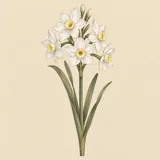
- Narcissus (Paperwhite) (primary in modern US sources)
Narcissus papyraceus. Color: White, with a pale yellow center, usually grown as an indoor winter bulb.
Traditionally read as hope and good wishes, tied to its midwinter indoor bloom.
- Holly (primary in UK and older sources)
Ilex. Color: Dark green leaves with red berries; a few cultivars carry yellow or white berries instead.
Traditionally read as protection and domestic happiness.
See the disagreements section below: which flower leads for December depends on which tradition you're reading.
Birthstone: Turquoise, Tanzanite, and Zircon
Where Birth Flower Lists Disagree
Most months on this chart are settled. Two are not, and we would rather show you the disagreement than paper over it.
November: One Flower or Two?
Every source we checked agrees chrysanthemum belongs to November. Not every source agrees it has company. The Old Farmer's Almanac publishes November's birth flower as chrysanthemum alone; its dedicated page is titled "The Chrysanthemum," with no second name attached. Farmers' Almanac and most florist trade sites pair it with peony instead. There's a botanical detail behind that split worth knowing: peonies bloom in late spring across most of the US, not in November, which is one reason the pairing reads like a newer, more commercial addition, not an old floriography match.
December: Which Flower Comes First?
Nobody disputes that December has both narcissus and holly. What differs is which one leads. Farmers' Almanac names narcissus as "the official December birth flower" and describes holly as "the most common secondary December flower in U.K. tradition and old Almanac sources." Older and British references tend to lead with holly, likely because of its long tie to English midwinter and Christmas carol tradition. Modern American florist sources lead with narcissus, likely because paperwhites are what you can actually buy as a potted bulb in December, while holly stays mostly a cut evergreen. We list both, in the order most modern US sources use, and we say so here so the choice isn't silent.
What This Chart Does That Others Don't
- Color and meaning are two separate fields for every flower on this chart, one fact and one tradition, never blended into a single sentence that hides which is which.
- The two real disagreements in the birth flower tradition, November's single-versus-double flower question and December's narcissus-versus-holly order, are named and sourced here, not silently resolved one way.
- Every month links to this site's own birthstone guide for that month, so you can read the flower and the stone side by side without leaving the page.
Birth Flower Chart FAQ
- Why do some months have two birth flowers?
- Most months carry two flowers because the list grew in two waves. Victorian flower writers in 19th-century England picked one flower per month for their language-of-flowers dictionaries. American florists later filled in most months with a second flower in the early 20th century, when the modern birthday-flower list took the shape it still has. The two flowers in a pair often came from two different eras of the same tradition, not one single source, which is also why they don't always feel closely related.
- What is the difference between a birth flower and a birthstone?
- A birthstone is a gem assigned to your birth month by the American jewelry trade, fixed in 1912. A birth flower is a plant assigned to your birth month through 19th-century floriography, a much older and looser tradition with no single fixing date. They grew up separately and were combined by marketers later. Each month on this chart links to this site's matching birthstone guide, so you can compare both traditions for your own birth month.
- Who decided which flower goes with which month?
- No single group did, and that is different from how birthstones work. Birthstones trace to one specific 1912 decision by the American jewelry trade. Birth flowers built up more loosely, out of 19th-century Victorian language-of-flowers dictionaries in England, then filled in and popularized by American florists in the early 20th century who wanted a flower to sell for every birth month. That looser history is why some months carry two flowers from two different eras, and why almanacs still don't fully agree on which flower leads.
- Why don't all birth flower charts agree?
- Because the tradition itself has more than one source. We found two real disagreements while researching this chart: whether November has one flower or two, and whether December leads with narcissus or holly. Both are documented above with the sources behind each version. We don't pick one silently. Most other months are settled across the sources we checked.
- Are birth flower meanings backed by science?
- No. A flower's bloom color is a fact you can verify by looking at the plant. Its "meaning," whether that's hope, love, or remembrance, is Victorian-era floriography and later florist-trade tradition, not a property of the plant itself. We keep the two apart everywhere on this chart: color as fact, meaning as tradition.
- What if my birth flower doesn't actually bloom in my birth month?
- That happens more than the chart implies. Peony, November's secondary flower, blooms in late spring across most of the US, not in fall. Lily of the valley, tied to May, can bloom earlier or later depending on your climate. The chart is a symbolic assignment from floriography and florist tradition, not a planting or blooming calendar for your area.
Sources Behind This Chart
We verified every month's flower, color, and traditional meaning against at least two of the sources below before writing anything. Read them directly. Our summary here is a starting point, not the last word. For example, the first link below points to The Old Farmer's Almanac article titled "What Is My Birth Flower? Birth Month Flowers and Their Meanings".
- The Old Farmer's Almanac, "What Is My Birth Flower? Birth Month Flowers and Their Meanings" — Primary cross-check for all 12 months' flower assignments, colors, and meanings.
- Farmers' Almanac, "Birth Flower Chart: All 12 Birth Flowers by Month" — Second independent cross-check for all 12 months' flower assignments and meanings.
- Farmers' Almanac, "December Birth Flower: Narcissus, Paperwhite Lore, and Holly Alternative" — Source for the December narcissus-versus-holly disagreement.
- The Old Farmer's Almanac, "November Birth Flower: The Chrysanthemum" — Source for the November single-flower-versus-pair disagreement.
- Britannica, "Birth month flowers" — Third-source check on January and February flower identification and the iris-as-occasional-third-February-flower note.
- The Old Farmer's Almanac, individual month pages (January through December) — Color detail for each flower, cross-checked against Farmers' Almanac and florist-industry pages cited inline above; each month's dedicated Old Farmer's Almanac page follows the pattern almanac.com/content/{month}-birth-flowers.