 BirthstoneMeaning
 Aries Birthstone
 Taurus Birthstone
 Gemini Birthstone
 Cancer Birthstone
 Leo Birthstone
 Virgo Birthstone
 Libra Birthstone
 Scorpio Birthstone
 Sagittarius Birthstone
 Capricorn Birthstone
 Aquarius Birthstone
 Pisces Birthstone
 Peridot Meaning
 Garnet Meaning
 Amethyst Meaning
 Aquamarine Meaning
 Diamond Meaning
 Emerald Meaning
 Pearl Meaning
 Ruby Meaning
 Blue Sapphire Meaning
 Opal Meaning
 Topaz Meaning
 Turquoise Meaning
 Moonstone Meaning
 Tourmaline Meaning
 Citrine Meaning
 Tanzanite Meaning
 Alexandrite Meaning
 Spinel Meaning
 Sardonyx Meaning
 Zircon Meaning
 Lapis Lazuli Meaning
 Rose Quartz Meaning
 Onyx Meaning
 Labradorite Meaning
 Malachite Meaning
 Jade Meaning
 Agate Meaning
 Carnelian Meaning
 Clear Quartz Meaning
 Black Tourmaline Meaning
 Smoky Quartz Meaning
 Sodalite Meaning
 Obsidian Meaning
 Fluorite Meaning
 Selenite Meaning
 Hematite Meaning
 Howlite Meaning
 September Birthstone
Labradorite Meaning and Healing Properties Explained
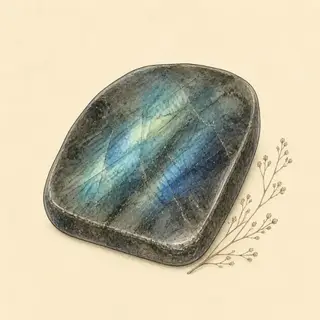
Labradorite meaning refers to its traditional use as a stone of hidden revelation and esoteric study. Mineralogists classify this plagioclase feldspar by its unique optical interference effect called labradorescence. Crystal practitioners value the gem as a tool for crown chakra meditation and navigating major life transitions.
| Chakra | Crown (Sahasrara) |
| Element | Water |
| Zodiac | Scorpio |
| Color | Gray with blue flash, Green flash, Gold flash, Spectrolite (full spectrum) |
What Is the Foundational Spiritual Labradorite Meaning?
The cultural labradorite meaning originates in 1770, when Moravian missionaries working on the remote Isle of Paul in Labrador, Canada, formally identified this gray stone. The local indigenous populations already knew the material well. Modern mineralogists classify the discovery as a plagioclase feldspar. The stone gained rapid popularity in Europe due to its unique optical flash. Gemologist George Frederick Kunz documented its enduring cultural presence in his 1913 text The Curious Lore of Precious Stones. Kunz never wrote a dedicated narrative chapter for this specific mineral. He recorded its usage entirely through structured lists. This list-based documentation offers a highly precise historical record of how early twentieth-century society actually utilized the stone. Kunz documented a fascinating sartorial custom from Siam regarding the days of the week. Local fashion dictated specific colors and materials for daily wear. Practitioners wore white fabrics on Monday and deep red silks on Sunday. Kunz recorded this specific flashing feldspar as the designated phenomenal gem for Saturday wear. He used the word phenomenal to describe stones displaying optical interference effects. Kunz also captured the stone's role in Victorian and Edwardian sentiment jewelry. Jewelers created secret messages by spelling words with the first letters of sequential gemstones. Kunz listed this feldspar for the letter L in a specific arrangement spelling the phrase GOOD LUCK. He also recorded its use in a LOVE ME arrangement. He used the older trade name Labrador spar for that second list. These exact records prove that early twentieth-century jewelers actively sourced and cut this material for romantic and superstitious amulets.
You can observe the internal light interference effect when you turn the stone slowly in your hand. This optical shift forms the direct basis for the emotional labradorite meaning. Practitioners use the stone to navigate periods of shifting personal identity. The gray surface appears entirely unremarkable from certain angles. A slight shift in perspective reveals bright flashes of blue, green, or gold. You apply this visual metaphor directly to your own emotional challenges. The tradition suggests that difficult emotional states often conceal valuable personal insights. Crystal workers recommend holding a polished piece during moments of severe self-doubt. You might feel totally stuck in a rigid way of thinking. The stone serves as a physical reminder to change your viewing angle. The Water element association reinforces this specific focus on fluidity and emotional depth. You learn to accept that surface appearances rarely tell the whole story. You allow your internal feelings to surface naturally without forcing them into a rigid structure. The practice encourages patience during confusing emotional transitions. You wait for the light to catch the hidden planes of your own awareness.
Zodiac Connection
Scorpio traditions align perfectly with a stone that hides bright internal light beneath a dark, opaque gray surface.
Tradition classifies this plagioclase feldspar as a tool for emotional reflection. Crystal practitioners believe the stone provides symbolic grounding energy. Folklore suggests the mineral aids in meditation practices. You should never use crystals to replace professional medical care. Healing lore represents cultural belief.
How Is Labradorite Utilized in Traditional Healing Practices?
Physical Healing
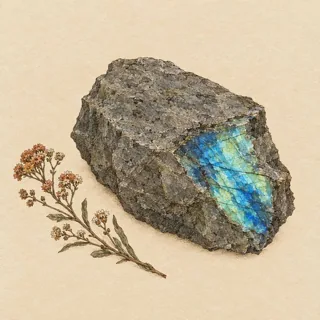
The physical labradorite meaning centers on folkloric healing traditions that utilize this specific feldspar as a protective barrier during periods of severe physical exhaustion. Crystal practitioners traditionally place a heavy, polished palm stone in their pocket when facing long work days. The lore suggests the dense mineral acts as a physical shield against environmental fatigue. Traditional users place large pieces of the rough mineral on their nightstands to guard their physical sleeping environment. Crystal workers do not consider these practices a form of medical intervention. They treat the stone strictly as a symbolic boundary marker. The physical weight of the gem grounds your attention in your own physical body. Folklore dictates that the sudden flashes of internal light deflect unwanted external demands. Traditional practitioners incorporate the stone into specific physical spaces where demanding labor occurs. They place freeform chunks on drafting tables to maintain physical stamina during complex tasks. The tradition values the dark, earthy base color of the mineral as an anchor for physical endurance. You might handle the stone immediately before entering a crowded room. You feel the smooth polish of the surface. You use that tactile sensation to remain physically present and centered in your own space.
Emotional & Spiritual Healing
The emotional labradorite meaning focuses entirely on internal reflection and deep shadow work. You often carry unrecognized emotional burdens from previous challenging experiences. Crystal practitioners use the flashing light of this feldspar to symbolize the surfacing of these hidden feelings. The tradition dictates that you cannot process hidden emotions until you observe them clearly. You might sit quietly with the stone to reflect on a sudden feeling of anger. The folklore suggests the changing colors help you identify the true source of your frustration. You learn to recognize the difference between a current external threat and an old internal insecurity. Emotional practitioners place great value on the dark base color of the mineral. They associate the gray or black background with emotional stability. The bright internal flashes represent sudden moments of emotional clarity. You use the stone to balance intense personal revelations with a grounded, realistic perspective. The practice encourages you to face uncomfortable personal truths. You hold the stone to maintain your composure during difficult conversations. The shifting optical effect reminds you that emotional states change quickly. You learn to observe your feelings without letting them overwhelm your logical mind.
Chakra Association
The chakra labradorite meaning focuses entirely on your connection to abstract spiritual concepts. Practitioners call this specific energy center the Sahasrara. It sits directly at the top of the human head. This center governs philosophical thought and broader spiritual awareness. Traditional chakra workers use this flashing feldspar to stimulate this upper energy zone. They believe the high-frequency optical flashes resonate with complex spiritual information. You might feel entirely disconnected from your broader life purpose. Chakra folklore suggests a blocked Sahasrara creates this specific feeling of isolation. You place the flat stone directly above your head during supine meditation to address this issue. The tradition claims the mineral clears static from your spiritual channel. Practitioners warn that an overactive crown chakra can cause severe mental disorientation. They utilize the dark, earthy matrix of this specific feldspar to mitigate that exact risk. The opaque base grounds the rapidly expanding crown energy. You maintain a firm connection to physical reality while you explore abstract spiritual ideas. This dual action makes the stone highly valuable in modern energy balancing routines. You use the mineral to bridge the gap between high-minded philosophy and daily practical living.
This is tradition and practice, not medical, financial, or life advice.
How Do You Use Labradorite Day to Day?
Wearing Labradorite
You can wear jewelry featuring this flashing feldspar to keep the protective labradorite meaning close to your physical body. Jewelers frequently set the cabochons in heavy silver rings or large statement pendants. The mineral possesses a Mohs hardness of 6 to 6.5. This relatively soft rating requires conscious caution during your daily routine. You must remove your rings before lifting heavy objects to prevent deep scratches. You should also protect the stone from direct impacts that could split its internal cleavage planes.
Labradorite in Your Home
You can place large polished freeform pieces near the main entrance of your living space. Traditional folklore suggests this specific placement filters the energy entering your private home, emphasizing the protective labradorite meaning. The changing internal light catches the attention of arriving guests immediately. You can position the stone under a dedicated halogen lamp to maximize the visible labradorescence. This deliberate lighting setup establishes a calm, contemplative tone for the entire room.
Meditation with Labradorite
You hold a smooth palm stone in your receptive hand during seated reflection. You tilt the mineral slowly back and forth to observe the shifting colors. You time your deep breathing to the appearance and disappearance of the internal flash. This repetitive physical movement helps anchor your wandering mind. You deepen your focus on the present moment by concentrating entirely on the changing light.
Cleansing & Charging
You must clean this specific plagioclase feldspar using only lukewarm water and a very soft microfiber cloth. The internal cleavage planes make the mineral highly vulnerable to extreme temperature changes. You must avoid hot water completely to prevent internal fracturing. You cannot use ultrasonic jewelry cleaners under any circumstances. The high-frequency vibrations will permanently damage the internal structure of the stone.
Crystal Combinations
Labradorite pairs well with these crystals for complementary energy in crystal healing practice:
- Moonstone for Practitioners combine these two feldspars to balance the bright lunar energy of one with the dark grounding matrix of the other.
- Clear Quartz for Traditional folklore pairs these stones to amplify the optical flash and stimulate deep intellectual focus during meditation practices.
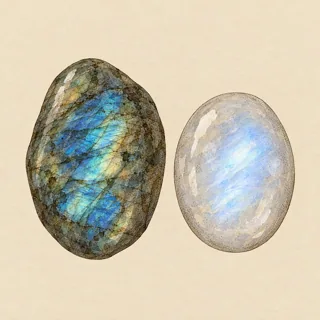
Labradorite and rose quartz share the same Water element assignment in crystal practice, though labradorite sits at the Crown chakra and rose quartz at the Heart. The rose quartz guide covers that Heart chakra work and rose quartz's Taurus association.
Caring for Labradorite
Cleaning: Warm soapy water and a soft cloth; avoid ultrasonic and steam cleaners.
Avoid: Labradorite can split along internal planes under a sharp knock. Avoid drops and hard impacts that could cause it to crack.
Your crystal profile
Is Labradorite Your Birthstone?
Month
Day
Labradorite is linked to Scorpio. Enter your birthday above to see if it matches your sign.
Pairs well with
Labradorite at a glance
- Also known as
- Labrador Spar
- Tradition
- Stone of hidden revelation
- Chakra / element
- Crown (Sahasrara) / Water
- In one line
- The core labradorite meaning centers on a flashing plagioclase feldspar used traditionally for emotional reflection and crown chakra meditation.
- Try this first
- Turn the stone slowly under a direct light to observe the shifting colors and reset your focus.
- Do not
- Avoid ultrasonic cleaners and hot water to prevent damage to the internal cleavage planes.
Kunz, The Curious Lore of Precious Stones, 1913, p.335
Practical Applications For Shifting Energy
You can incorporate this optical feldspar into specific routines to explore the practical labradorite meaning and anchor your focus during transitions.
Saturday evening at 7pm
You prepare for a quiet night of reading in your living room. You place a polished freeform piece of this feldspar on your side table under a direct reading lamp. The warm light catches the internal planes of the mineral perfectly. You use this visual anchor to detach completely from the stress of your work week. The stone serves as your physical transition into a restful weekend state.
Tuesday morning at your desk
You face a highly complicated work project with no obvious solution. You hold a small tumbled piece of this stone in your left hand. You turn the mineral slowly until the bright blue flash suddenly appears. This deliberate physical action channels the labradorite meaning, reminding you to look at your project from a completely different angle. You return to your keyboard with a fresh, adjusted perspective.
December 21st during a winter storm
You sit by your window watching the heavy snow fall. You hold your favorite silver pendant featuring this specific mineral. You reflect on George Frederick Kunz listing this exact stone among his historical Gems of Winter. The cold gray matrix matches the heavy winter sky outside your window perfectly. You appreciate the hidden flashes of light as a quiet promise of returning spring.
Historical Debates Over Saturday Gem Custom
Antique jewelry historians trace differing opinions on exactly why Edwardians categorized this stone for specific days and sentiments.
The Siam Saturday Custom
In 1913, George Frederick Kunz documented a strict sartorial tradition from Siam on page 335 of The Curious Lore of Precious Stones. Local society dictated specific colors and specific gems for every day of the week. Practitioners wore white fabrics on Monday and deep red silks on Sunday. Kunz recorded this exact flashing feldspar as the designated phenomenal gem for Saturday wear. Modern crystal historians debate the exact reasoning behind this specific assignment. Some argue the dark gray base color aligned with traditional Saturnian associations for Saturday. Kunz specifically emphasized the phenomenal optical quality of the stone in his text. The historical record indicates the optical flash held more importance than the dark base color.
The Acrostic Sentiment Debate
Victorian and Edwardian jewelers routinely spelled out secret words using the first letters of sequential gemstones. Kunz documented this exact practice on pages 360 and 362 of his 1913 book. He listed Labrador spar for the letter L in a romantic LOVE ME arrangement. He listed the standard name of the stone for a GOOD LUCK arrangement. Antique jewelry scholars sometimes argue over the true prevalence of this dark material in romantic pieces. The dark gray base appears counterintuitive for brightly colored romance jewelry. Kunz provided the concrete documentary evidence. His lists prove the trade actively cut and set this specific mineral for exact sentiment spelling.
Frequently Asked Questions
What exactly creates the flash of color in this specific stone?
Understanding the physical labradorite meaning starts with this unique optical effect, which mineralogists call labradorescence. Light enters the surface of the stone and strikes internal parallel cleavage planes. These microscopic layered structures formed naturally as the plagioclase feldspar cooled deep within the earth millions of years ago. The incoming light waves bounce off these different internal layers and physically interfere with one another. This optical interference produces the bright flashes of blue, green, yellow, or orange that you observe on the surface. The dark gray matrix of the surrounding mineral provides a high contrast background. This dark background makes the internal interference colors appear significantly brighter to the human eye.
Where did the official name of this mineral originally come from?
The scientific name comes directly from the Labrador region of eastern Canada. Moravian missionaries formally discovered and documented the mineral on the Isle of Paul in 1770. Indigenous peoples of the northern region had known and utilized the local material long before any European contact occurred. Geologists eventually found massive deposits of similar material in Madagascar and other global locations. The original Canadian geographic designation remains the official scientific name for this specific type of plagioclase feldspar. The jewelry trade sometimes used older names like Labrador spar during the nineteenth century.
Why do crystal practitioners strongly associate this stone with the winter season?
The seasonal association dates back directly to early twentieth-century gem classification systems. George Frederick Kunz explicitly listed the stone under his Gems of Winter heading on page 326 of his 1913 book. He paired the dark mineral with Moonstone and Pearl in that specific winter column. The dark, opaque base color perfectly mirrors the long, dark nights of the winter season. The sudden flashes of bright internal light strongly resemble the aurora borealis visible in extreme northern winter skies. The seasonal labradorite meaning continues to influence modern crystal workers. They utilize the stone heavily for deep introspection during the coldest months of the year.
Can I safely clean this gemstone using an ultrasonic jewelry machine?
You must never use an ultrasonic cleaner on this specific mineral under any circumstances. The stone possesses a relatively low Mohs hardness of only 6 to 6.5. The mineral also contains multiple internal cleavage planes that create its signature optical flash. The high-frequency vibrations of a commercial ultrasonic machine can easily cause these internal planes to separate or fracture completely. Extreme temperature changes from hot water can also cause the stone to crack along these same exact planes. You should only use mild soap, lukewarm water, and a very soft cloth to maintain the surface polish safely.
Who should wear labradorite?
Anyone seeking emotional reflection is traditionally drawn to this flashing feldspar. Crystal astrology practitioners often recommend it to individuals exploring hidden revelations and deep spiritual truths. Because it aligns with the crown chakra and the water element, folklore suggests it supports quiet meditation. Wearers looking for quiet introspection typically appreciate its shifting colors.
What zodiac sign is labradorite for?
Scorpio is the specific sign linked to this reflective stone. Folklore holds that the water element energy of the mineral perfectly matches their deep and investigative nature. Since practitioners associate it with uncovering hidden truths, this pairing makes sense for individuals who constantly seek profound insights. The crown chakra connection supports their continuous spiritual exploration.
Crystal practice also pairs labradorite with a card from the tarot deck. The Temperance tarot guide covers that card's upright and reversed meaning, plus the zodiac sign tradition assigns to it.
Documentary Evidence From Kunz
Historical texts provide clear evidence of how early twentieth-century society utilized this flashing feldspar.
- Siamese tradition assigned this specific phenomenal gem to Saturday wear.
Kunz 1913, p.335
George Frederick Kunz documented regional astrological fashion dictates in his chapter on planetary influences. He detailed how practitioners in Siam coordinated their daily clothing and jewelry colors. He explicitly listed this flashing feldspar as the phenomenal gem designated for Saturday use. - Edwardian jewelers used this feldspar to spell words in sentiment jewelry.
Kunz 1913, p.362
Kunz provided lists of gems used to spell specific phrases in antique rings and brooches. He recorded the period term Labrador spar as the L in a romantic LOVE ME arrangement. This proves the trade actively cut and set this specific mineral for romantic amulets during the early twentieth century.
References
“The safest cleaning methods are also the easiest.”