 BirthstoneMeaning
 Aries Birthstone
 Taurus Birthstone
 Gemini Birthstone
 Cancer Birthstone
 Leo Birthstone
 Virgo Birthstone
 Libra Birthstone
 Scorpio Birthstone
 Sagittarius Birthstone
 Capricorn Birthstone
 Aquarius Birthstone
 Pisces Birthstone
 Peridot Meaning
 Garnet Meaning
 Amethyst Meaning
 Aquamarine Meaning
 Diamond Meaning
 Emerald Meaning
 Pearl Meaning
 Ruby Meaning
 Blue Sapphire Meaning
 Opal Meaning
 Topaz Meaning
 Turquoise Meaning
 Moonstone Meaning
 Tourmaline Meaning
 Citrine Meaning
 Tanzanite Meaning
 Alexandrite Meaning
 Spinel Meaning
 Sardonyx Meaning
 Zircon Meaning
 Lapis Lazuli Meaning
 Rose Quartz Meaning
 Onyx Meaning
 Labradorite Meaning
 Malachite Meaning
 Jade Meaning
 Agate Meaning
 Carnelian Meaning
 Clear Quartz Meaning
 Black Tourmaline Meaning
 Smoky Quartz Meaning
 Sodalite Meaning
 Obsidian Meaning
 Fluorite Meaning
 Selenite Meaning
 Hematite Meaning
 Howlite Meaning
 September Birthstone
Wheel of Fortune Tarot: What Upright and Reversed Mean
This is tradition and practice, not medical, financial, or life advice.
A wheel of fortune tarot reading marks a turning point you don't fully control. Upright, the card promises a shift in your favor if you're ready to act when it arrives. Reversed, the turn stalls or repeats, often because the same pattern keeps coming back around. No reading here is a flat yes.
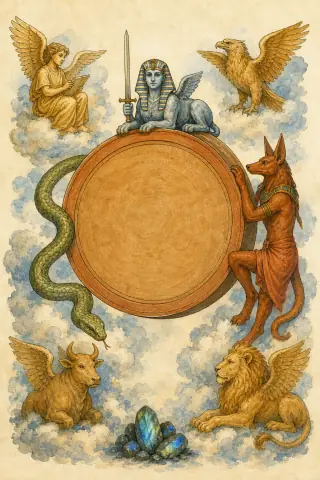
At a Glance
- Card
- X (10). Wheel of Fortune
- Upright
- Fortune, destiny, a turn in your favor
- Reversed
- Delay, repetition, more of the same
- Zodiac Sign
- Sagittarius
- Crystal
- Amethyst
- Verdict
- Maybe, a conditional yes
Wheel of Fortune Tarot Meaning, Upright and Reversed
Card ten turns the deck's numbering past its first full cycle, and the image matches that idea. A. E. Waite's own keyword list for this position, printed in 1911, reads "Destiny, fortune, success, elevation, luck, felicity," and readers still lean on that list a century later. Upright, the wheel favors you: an opportunity arrives that you didn't manufacture, a decision outside your hands resolves in your favor, or a stretch of flat luck finally breaks open. The card doesn't promise you earned it. It promises the turn is happening now, so the smart move is to take the opening while it's in front of you. Waiting for a better one to show up later gives the wheel time to turn again, and not always in your favor.
Reversed, the wheel doesn't flip to bad luck the way most quick-reference lists claim. Waite's own reversed keywords are "Increase, abundance, superfluity," words about too much of something, not too little. In practice, readers use this position for delay, repetition, or excess: the opportunity keeps almost arriving, a cycle you thought was finished starts again, or you get more of a good thing than you can use well. The lesson underneath stays about timing, but the shape of it flips. Whatever kept happening before is due to happen again unless you change your own pattern first.
Where Wheel of Fortune Tarot Traditions Disagree
- A. E. Waite printed "Increase, abundance, superfluity" as this card's reversed meaning in 1911. Nothing on that list says bad luck. Yet a lot of quick-reference tarot content published in the last decade flattens every reversed Major Arcana card into "the opposite, and usually worse," so the Wheel reversed gets rewritten as misfortune or a bad break. Waite's own words don't support that shortcut. His reversed Wheel describes too much of something landing on you, not too little.
- Readers pair a stone with almost every Major Arcana card, but most of those pairings are guesses with no written source behind them. The Wheel of Fortune is one of the few with a dated one: Aleister Crowley's 777, printed in 1909, puts amethyst on row 21 of Column XL, the Wheel's own path in his attribution table. Most sites that pair a crystal with this card never say where the pairing comes from, because for most cards, there is no table to cite.
The Wheel of Fortune in Real Situations
You've been half-hoping an ex reaches out, or that the person you've been texting for three weeks finally makes a move. A wheel of fortune pull here says the shift is close, but it isn't yours to force. Keep showing up. Stop refreshing your phone.
A promotion call, a client's yes or no, a layoff round, anything sitting on someone else's desk right now: this card says the decision is turning, and soon. Keep your resume updated and your pitch ready so you can move the moment it lands.
You've had the same bill collector, the same recurring car repair, the same bad month, show up three Januaries running. Reversed Wheel names that loop directly. It isn't fate repeating. It's a decision you keep making the same way, and it will keep costing you until you make a different one.
A friendship that went quiet two years ago resurfaces out of nowhere, a text at 11 p.m. from someone you'd written off. Upright Wheel treats that kind of reappearance as the turn doing its job, not a coincidence worth overthinking.
Stone & Sign Correspondence
Amethyst. Aleister Crowley published 777 in 1909, a table that lines up all twenty-two Major Arcana with a path, a stone, and a set of other correspondences. Row 21 of Column XL is the Wheel of Fortune's own row, and amethyst sits on it. It's one of the few card-to-stone pairings on this site with a source and a date attached; most others are a guess passed down through repetition, with no table behind them at all.
Sagittarius. In the Golden Dawn system, the planet Jupiter rules this card's path, and Jupiter is Sagittarius's own ruling planet in astrology. That chain of rulership is how tradition lands the Wheel on Sagittarius: the sign built around luck, long odds, and the belief that a big swing eventually pays off.
What People Get Wrong About the Wheel of Fortune
The most common misread treats this card as a guaranteed jackpot: pull the Wheel and good luck is locked in, no more effort required. The upright and reversed meanings don't say that, either one. Upright Wheel describes a turn arriving, not a prize being handed over; you still have to act on it before it turns again. And the card's own reversed meaning, "increase, abundance, superfluity" in Waite's words, isn't really about bad luck at all. It's about excess: too much landing at once, a cycle repeating past the point it's useful. Read literally, the Wheel has never promised anyone an easy win. It promises movement, and movement can go either way depending on what you do with it.
Wheel of Fortune Tarot Questions
- Does the Wheel of Fortune mean good luck is coming?
- Upright, it usually does, but the card describes a turn, not a guarantee. Waite's 1911 keywords for it are destiny, fortune, success, elevation, luck, and felicity, all words about a shift, not a fixed outcome. You still need to act while the opening is there.
- What does the Wheel of Fortune reversed really mean?
- Not misfortune, despite how often it gets read that way. Waite's own reversed keywords are increase, abundance, and superfluity, which point to too much of something, not too little. In practice, readers use this position for delay, repetition, or a cycle that hasn't run its course yet.
- Why is amethyst paired with the Wheel of Fortune?
- The pairing traces to Aleister Crowley's 777, a correspondence table he published in 1909. Row 21 of Column XL is the Wheel's row in his system, and amethyst sits on it, a documented source most tarot-to-crystal pairings don't have.
- Why is the Wheel of Fortune linked to Sagittarius?
- The Golden Dawn tradition assigns this card to the planet Jupiter, and Jupiter rules Sagittarius in astrology. Following that chain lands the Wheel on Sagittarius, the sign associated with luck, long shots, and expansion.
- Is the Wheel of Fortune a yes or no card?
- It's a conditional one. This site reads it as a maybe with a condition attached: the situation is turning, but the outcome depends on timing you don't fully control. Pulling this card is rarely a flat yes or a flat no.
Primary Sources
- A. E. Waite, The Pictorial Key to the Tarot (Rider & Son, 1911). Public-domain upright and reversed keyword lists and the card's scene description, Part III, "The Greater Arcana and their Divinatory Meanings." Text as transcribed on Wikisource.
- Aleister Crowley, 777 and Other Qabalistic Writings (1909). Correspondence table, Column XL, row 21, pairing amethyst with the Wheel of Fortune's path.
Explore More Tarot
Tarot is a tradition of symbolic interpretation, not a method of prediction. Treat every answer here as a prompt for reflection. Nothing on this page is medical, legal, or financial advice.
Sources & Editorial Basis
Month assignments follow the Jewelers of America birthstone list. Care guidance is checked against the Gemological Institute of America. Everything else here is folklore, astrology and crystal practice. We label each claim as tradition and name the text or the period we traced it to wherever one exists.
“The safest cleaning methods are also the easiest.”